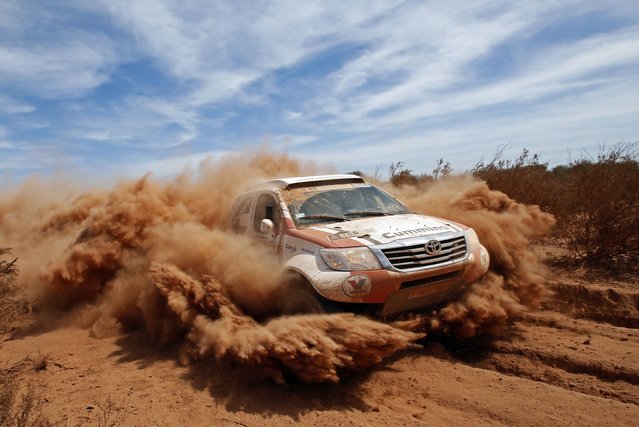
Toyota driver Rainer Wissmans of Germany drives during the 2nd stage of the Dakar Rally 2015, from Villa Carlos Paz to San Juan January 5, 2015. (Photo by Jean-Paul Pelissier/Reuters)
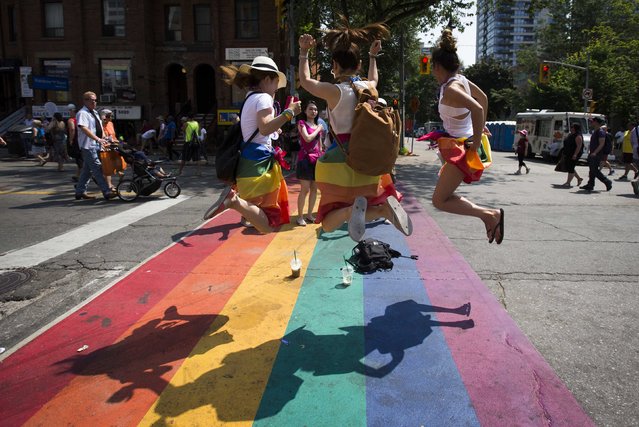
Revelers jump on a rainbow painted crosswalk in Church Street, Toronto's LGBT neighbourhood, before “WorldPride”, a gay pride parade, in Toronto, June 29, 2014. Toronto is hosting WorldPride, a week-long event that celebrates the lesbian, gay, bisexual and transgender (LGBT) community. (Photo by Mark Blinch/Reuters)
People try out the XIM 17 vehicle interior concept unveiled by Yanfeng Automotive Interiors during the North American International Auto Show in Detroit, Michigan, U.S., January 10, 2017. (Photo by Brendan McDermid/Reuters)
A woman overcome by emotion after an aftershock hit the area, is carried by a relative to the general hospital in Port-de-Paix, Haiti, Sunday, October 7, 2018. A magnitude 5.2 aftershock struck Haiti on Sunday, even as survivors of the previous day's temblor were sifting through the rubble of their cinderblock homes. The death toll stood at 12, with fears it could rise. (Photo by Dieu Nalio Chery/AP Photo)
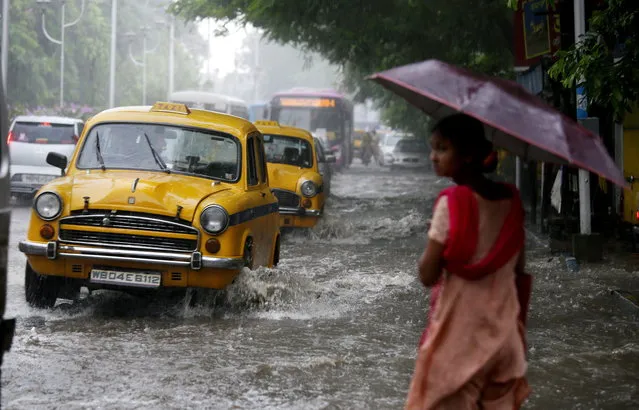
Indian commuters wade through floodwaters during the continuous rain shower in Calcutta, India, July 10, 2015. A monsoon shower hit the city and disrupted daily life. The Indian monsoon, takes place between May and September. (Photo by Piyal Adhikary/EPA)
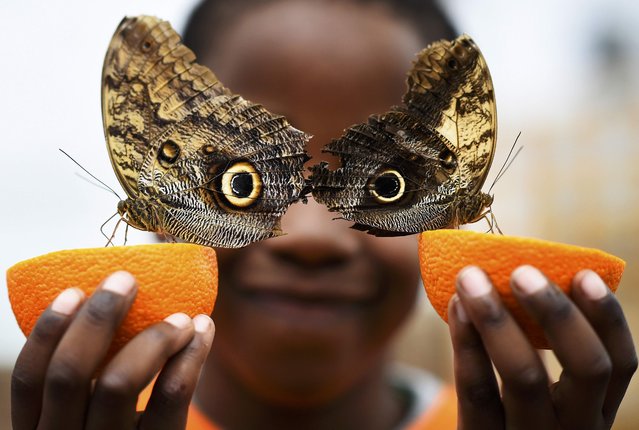
Bjorn, aged 5, smiles as he poses with a Owl butterfly during an event to launch the Sensational Butterflies exhibition at the Natural History Museum in London, Britain March 23, 2016. The exhibition opens to the public on March 24 and runs until September 11. (Photo by Dylan Martinez/Reuters)
Chloe Goodman attending the Fantastic Beasts and Where to Find Them European Premiere at Leicester Square, London. (Photo by Ian West/PA Images via Getty Images)
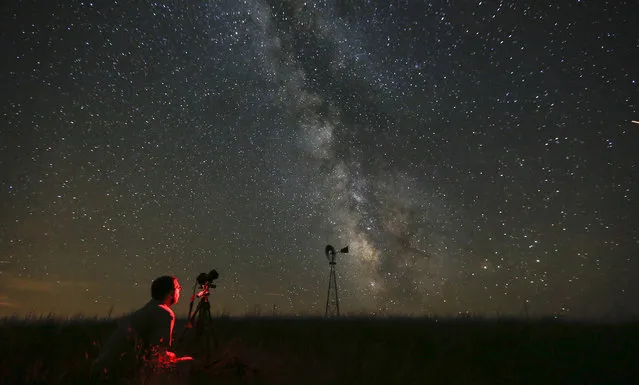
In this Wednesday, July 23, 2014 file photo, Omaha photographer Lane Hickenbottom photographs the night sky in a pasture near Callaway, Neb. With no moon in the sky, the Milky Way was visible to the naked eye. More than one-third of the world’s population can no longer see the Milky Way because of man-made lights, according to a scientific paper by Light Pollution Science and Technology Institute's Fabio Falchi and his team members, published on Friday, June 10, 2016. (Photo by Travis Heying/The Wichita Eagle via AP Photo)