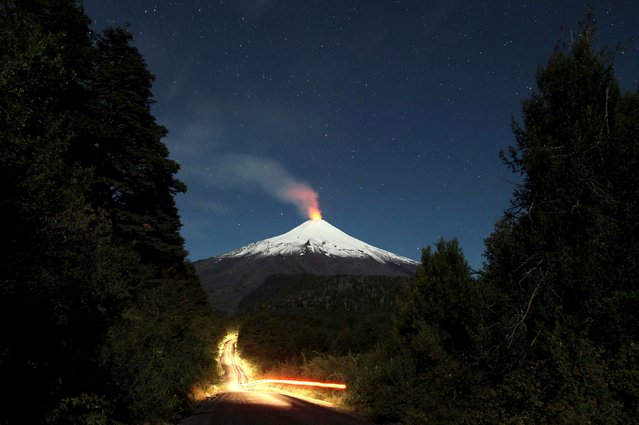
The Villarrica Volcano is seen at night in Chile, April 16, 2016. Villarrica is one of Chile's most active volcanoes. Picture taken with long exposure. (Photo by Cristobal Saavedra/Reuters)
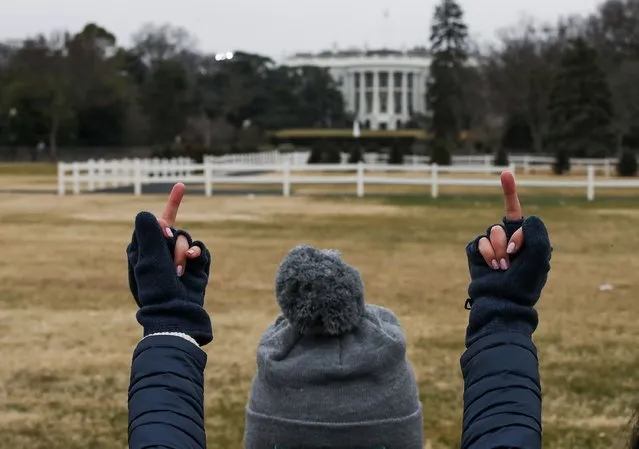
A protestor gestures toward the White House on the Ellipse near the South Lawn of the White House during the Women's March on Washington January 21, 2017 in Washington, DC. Large crowds are attending the anti-Trump rally a day after U.S. President Donald Trump was sworn in as the 45th U.S. president. (Photo by Drew Angerer/Getty Images)
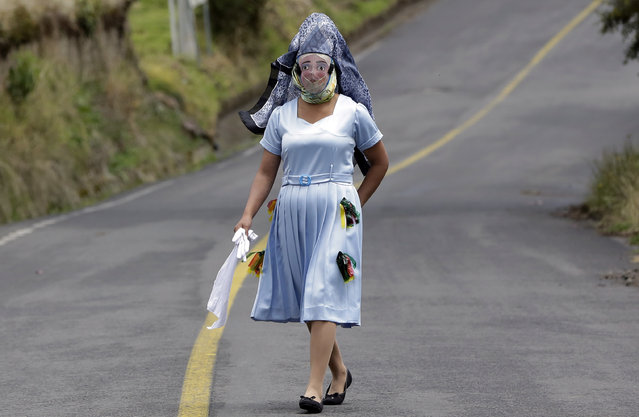
A woman dressed for la “La Diablada” festival walks down a road in Pillaro, Ecuador, Friday, January 6, 2017. Local legend holds that anyone who adopts a costume for the celebration and wears it at the event six years in a row will have good luck. (Photo by Dolores Ochoa/AP Photo)
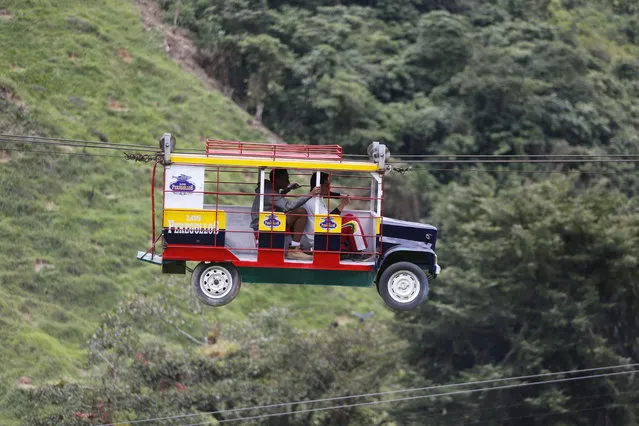
Tourists ride a cable car in the form a of a Chiva, a bus used to serve rural routes, in Pitalito, Colombia, Tuesday, April 5, 2017. The ride called “La Chiva Voladora” costs about $0.70 and you zip along about 800 meters from one side of a hill to another. (Photo by Fernando Vergara/AP Photo)
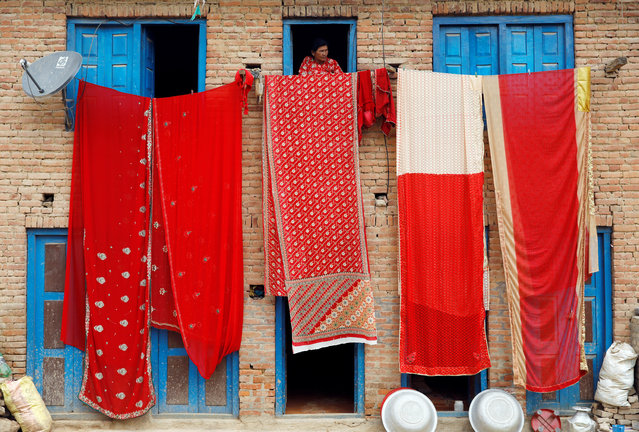
A woman looks out of the window of a house as saris, traditional clothing worn by women, are hanged out to dry in Lalitpur, Nepal on April 17, 2019. (Photo by Navesh Chitrakar/Reuters)
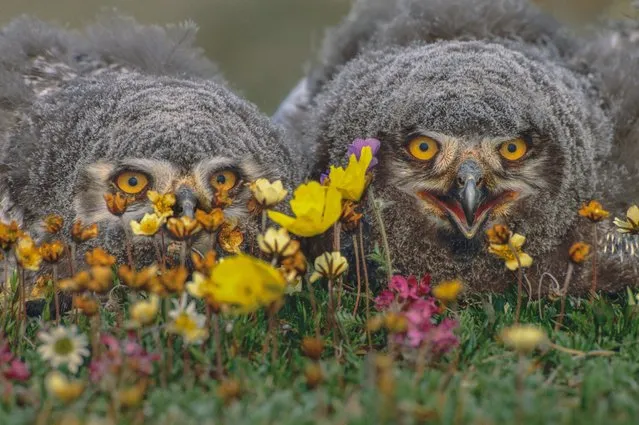
The photography of Art Wolfe covers the globe, capturing landscapes, wildlife, and cultures from every continent; here he talks through a selection of his favourite images. Art Wolfe is an American photographer and conservationist. His photographs have been noted by environmental advocacy groups for their “stunning” visual impact. Here: Snowy owlets (Bubo scandiacus), Arctic National Wildlife Refuge, Alaska, USA. (Photo by Art Wolfe/Art Wolfe Stock)
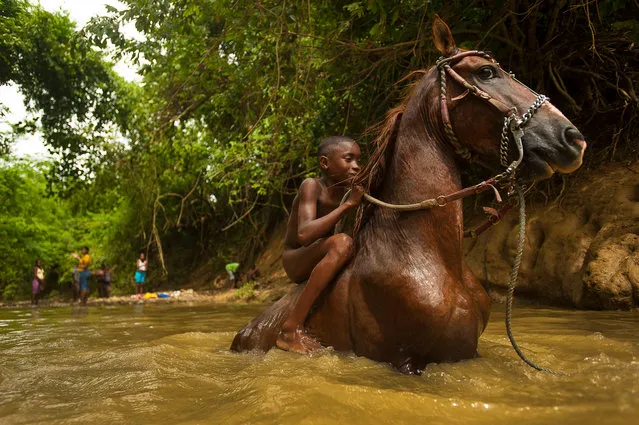
This image of a young bareback rider was taken in the village of Palenque de San Basilio, in Colombia’s Bolívar department. Founded by freed slaves in the 17th century, it became the first free town in the Americas, following a decree by the Spanish crown. Most of today’s inhabitants are direct descendants of those slaves and have preserved many of their customs, including their own language, Palenquero. (Photo by Sebastián Suki Beláustegui/The Guardian)