Loading...
Done
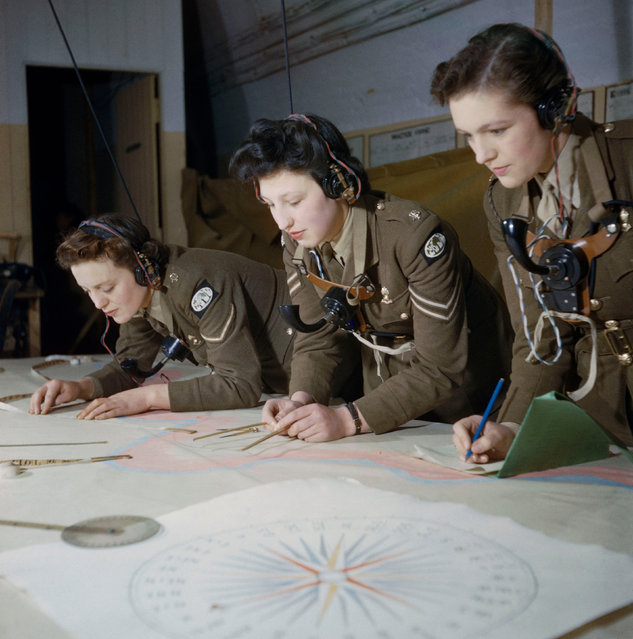
Auxiliary Territorial Service (ATS) plotters at work at Coastal Artillery Headquarters in Dover, December 1942. (Photo by Ted Dearberg/IWM/PA Wire)

Auxiliary Territorial Service (ATS) plotters at work at Coastal Artillery Headquarters in Dover, December 1942. The Auxiliary Territorial Service was the women's branch of the British Army during the Second World War. It was formed on 9 September 1938, initially as a women's voluntary service, and existed until 1 February 1949, when it was merged into the Women's Royal Army Corps. The ATS had its roots in the Women's Auxiliary Army Corps (WAAC), which was formed in 1917 as a voluntary service. During the First World War its members served in a number of jobs including clerks, cooks, telephonists and waitresses. The WAAC was disbanded after four years in 1921. (Photo by Ted Dearberg/IWM/PA Wire)
Details
13 Jul 2017 07:52:00
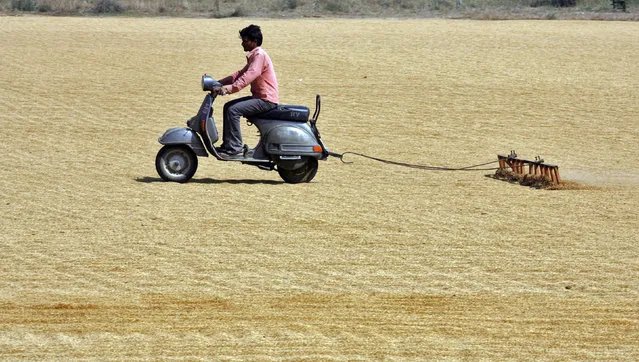
A worker spreads paddy crop for drying in a rice mill complex on the outskirts of Ahmedabad February 3, 2011. (Photo by Amit Dave/Reuters)

A worker spreads paddy crop for drying in a rice mill complex on the outskirts of Ahmedabad February 3, 2011. (Photo by Amit Dave/Reuters)
Details
13 May 2016 12:01:00
NATO and U.S. flags flutter as U.S. Air Force F-22 Raptor fighter flies over the military air base in Siauliai, Lithuania, April 27, 2016. (Photo by Ints Kalnins/Reuters)

NATO and U.S. flags flutter as U.S. Air Force F-22 Raptor fighter flies over the military air base in Siauliai, Lithuania, April 27, 2016. (Photo by Ints Kalnins/Reuters)
Details
14 Jun 2016 12:29:00
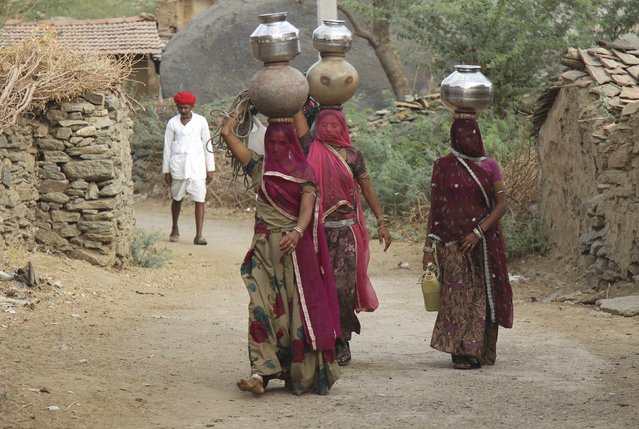
Women carry pitchers filled with drinking water in Devmali village in the desert state of Rajasthan, India, June 16, 2016. (Photo by Himanshu Sharma/Reuters)

Women carry pitchers filled with drinking water in Devmali village in the desert state of Rajasthan, India, June 16, 2016. (Photo by Himanshu Sharma/Reuters)
Details
19 Jun 2016 10:16:00
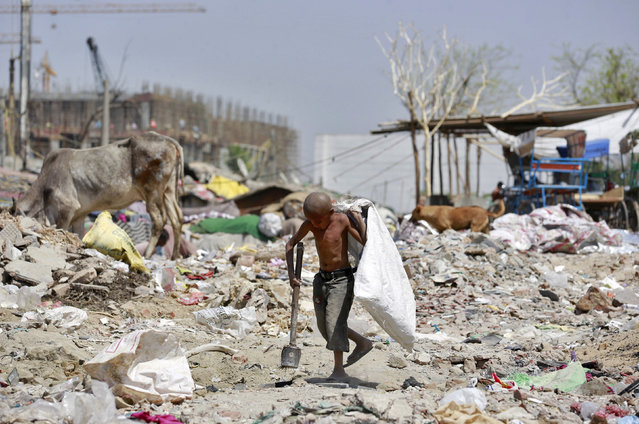
A boy looks for scrap metal using an improvised magnetic tool near a construction site in New Delhi, India, March 21, 2016. (Photo by Cathal McNaughton/Reuters)

A boy looks for scrap metal using an improvised magnetic tool near a construction site in New Delhi, India, March 21, 2016. (Photo by Cathal McNaughton/Reuters)
Details
09 Jul 2016 09:50:00
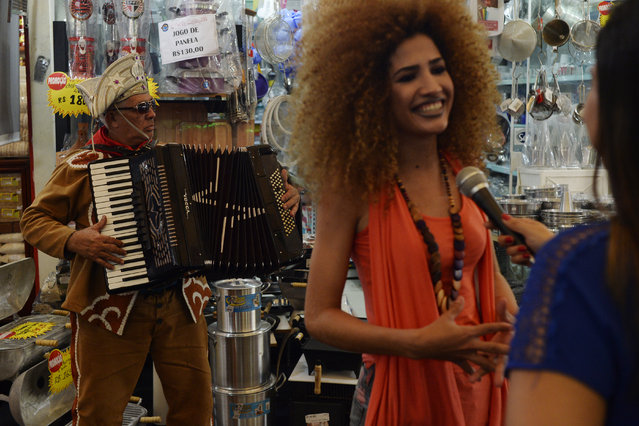
José Pereira de Souza plays an accordion as actress and model Tatiana Melo gives a television interview in Feira Nordestina outside of the Olympic periphery on Wednesday, August 17, 2016. (Photo by Aaron Ontiveroz/The Denver Post)

José Pereira de Souza plays an accordion as actress and model Tatiana Melo gives a television interview in Feira Nordestina outside of the Olympic periphery on Wednesday, August 17, 2016. (Photo by Aaron Ontiveroz/The Denver Post)
Details
19 Aug 2016 12:01:00
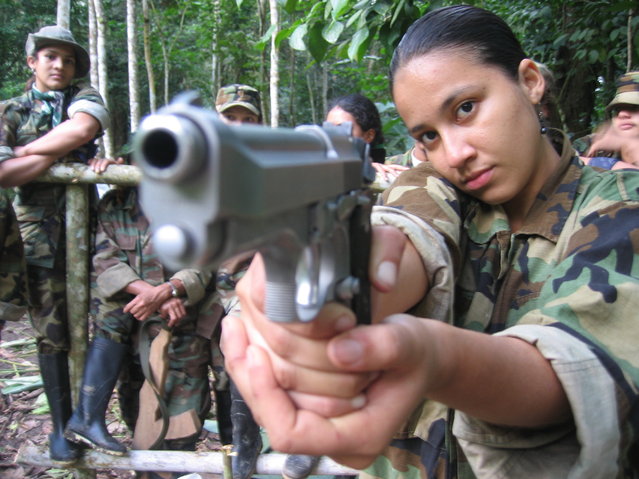
A member of the Revolutionary Armed Forces of Colombia (FARC) pose for a picture at a camp in the Colombian mountains on February 2005. (Photo by Frank Piasecki Poulsen)

A member of the Revolutionary Armed Forces of Colombia (FARC) pose for a picture at a camp in the Colombian mountains on February 2005. (Photo by Frank Piasecki Poulsen)
Details
29 Sep 2016 08:51:00
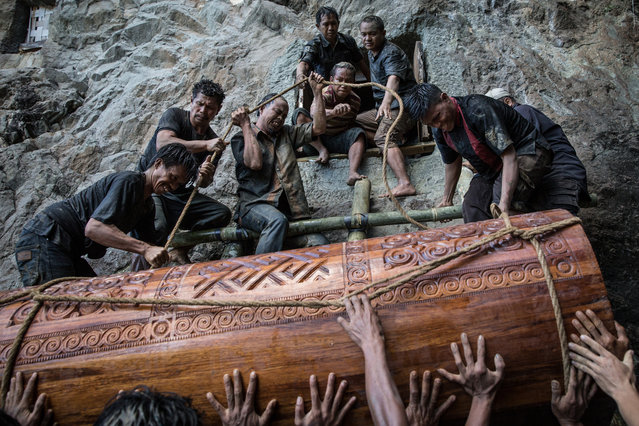
It is said that Torajans are people who “live to die”. For this Indonesian ethnic group, funerals are such extravagant events that they sometimes attract tourists. Families can postpone burials years (and the deceased are considered sick and hosted at home until the funeral) until the family can raise enough money and gather as many relatives as possible. And then it’s a jubilant multiday social event with a parade, dances and animal sacrifices. Agung Parameswara photographed these funerary practices when he traveled to South Sulawesi province, where the Torajans live. But often, their funeral isn’t the last time the dead are seen. In August, crypts are opened, coffins are slid back out and bodies delicately unsheathed. This tender ritual is known as Ma’Nene, which is customarily performed every few years. (Photo by Agung Parameswara/The Washington Post)

It is said that Torajans are people who “live to die”. For this Indonesian ethnic group, funerals are such extravagant events that they sometimes attract tourists. Families can postpone burials years (and the deceased are considered sick and hosted at home until the funeral) until the family can raise enough money and gather as many relatives as possible. And then it’s a jubilant multiday social event with a parade, dances and animal sacrifices. Agung Parameswara photographed these funerary practices when he traveled to South Sulawesi province, where the Torajans live. (Photo by Agung Parameswara/The Washington Post)
Details
06 Oct 2016 09:15:00