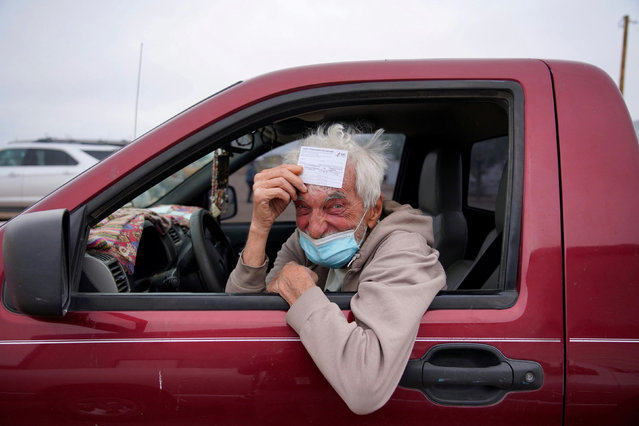
Taras Mychalewych, 75, poses for a portrait with his vaccination card after receiving his coronavirus disease (COVID-19) vaccine at a rural vaccination site in Columbus, New Mexico, U.S., April 16, 2021. (Photo by Paul Ratje/Reuters)
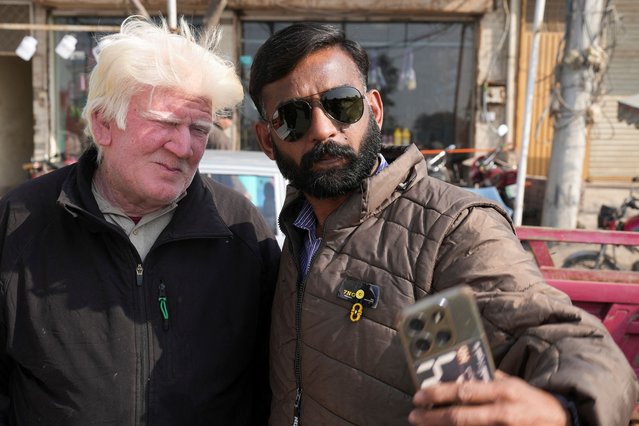
Saleem Bagga, seen by some as a lookalike of U.S. President-elect Donald Trump, poses for a selfie with a customer while selling kheer, a traditional South Asian rice pudding, along a road in Sahiwal, Pakistan on January 13, 2025. (Photo by Nida Meboob/Reuters)
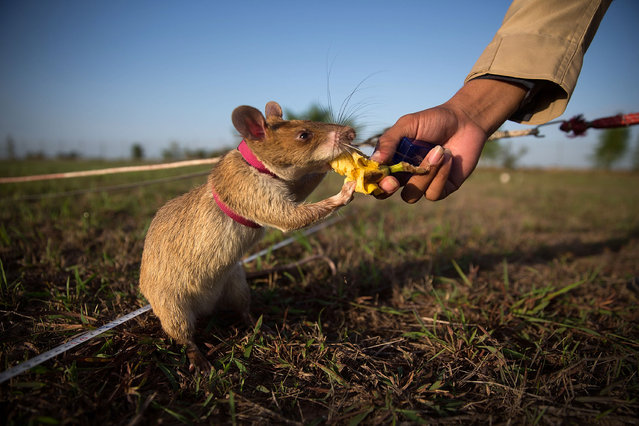
A mine detection rat is given banana as a reward after successfully identifying an inactive mine on July 2, 2015 in Siem Reap, Cambodia. The Cambodian Mine Action Center (CMAC) working with the Belgian NGO APOPO has recently begun testing the feasability of using large mine detection rats from Tanzania to help clear fields of mines and unexploded ordnance in one of the most bombed and mined countries in the world. (Photo by Taylor Weidman/Getty Images)
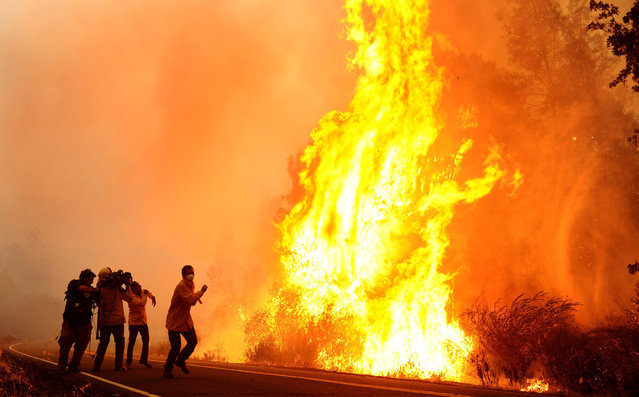
A news crew runs from flames southeast of Middletown, Calif., on Tuesday, September 15, 2015, as winds kick up the Valley fire. (Photo by Wally Skalij/Los Angeles Times/TNS)
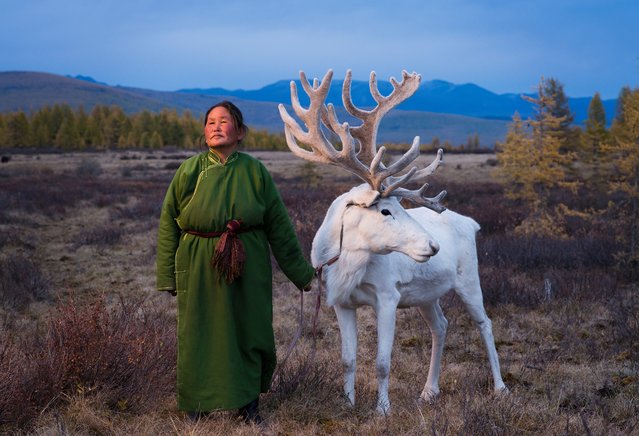
Saintsetseg Jambaldorj, a member of the Tsaatan ethnic minority, one of the last remaining groups of nomadic reindeer herders in East Taiga, Mongolia, wearing a traditional deel, on July 5, 2016. (Photo by Madoka Ikegami/Barcroft Images)
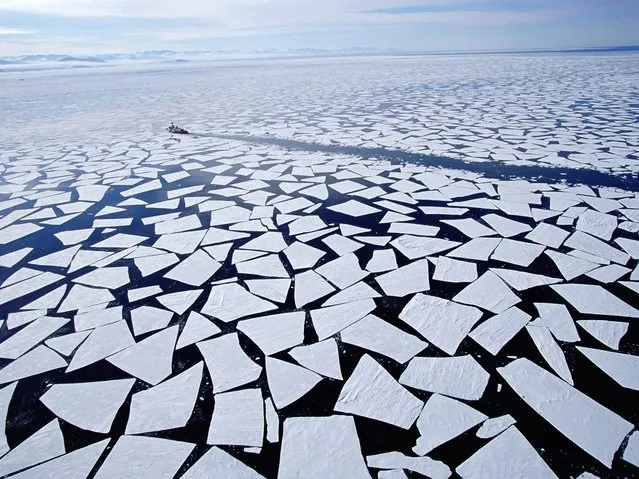
McMurdo Station is a U.S. Antarctic research centre located on the southern tip of Ross Island, which is in the New Zealand-claimed Ross Dependency on the shore of McMurdo Sound in Antarctica. It is operated by the United States through the United States Antarctic Program, a branch of the National Science Foundation. The station is the largest community in Antarctica, capable of supporting up to 1,258 residents, and serves as the United States Antarctic science facility. All personnel and cargo going to or coming from Amundsen–Scott South Pole Station first pass through McMurdo.