Loading...
Done
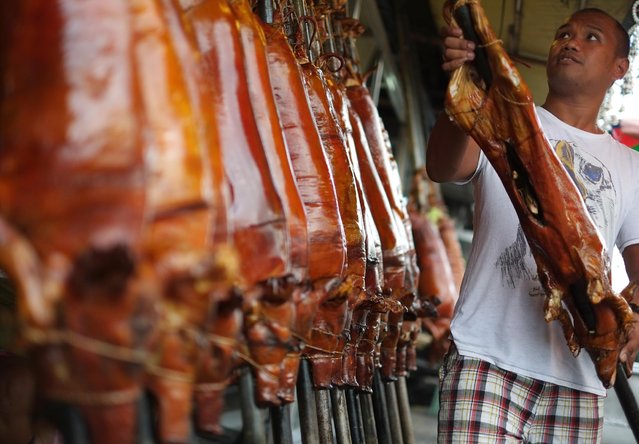
A Filipino worker arranges roasted pigs which they sell in suburban Quezon city, Philippines on Tuesday, December 23, 2014. Roasted pig is popular during Filipino celebrations and traditionally served during a Christmas eve dinner called “Noche Buena” in this predominantly Roman Catholic nation. (Photo by Aaron Favila/AP Photo)

A Filipino worker arranges roasted pigs which they sell in suburban Quezon city, Philippines on Tuesday, December 23, 2014. Roasted pig is popular during Filipino celebrations and traditionally served during a Christmas eve dinner called “Noche Buena” in this predominantly Roman Catholic nation. (Photo by Aaron Favila/AP Photo)
Details
27 Dec 2014 11:49:00
A dachshund portraying a racehorse, trots down Duval Street in Key West, Florida, December 31, 2014. About 175 dachshunds and other dogs participated in the event that preludes four warm-weather takeoffs on New York City's Times Square ball drop. (Photo by Steve Panariello/Reuters/Florida Keys News Bureau)

A dachshund portraying a racehorse, trots down Duval Street in Key West, Florida, December 31, 2014. About 175 dachshunds and other dogs participated in the event that preludes four warm-weather takeoffs on New York City's Times Square ball drop. (Photo by Steve Panariello/Reuters/Florida Keys News Bureau)
Details
03 Jan 2015 12:45:00
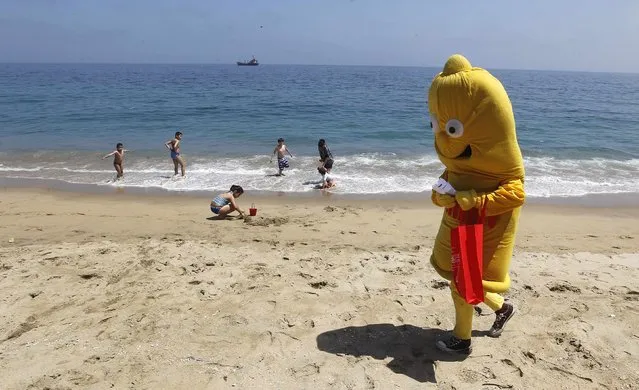
A man dressed in a condom costume walks at Caleta Portales beach, during a summer awareness campaign by the Chilean Corporation for the Prevention of AIDS in Valparaiso city, northwest of Santiago January  9, 2015. (Photo by Rodrigo Garrido/Reuters)

A man dressed in a condom costume walks at Caleta Portales beach, during a summer awareness campaign by the Chilean Corporation for the Prevention of AIDS in Valparaiso city, northwest of Santiago January 9, 2015. (Photo by Rodrigo Garrido/Reuters)
Details
10 Jan 2015 13:42:00
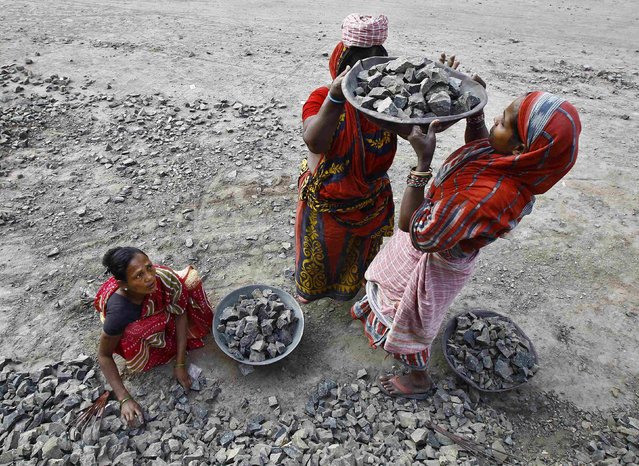
Women labourers work at the construction site of a road in Kolkata January 8, 2015. Across towns and cities in India, it is not uncommon to see women cleaning building sites, carrying bricks and or shoveling gravel - helping construct the infrastructure necessary for the country's economic and social development. (Photo by Rupak De Chowdhuri/Reuters)

Women labourers work at the construction site of a road in Kolkata January 8, 2015. Across towns and cities in India, it is not uncommon to see women cleaning building sites, carrying bricks and or shoveling gravel – helping construct the infrastructure necessary for the country's economic and social development. They help build roads, railway tracks, airports, and offices. They lay pipes for clean water supplies, cables for telecommunications, and dig the drains for sewage systems. But although women make up at least 20 percent of India's 40 million construction workers, they are less recognized than male workers with lower pay and often prone to safety hazards and sexual harassment. They are often unaware of their rights or scared to complain, say activists now trying to campaign for better treatment of women in the construction industry. (Photo by Rupak De Chowdhuri/Reuters)

Details
15 Jan 2015 13:47:00
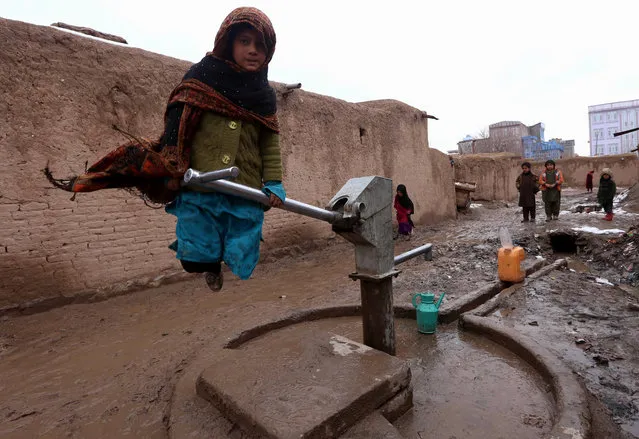
An Afghan woman fills containers with water near her temporary shelter at an internally displaced person's (IDP) camp on the outskirts of Herat, Afghanistan, January 21, 2015. Dozens of families are living in temporary shelters even in harsh winters and most depend on aid distributions by the United Nations High Commissioner for Refugees (UNHCR). (Photo by Jalil Rezayee/EPA)

An Afghan woman fills containers with water near her temporary shelter at an internally displaced person's (IDP) camp on the outskirts of Herat, Afghanistan, January 21, 2015. Dozens of families are living in temporary shelters even in harsh winters and most depend on aid distributions by the United Nations High Commissioner for Refugees (UNHCR). (Photo by Jalil Rezayee/EPA)
Details
23 Jan 2015 12:35:00
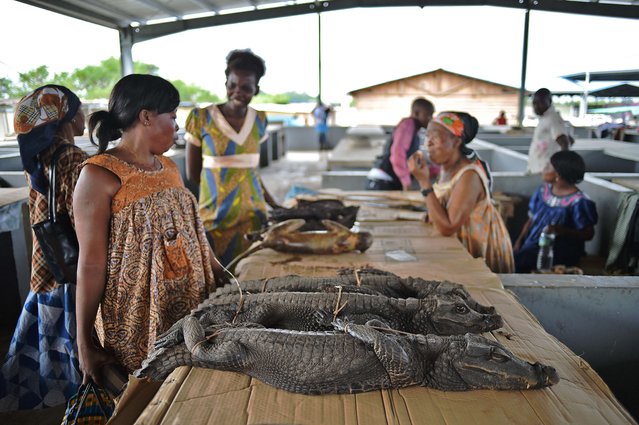
Shoppers walk past crocodiles for sale at a market in Bata on February 3, 2015. Markets in Equatorial Guinea sell a variety of animals including pangolins, monkeys and crocodiles as food. (Photo by Carl De Souza/AFP Photo)

Shoppers walk past crocodiles for sale at a market in Bata on February 3, 2015. Markets in Equatorial Guinea sell a variety of animals including pangolins, monkeys and crocodiles as food. (Photo by Carl De Souza/AFP Photo)
Details
07 Feb 2015 14:33:00
Two revelers dressed as toy soldiers gesture toward a police officer in a patrol car during the traditional carnival parade in Wuerzburg, Germany, 15 February 2015. Under the motto “Carnival Parade is cool” about 160 groups with over 3,000 members took part in one of the biggest carnival parades in southern Germany. (Photo by Daniel Karmann/EPA)

Two revelers dressed as toy soldiers gesture toward a police officer in a patrol car during the traditional carnival parade in Wuerzburg, Germany, 15 February 2015. Under the motto “Carnival Parade is cool” about 160 groups with over 3,000 members took part in one of the biggest carnival parades in southern Germany. (Photo by Daniel Karmann/EPA)
Details
21 Feb 2015 11:31:00
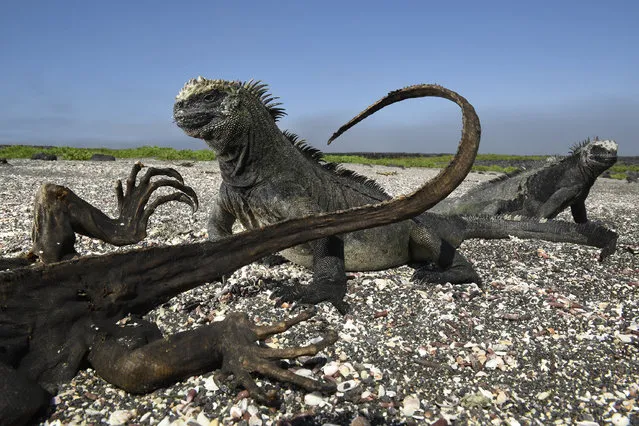
Galapagos – Rocking the Cradle: Four major ocean currents converge along the Galapagos archipelago, creating the conditions for an extraordinary diversity of animal life, April 25, 2016. The islands are home to at least 7,000 flora and fauna species, of which 97 percent of the reptiles, 80 percent of the land birds, 50 percent of the insects and 30 percent of the plants are endemic. The local ecosystem is highly sensitive to the changes in temperature, rainfall and ocean currents that characterize the climatic events known as El Niño and La Niña. These changes cause marked fluctuations in weather and food availability. Many scientists expect the frequency of El Niño and La Niña to increase as a result of climate change, making the Galapagos a possible early-warning location for its effects. (Photo by Thomas P. Peschak for National Geographic/World Press Photo)

Galapagos – Rocking the Cradle: Four major ocean currents converge along the Galapagos archipelago, creating the conditions for an extraordinary diversity of animal life, April 25, 2016. The islands are home to at least 7,000 flora and fauna species, of which 97 percent of the reptiles, 80 percent of the land birds, 50 percent of the insects and 30 percent of the plants are endemic. (Photo by Thomas P. Peschak for National Geographic/World Press Photo)
Details
16 Apr 2018 00:01:00