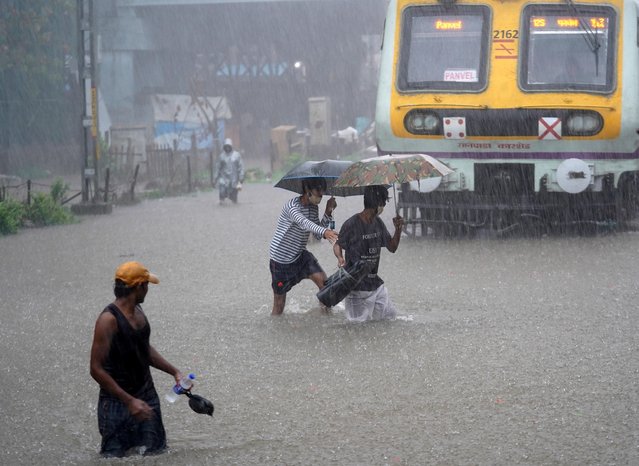
People cross waterlogged railway tracks next to a parked passenger train during heavy rains in Mumbai, India, June 9, 2021. (Photo by Hemanshi Kamani/Reuters)
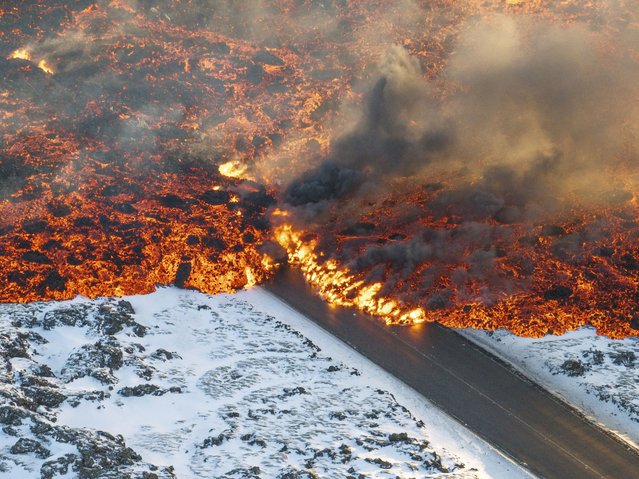
Lava crosses the main road to Grindavík and flows on the road leading to the Blue Lagoon, in Grindavík, Iceland, Thursday, February 8, 2024. (Photo by Marco Di Marco/AP Photo)
Jockeys and their horses compete in the Cross Country Chase, the fourth race on the second day of the Cheltenham Festival at Cheltenham Racecourse, in Cheltenham, western England on March 12, 2025. (Photo by Justin Tallis/AFP Photo)
Turkey's Merve Aydin cries after she came in last in her women's 800m round 1 heat at the London 2012 Olympic Games at the Olympic Stadium August 8, 2012. (Photo by Lucy Nicholson/Reuters)
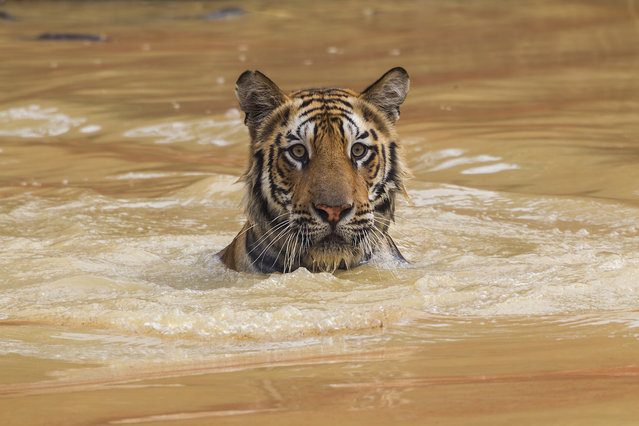
National Geographic photographer Steve Winter has spent most of his adult life shooting wild cats. Photo: A 14-month-old cub, cooling off in a pond, is riveted by a deer that appeared near the shore. Tigers are powerful swimmers; they can easily cross rivers four to five miles wide and have been known to swim distances of up to 18 miles. (Photo by Steve Winter/National Geographic)
Udomsak Ratanotayo, left, and Suttinan Boonsomkiat wear storm trooper costumes while donating blood at the Thai Red Cross in Bangkok, Thailand on Monday, April 28, 2014. Thai Star Wars fans will donate blood and give toys at an orphanage as part of a promotional campaign. (Photo by Sakchai Lalit/AP Photo)
Residents make their way along a fence as they try to cross a flooded street after heavy rainfall hit Wuhan, Hubei province, China, July 23, 2015. Severe downpours hit the city on Thursday, flooding streets and shutting down public transportations, local media reported. (Photo by Reuters/China Daily)
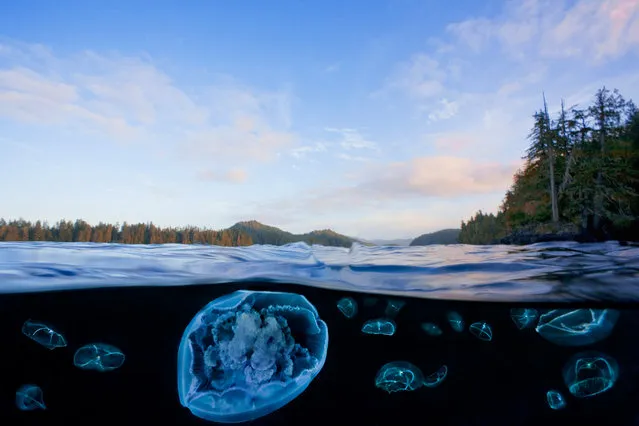
David Hall’s photographs of scenery and creatures off the coast of Canada in the Pacific Northwest portray serenity under the water, which belie the extreme challenges he faces to get his images. For each shoot, Hall wears a dry suit, a neoprene body suit that covers all of his body but his head and traps air inside to keep him warm. Water temperature in Canada’s British Columbia typically ranges between 45 and 50 degrees Fahrenheit. Photo: Moon jellyfish and cross jellies. (Photo by David Hall)