Loading...
Done
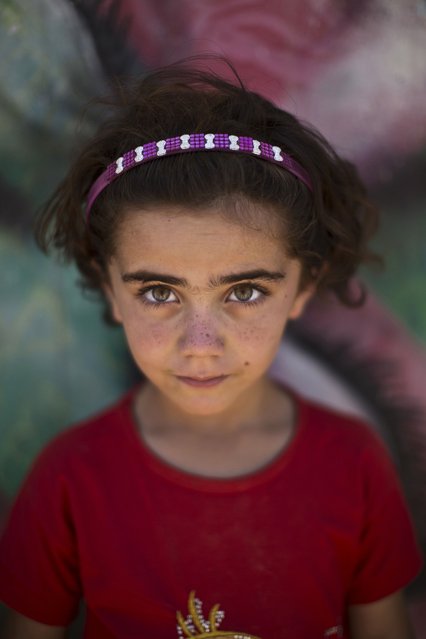
In this Tuesday, July 29, 2014, photo, Syrian refugee Samah, 5, poses for a picture at Zaatari refugee camp, near the Syrian border, in Mafraq, Jordan. More than 2.8 million Syrian children inside and outside the country – nearly half the school-aged population – cannot get an education because of the devastation from the civil war, according to the U.N. children's agency, UNICEF. (Photo by Muhammed Muheisen/AP Photo)

In this Tuesday, July 29, 2014, photo, Syrian refugee Samah, 5, poses for a picture at Zaatari refugee camp, near the Syrian border, in Mafraq, Jordan. More than 2.8 million Syrian children inside and outside the country – nearly half the school-aged population – cannot get an education because of the devastation from the civil war, according to the U.N. children's agency, UNICEF. That number is likely higher, as UNICEF can't count the children whose parents didn't register with the United Nations refugee agency. (Photo by Muhammed Muheisen/AP Photo)
Details
03 Aug 2014 07:46:00
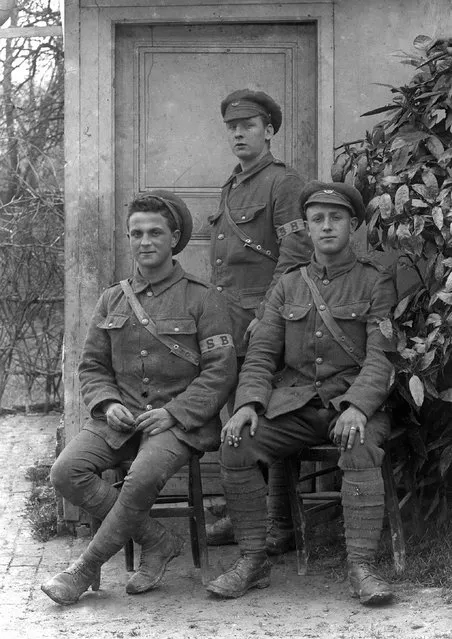
These images, scanned from old glass negatives which had surfaced in northern France, were believed to have been taken by a local amateur photographer in 1916. They showed British and a few Australian soldiers, in formal or informal poses, during or just before the most murderous battle in the history of the British Empire – Battle of the Somme. Who are these British and British Empire soldiers? The identity of the soldiers is, and may always remain, a mystery. (Property of Bernard Gardin/Dominique Zanardi/Joel Scribe/The Independent Magazine)

These images, scanned from old glass negatives which had surfaced in northern France, were believed to have been taken by a local amateur photographer in 1916. They showed British and a few Australian soldiers, in formal or informal poses, during or just before the most murderous battle in the history of the British Empire – Battle of the Somme. Who are these British and British Empire soldiers? The identity of the soldiers is, and may always remain, a mystery... (Property of Bernard Gardin/Dominique Zanardi/Joel Scribe/The Independent Magazine)
Details
04 Aug 2014 14:06:00
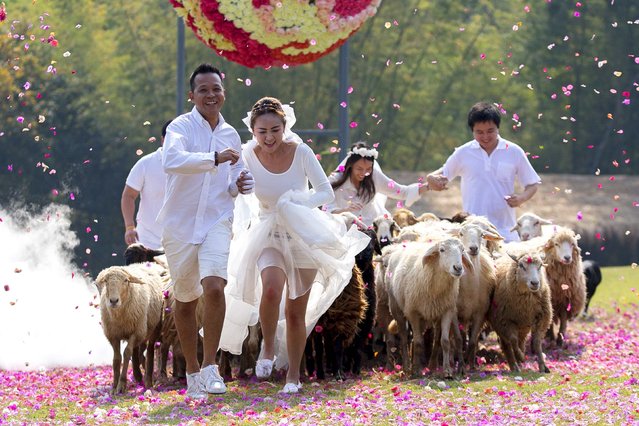
Couples (L-R) Chaiyut Phuangphoeksuk and Prontathourn Pronnapatthun, and Nichapatr Koomsombut and Pirat Rungthongoran run from sheep during their wedding ceremony at a resort in Ratchaburi province February 13, 2015. Three Thai couples took part in the wedding ceremony arranged by a resort themed around fun activities ahead of Valentine's Day. (Photo by Athit Perawongmetha/Reuters)

Couples (L-R) Chaiyut Phuangphoeksuk and Prontathourn Pronnapatthun, and Nichapatr Koomsombut and Pirat Rungthongoran run from sheep during their wedding ceremony at a resort in Ratchaburi province February 13, 2015. Three Thai couples took part in the wedding ceremony arranged by a resort themed around fun activities ahead of Valentine's Day. (Photo by Athit Perawongmetha/Reuters)
Details
15 Feb 2015 15:14:00
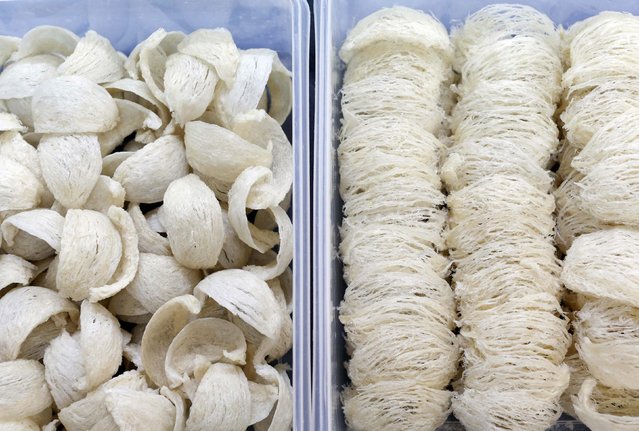
Two styles of cleaned bird's nest, Yan Zhan (L) and Su Zhan (R) await repacking at a processing plant in Kuala Lumpur, February 17, 2015. Prized in China for is alleged health benefits for hundreds of years, nests made from swiftlets' saliva are being mixed into coffee and cereal as the Southeast Asian producers of the delicacy seek to broaden its appeal, and their profit margins. (Photo by Olivia Harris/Reuters)

Two styles of cleaned bird's nest, Yan Zhan (L) and Su Zhan (R) await repacking at a processing plant in Kuala Lumpur, February 17, 2015. Prized in China for is alleged health benefits for hundreds of years, nests made from swiftlets' saliva are being mixed into coffee and cereal as the Southeast Asian producers of the delicacy seek to broaden its appeal, and their profit margins. The nests are among the world's most expensive foods, selling for up to $2,500 a kg and the swiftlets that weave them are indigenous to Indonesia, Malaysia, Thailand and Vietnam. (Photo by Olivia Harris/Reuters)
Details
24 Feb 2015 13:57:00
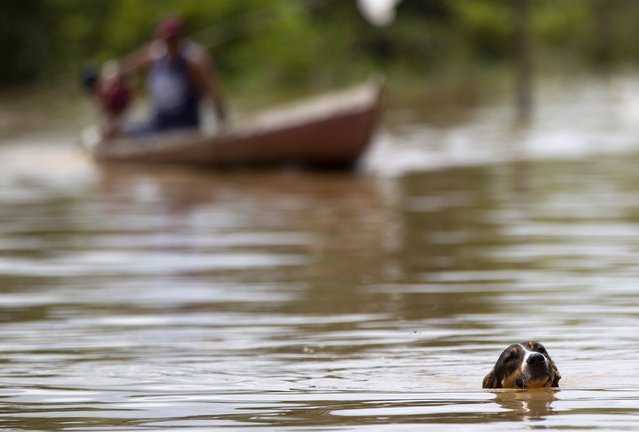
A dog swims as a resident navigates his boat in a neighbourhood flooded by the Purus river, which continues to rise from days of heavy rainfall in the region, in Boca do Acre, Amazonas state March 14, 2015. According the state civil defense, more than 20,000 people have been left homeless along the Purus river, where incessant rains have flooded the area and caused the river to burst their banks. (Photo by Bruno Kelly/Reuters)

A dog swims as a resident navigates his boat in a neighbourhood flooded by the Purus river, which continues to rise from days of heavy rainfall in the region, in Boca do Acre, Amazonas state March 14, 2015. According the state civil defense, more than 20,000 people have been left homeless along the Purus river, where incessant rains have flooded the area and caused the river to burst their banks. (Photo by Bruno Kelly/Reuters)
Details
16 Mar 2015 10:33:00
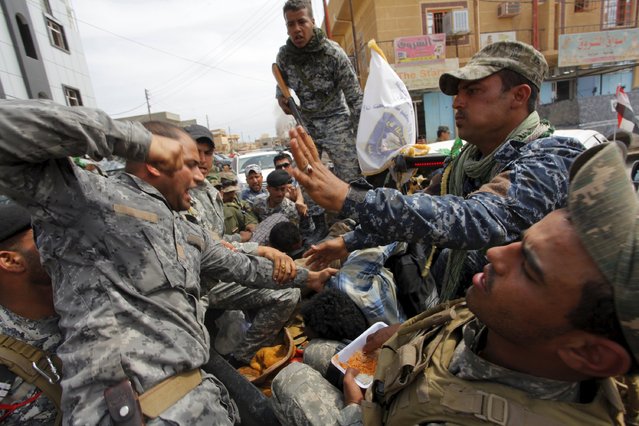
A member from the Iraqi security forces beats an Islamic State insurgent, who was captured in Tikrit April 1, 2015. Iraqi troops and Shi'ite paramilitary fighters were battling Islamic State on Wednesday in northern Tikrit, which officials described as the Sunni Muslim militant group's last stronghold in the city. (Photo by Alaa Al-Marjani/Reuters)

A member from the Iraqi security forces beats an Islamic State insurgent, who was captured in Tikrit April 1, 2015. Iraqi troops and Shi'ite paramilitary fighters were battling Islamic State on Wednesday in northern Tikrit, which officials described as the Sunni Muslim militant group's last stronghold in the city. (Photo by Alaa Al-Marjani/Reuters)
Details
02 Apr 2015 12:48:00
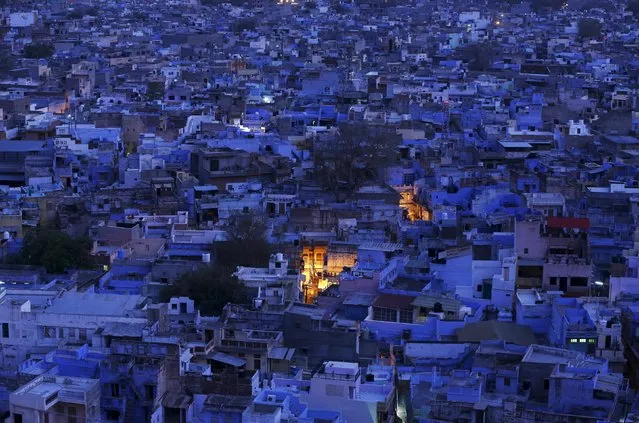
A general view of the residential area is pictured during dusk at Jodhpur in Rajasthan, April 5, 2015. Jodhpur, also known as the blue city in the desert Indian state of Rajasthan, which residents say originally, was used to show where the highest caste of priestly Hindus live, who wanted to set them apart from the rest of the population. Later the rest of the population followed suit. Another reason for the city to be blue is to keep the buildings cool during the summers, local residents said. (Photo by Adnan Abidi/Reuters)

A general view of the residential area is pictured during dusk at Jodhpur in Rajasthan, April 5, 2015. Jodhpur, also known as the blue city in the desert Indian state of Rajasthan, which residents say originally, was used to show where the highest caste of priestly Hindus live, who wanted to set them apart from the rest of the population. Later the rest of the population followed suit. Another reason for the city to be blue is to keep the buildings cool during the summers, local residents said. (Photo by Adnan Abidi/Reuters)
Details
12 Apr 2015 08:27:00
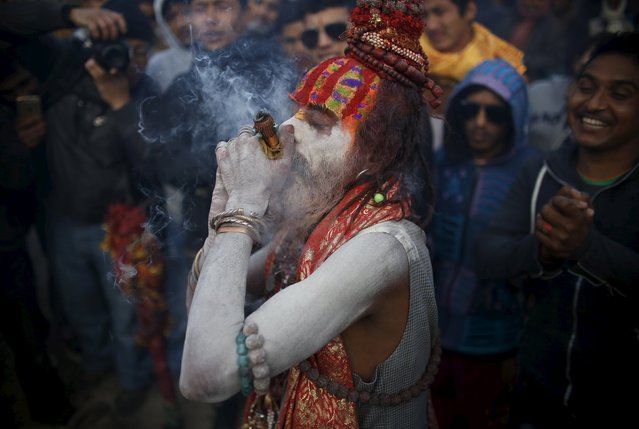
A Hindu holy man, or sadhu, smeared with ashes smokes marijuana in a chillum during the Shivaratri festival on the premises of Pashupatinath Temple in Kathmandu, Nepal, March 7, 2016. Hindu holy men from Nepal and India come to this temple to take part in the Maha Shivaratri festival. Celebrated by Hindu devotees all over the world, Shivaratri is dedicated to Lord Shiva, and holy men mark the occasion by praying, smoking marijuana or smearing their bodies with ashes. (Photo by Navesh Chitrakar/Reuters)

A Hindu holy man, or sadhu, smeared with ashes smokes marijuana in a chillum during the Shivaratri festival on the premises of Pashupatinath Temple in Kathmandu, Nepal, March 7, 2016. Hindu holy men from Nepal and India come to this temple to take part in the Maha Shivaratri festival. Celebrated by Hindu devotees all over the world, Shivaratri is dedicated to Lord Shiva, and holy men mark the occasion by praying, smoking marijuana or smearing their bodies with ashes. (Photo by Navesh Chitrakar/Reuters)
Details
08 Mar 2016 13:46:00