Loading...
Done
A racegoer enjoy the atmosphere following 2016 Derby Day at Flemington Racecourse on October 29, 2016 in Melbourne, Australia. Women attendees weren’t afraid to show off some skin as the warm summer weather arrived in Australia. (Photo by Splash News and Pictures)

A racegoer enjoy the atmosphere following 2016 Derby Day at Flemington Racecourse on October 29, 2016 in Melbourne, Australia. Women attendees weren’t afraid to show off some skin as the warm summer weather arrived in Australia. (Photo by Splash News and Pictures)
Details
30 Oct 2016 11:22:00
Cyclists compete during the UCI BMX World Championships Elite Women's Moto Race on May 29, 2016 in Medellin, Antioquia department, Colombia. (Photo by Raul Arboleda/AFP Photo)

Cyclists compete during the UCI BMX World Championships Elite Women's Moto Race on May 29, 2016 in Medellin, Antioquia department, Colombia. (Photo by Raul Arboleda/AFP Photo)
Details
31 May 2016 11:59:00
Attendees look at Volkswagen's BUDD-e, a long distance electric vehicle,  displayed during a press event at CES 2016 at The Chelsea at The Cosmopolitan of Las Vegas on January 5, 2016 in Las Vegas, Nevada.  (Photo by David Becker/Getty Images)

Attendees look at Volkswagen's BUDD-e, a long distance electric vehicle, displayed during a press event at CES 2016 at The Chelsea at The Cosmopolitan of Las Vegas on January 5, 2016 in Las Vegas, Nevada. CES, the world's largest annual consumer technology trade show, runs from January 6-9 and is expected to feature 3,600 exhibitors showing off their latest products and services to more than 150,000 attendees. (Photo by David Becker/Getty Images)
Details
08 Jan 2016 08:01:00
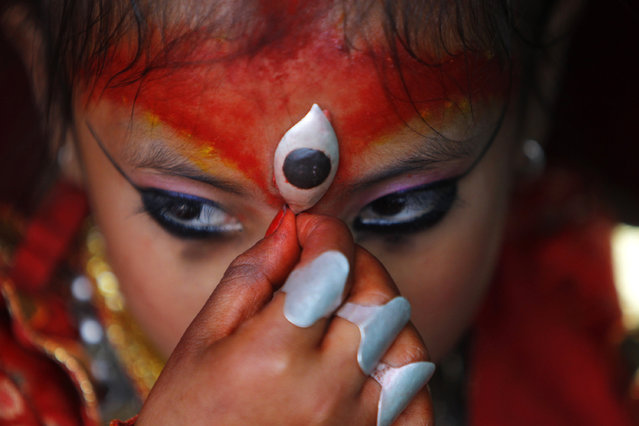
Nepal's Kumari, or living goddess, adjusts her ornament as she watches the Rato Machindranath chariot Festival in Lalitpur, Nepal, Friday, April 24, 2015. Nepal's living goddesses are young pre-pubescent girls considered by devotees to be incarnations of a Hindu goddess. Selected as toddlers, living goddesses usually keep their positions until they reach puberty. (Photo by Niranjan Shrestha/AP Photo)

Nepal's Kumari, or living goddess, adjusts her ornament as she watches the Rato Machindranath chariot Festival in Lalitpur, Nepal, Friday, April 24, 2015. Nepal's living goddesses are young pre-pubescent girls considered by devotees to be incarnations of a Hindu goddess. Selected as toddlers, living goddesses usually keep their positions until they reach puberty. (Photo by Niranjan Shrestha/AP Photo)
Details
25 Apr 2015 10:05:00
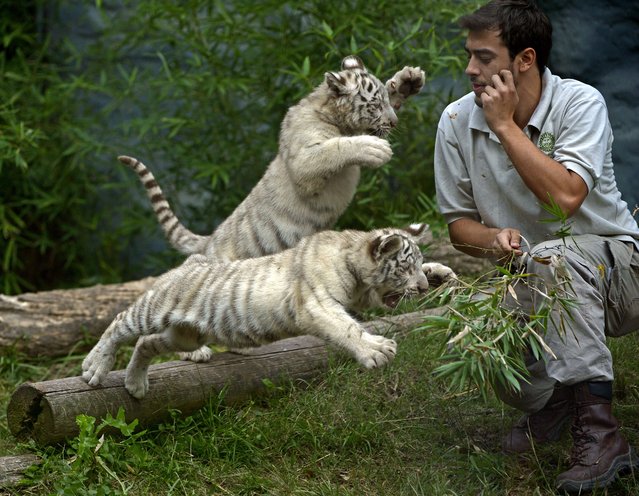
Two three-month-old female white Bengal tiger cubs play with a zoo keeper in their enclosure at the Buenos Aires' Zoo, in Argentina, on April 17, 2014. Captive white Bengal tiger Cloe, gave birth to three cubs – two females and one male – on January 14, 2014. (Photo by Juan Mabromata/AFP Photo)

Two three-month-old female white Bengal tiger cubs play with a zoo keeper in their enclosure at the Buenos Aires' Zoo, in Argentina, on April 17, 2014. Captive white Bengal tiger Cloe, gave birth to three cubs – two females and one male – on January 14, 2014. (Photo by Juan Mabromata/AFP Photo)
Details
19 Apr 2014 12:27:00
Park Ji-soo of South Korea performs her contemporary variation during the final of the 43rd Prix de Lausanne at the Beaulieu Theatre in Lausanne February 7, 2015. (Photo by Denis Balibouse/Reuters)

Park Ji-soo of South Korea performs her contemporary variation during the final of the 43rd Prix de Lausanne at the Beaulieu Theatre in Lausanne February 7, 2015. The Prix de Lausanne is an annual international dance competition for dancers aged 15 to 18. A total of 67 participants from 18 countries were selected from 300 applicants to take part in this year's week-long competition, from which the jury has shortlisted 20 finalists to compete for Saturday's finals. Six of this year's finalists will be awarded a one-year all expenses paid scholarship at one of the Prix de Lausanne's partner schools or companies, among the most prestigious in the world. (Photo by Denis Balibouse/Reuters)
Details
09 Feb 2015 12:01:00
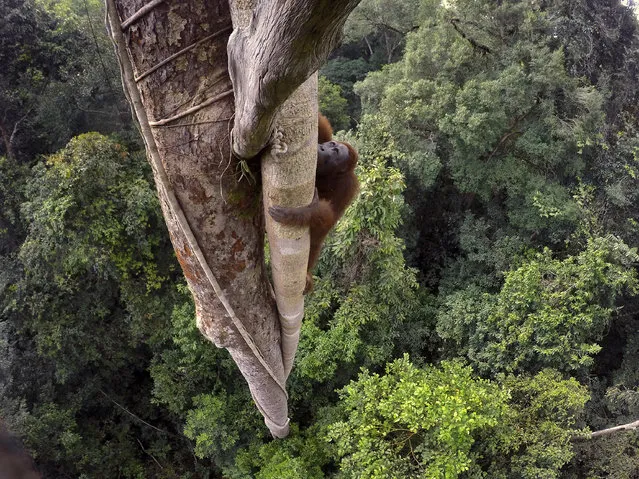
“Tough Times for Orangutans”. Nature, first prize stories. Tim Laman, USA. Location: West Kalimantan, Indonesia. A Bornean orangutan climbs over 30 meters up a tree in the rain forest of Gunung Palung National Park, West Kalimantan, Indonesia, August 12, 2015. The lives of wild orangutans are brought to light. Threats to these orangutans from fires, the illegal animal trade and loss of habitat due to deforestation have resulted in many orphan orangutans ending up at rehabilitation centers. (Photo by Tim Laman/World Press Photo Contest)

“Tough Times for Orangutans”. Nature, first prize stories. Tim Laman, USA. Location: West Kalimantan, Indonesia. A Bornean orangutan climbs over 30 meters up a tree in the rain forest of Gunung Palung National Park, West Kalimantan, Indonesia, August 12, 2015. The lives of wild orangutans are brought to light. Threats to these orangutans from fires, the illegal animal trade and loss of habitat due to deforestation have resulted in many orphan orangutans ending up at rehabilitation centers. (Photo by Tim Laman/World Press Photo Contest)
Details
19 Feb 2016 13:06:00
A picture made available on 13 May 2016 shows A Tiwa girl performing her traditional dance as they celebrated the Wanchuwa festival in Karbi Anglong District of Assam state, India, 11 May 2016. Wanchuwa is one of the most important festivals of the Tiwa tribal community living in the hills as it is related with agriculture which is the mainstay of their economy. Tiwas pray for a bountiful harvest during this festival and to protect their crops from pest and other natural calamities. (Photo by EPA/Stringer)

A picture made available on 13 May 2016 shows A Tiwa girl performing her traditional dance as they celebrated the Wanchuwa festival in Karbi Anglong District of Assam state, India, 11 May 2016. Wanchuwa is one of the most important festivals of the Tiwa tribal community living in the hills as it is related with agriculture which is the mainstay of their economy. Tiwas pray for a bountiful harvest during this festival and to protect their crops from pest and other natural calamities. Tiwa is a major tribe of Assam state who practice Jhum or shifting cultivation for their living in the hills. (Photo by EPA/Stringer)
Details
14 May 2016 11:45:00