Loading...
Done
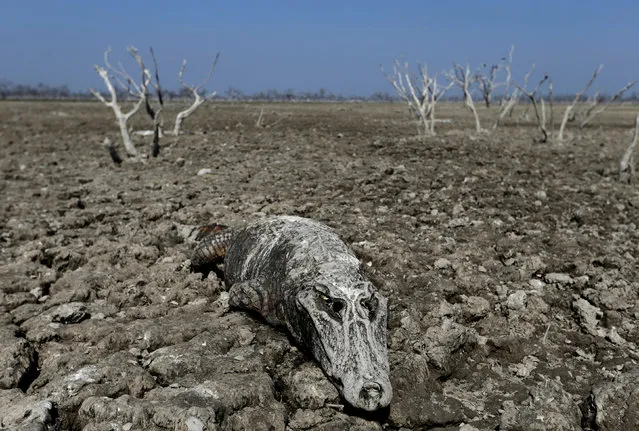
The carcass of a yacare caiman lies in the dried-up river bed of the Pilcomayo river in Boqueron, Paraguay, August 14, 2016. In Paraguay, alongside the Pilcomayo River, black vultures flew over a shrinking pond where a group of crocodilian reptiles known as yacare caimans sought refuge. Water from the river, which divides Paraguay and Argentina in the area of the Gran Chaco, was scarce. This is not an uncommon sight in the region of General Diaz, about 700 kilometres (435 miles) northwest of the country's capital Asuncion, where the Pilcomayo's waters form lakes and streams that give life to capybaras, birds and caimans. “The river's situation is critical. No water is forecast to enter the basin until December, as happens every year”, said Alcides Gonzalez, a resident of the area. (Photo by Jorge Adorno/Reuters)

The carcass of a yacare caiman lies in the dried-up river bed of the Pilcomayo river in Boqueron, Paraguay, August 14, 2016. In Paraguay, alongside the Pilcomayo River, black vultures flew over a shrinking pond where a group of crocodilian reptiles known as yacare caimans sought refuge. Water from the river, which divides Paraguay and Argentina in the area of the Gran Chaco, was scarce. This is not an uncommon sight in the region of General Diaz, about 700 kilometres (435 miles) northwest of the country's capital Asuncion, where the Pilcomayo's waters form lakes and streams that give life to capybaras, birds and caimans. (Photo by Jorge Adorno/Reuters)
Details
03 Nov 2016 12:40:00
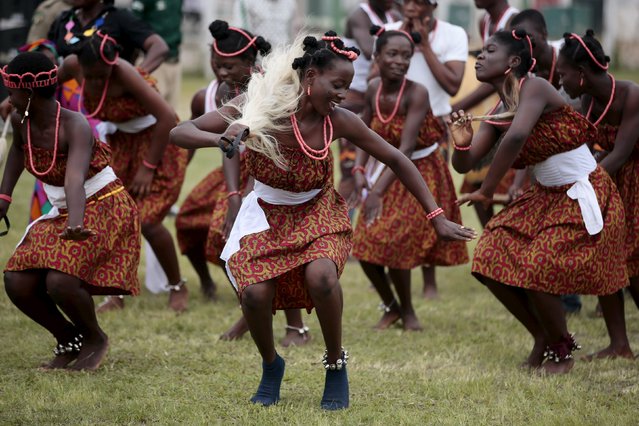
Students of JSS Dutse Alhaji participate in a cultural dance performance during celebrations to commemorate Nigeria's 55th Independence Day in Abuja, Nigeria, October 1, 2015. (Photo by Afolabi Sotunde/Reuters)

Students of JSS Dutse Alhaji participate in a cultural dance performance during celebrations to commemorate Nigeria's 55th Independence Day in Abuja, Nigeria, October 1, 2015. (Photo by Afolabi Sotunde/Reuters)
Details
04 Oct 2015 08:00:00
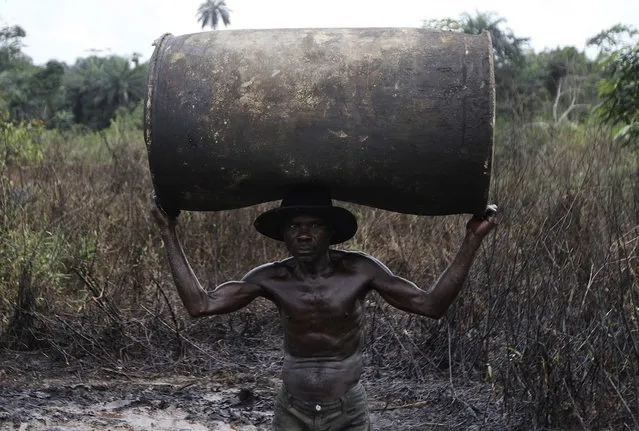
Ebiowei, 48, carries an empty oil container on his head to a place where it would be filled with refined fuel at an illegal refinery site near river Nun in Nigeria's oil state of Bayelsa November 27, 2012. (Photo by Akintunde Akinleye/Reuters)

Ebiowei, 48, carries an empty oil container on his head to a place where it would be filled with refined fuel at an illegal refinery site near river Nun in Nigeria's oil state of Bayelsa November 27, 2012. Locals in the industry say workers can earn $50 to $60 a day. Thousands of people in Nigeria engage in a practice known locally as “oil bunkering” – hacking into pipelines to steal crude then refining it or selling it abroad. The practice, which leaves oil spewing from pipelines for miles around, managed to lift around a fifth of Nigeria's two million barrel a day production last year according to the finance ministry. (Photo by Akintunde Akinleye/Reuters)
Details
18 Jan 2013 14:29:00
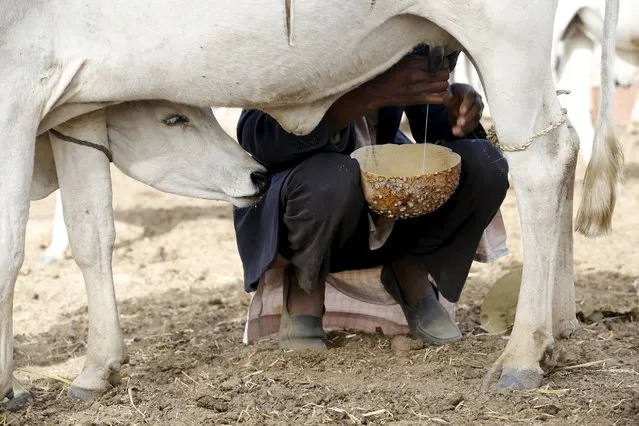
A tribal Fulani man milks a cow at a local milk collecting centre in Dangwala Karfi village on the outskirts of Nigeria's northern city of Kano January 19, 2016. (Photo by Akintunde Akinleye/Reuters)

A tribal Fulani man milks a cow at a local milk collecting centre in Dangwala Karfi village on the outskirts of Nigeria's northern city of Kano January 19, 2016. (Photo by Akintunde Akinleye/Reuters)
Details
21 Jan 2016 08:00:00
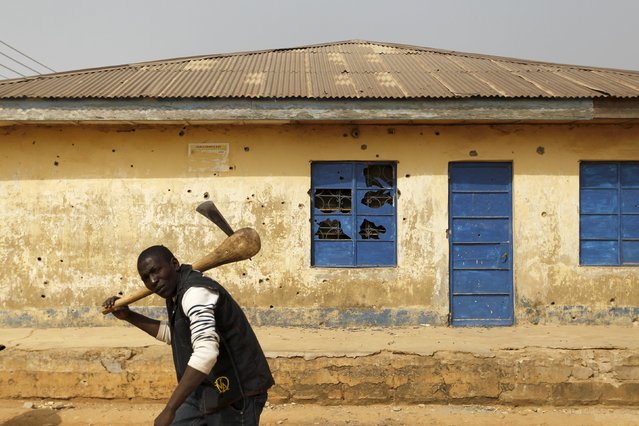
A man carrying an axe walks past a house marked with bullet holes in Gyallesu district after recent clashes between Shi'ites and the army in Zaria, Kaduna state, Nigeria, February 3, 2016. (Photo by Afolabi Sotunde/Reuters)

A man carrying an axe walks past a house marked with bullet holes in Gyallesu district after recent clashes between Shi'ites and the army in Zaria, Kaduna state, Nigeria, February 3, 2016. Sectarian tensions are rising in Nigeria's Muslim north, where hundreds of Shi'ites were killed in clashes with the army in the town of Zaria in December, according to Shi'ites and rights groups. Following the clashes, bulldozers sent by the state levelled Shi'ite shrines, a cemetery and offices in the deeply divided town. The region is already grappling with an insurgency waged by the jihadist Boko Haram group. (Photo by Afolabi Sotunde/Reuters)
Details
12 Feb 2016 12:52:00
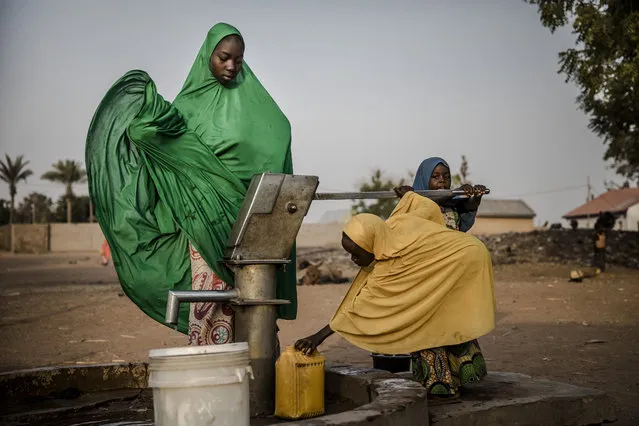
Camp dwellers pump water from a well at Malkohi refugee camp in Jimeta, Adamawa State, Nigeria on February 19, 2019, four days ahead of the country's General elections set for February 23 after a last-minute rescheduling. Malkohi is a camp for internal displaced who fled their homes as Boko Haram insurgents advanced across north-eastern Nigeria. From their homes on the outskirts of Yola, capital of presidential candidate Atiku Abubakar's home state Adamawa, Malkohi residents say they feel forgotten. (Photo by Luis Tato/AFP Photo)

Camp dwellers pump water from a well at Malkohi refugee camp in Jimeta, Adamawa State, Nigeria on February 19, 2019, four days ahead of the country's General elections set for February 23 after a last-minute rescheduling. Malkohi is a camp for internal displaced who fled their homes as Boko Haram insurgents advanced across north-eastern Nigeria. From their homes on the outskirts of Yola, capital of presidential candidate Atiku Abubakar's home state Adamawa, Malkohi residents say they feel forgotten. (Photo by Luis Tato/AFP Photo)
Details
02 Mar 2019 00:05:00
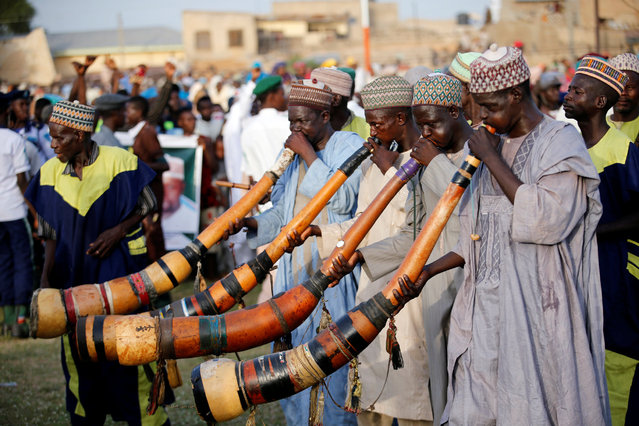
Traditional trumpeters perform during the durbar festival on the second day of Eid-al-Fitr celebrations in Nigeria's northern city of Kano, July 7, 2016. (Photo by Akintunde Akinleye/Reuters)

Traditional trumpeters perform during the durbar festival on the second day of Eid-al-Fitr celebrations in Nigeria's northern city of Kano, July 7, 2016. The Durbar festival begins with prayers, followed by a parade of the Emir and his entourage on horses, accompanied by music players, and ending at the Emir's palace. The Durbar festival had been in hausaland for more than 500 years. It was introduced by sarki muhammadu rumfa of kano in the late 14th century, as a way of demonstrating military power and skills before going to war. The festival is also an opportunity for local leaders to pay homage to emir throughout the jahi cheering. (Photo by Akintunde Akinleye/Reuters)
Details
09 Jul 2016 09:35:00
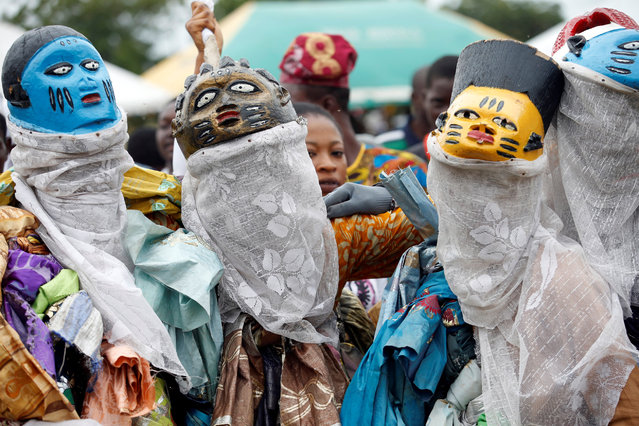
Masquerade performers participate in the annual Badagry cultural festival near the old slave port in Badagry, on the outskirts of Lagos, Nigeria August 27, 2016. (Photo by Akintunde Akinleye/Reuters)

Masquerade performers participate in the annual Badagry cultural festival near the old slave port in Badagry, on the outskirts of Lagos, Nigeria August 27, 2016. (Photo by Akintunde Akinleye/Reuters)
Details
29 Aug 2016 07:18:00