Loading...
Done
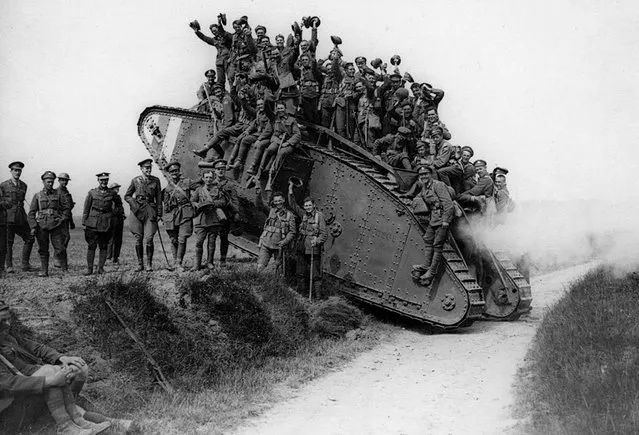
These black-and-white photos are taken from the new book “Armoured Warfare in the First World War 1916 – 1918” by Anthony Tucker-Jones and published by Pen & Sword Military. “Interestingly the British, French and Germans took completely different approaches with varying results”. The British military produced “Little Willie” in Autumn 1915 weighing 18 tonnes, which had a crew of two plus four gunners. “Inspired by a tracked artillery tractor “Little Willie” was referred to as a water tank – hence the name tank – to ensure secrecy”, said Anthony. “This led to the strange looking Mark I with its peculiar rhomboid shape, designed to cross trenches with guns in sponsons on either side. The Germans saw the tank as unchivalrous and were slow to grasp its utility. They favoured the Stormtrooper (specialist soldiers used to infiltrate enemy trenches) and artillery, not the tank”, said Anthony. “However, they didn’t hesitate to make use of captured British tanks. Although the tank helped secure victory and German soldiers dubbed it “Germany’s Downfall” the country was ultimately brought to its knees by the Allies blockade”. Here: British troops hitch a ride on a Mark IV after the massed tank fleet spearheading attack at Cambrai on November 20, 1917. (Photo by Anthony Tucker-Jones/Mediadrumworld.com)

These black-and-white photos are taken from the new book “Armoured Warfare in the First World War 1916 – 1918” by Anthony Tucker-Jones and published by Pen & Sword Military. Here: British troops hitch a ride on a Mark IV after the massed tank fleet spearheading attack at Cambrai on November 20, 1917. (Photo by Anthony Tucker-Jones/Mediadrumworld.com)
Details
23 Feb 2017 00:02:00
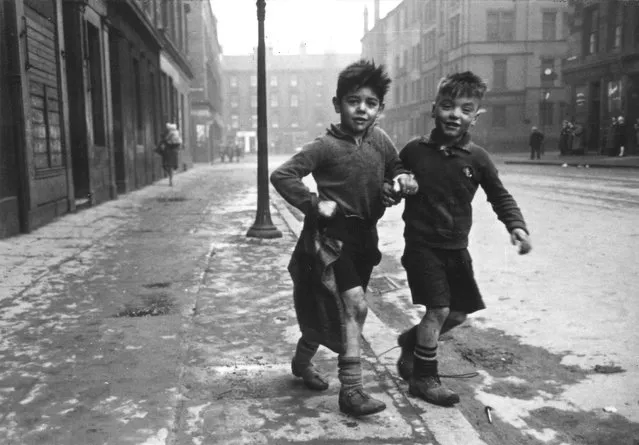
Two boys in the Gorbals area of Glasgow, UK on January 31, 1948. The Gorbals tenements were built quickly and cheaply in the 1840s, providing housing for Glasgow's burgeoning population of industrial workers. Conditions were appalling; overcrowding was standard and sewage and water facilities inadequate. The tenements housed about 40,000 people with up to eight family members sharing a single room, 30 residents sharing a toilet and 40 sharing a tap. By the time this photograph was taken 850 tenements had been demolished since 1920. Redevelopment of the area began in the late 1950s and the tenements were replaced with a modern tower block complex in the sixties. (Photo by Bert Hardy/Getty Images)

Two boys in the Gorbals area of Glasgow, UK on January 31, 1948. The Gorbals tenements were built quickly and cheaply in the 1840s, providing housing for Glasgow's burgeoning population of industrial workers. Conditions were appalling; overcrowding was standard and sewage and water facilities inadequate. The tenements housed about 40,000 people with up to eight family members sharing a single room, 30 residents sharing a toilet and 40 sharing a tap. By the time this photograph was taken 850 tenements had been demolished since 1920. Redevelopment of the area began in the late 1950s and the tenements were replaced with a modern tower block complex in the sixties. (Photo by Bert Hardy/Getty Images)
Details
09 Mar 2017 00:03:00
A participant in costume poses for a photo during a Halloween event in Kawasaki, south of Tokyo, Japan on October 28, 2018. (Photo by Toru Hanai/Reuters)

A participant in costume poses for a photo during a Halloween event in Kawasaki, south of Tokyo, Japan on October 28, 2018. (Photo by Toru Hanai/Reuters)
Details
01 Nov 2018 00:05:00
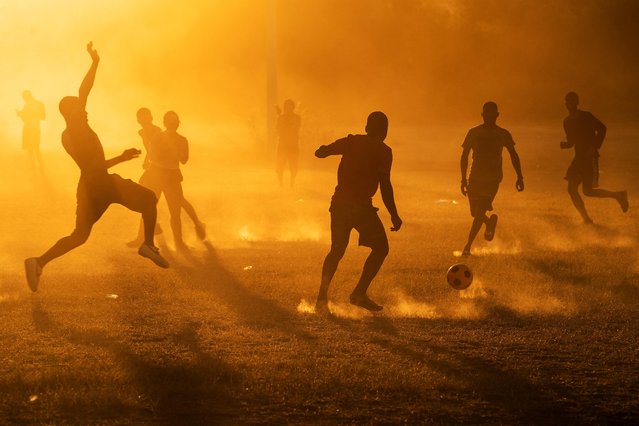
Migrants seeking asylum in the U.S., who returned to the Mexican side of the border to avoid deportation, play soccer in a makeshift migrant camp in Braulio Fernandez Ecological Park in Ciudad Acuna, Mexico, September 22, 2021. (Photo by Go Nakamura/Reuters)

Migrants seeking asylum in the U.S., who returned to the Mexican side of the border to avoid deportation, play soccer in a makeshift migrant camp in Braulio Fernandez Ecological Park in Ciudad Acuna, Mexico, September 22, 2021. (Photo by Go Nakamura/Reuters)
Details
23 Oct 2021 08:38:00
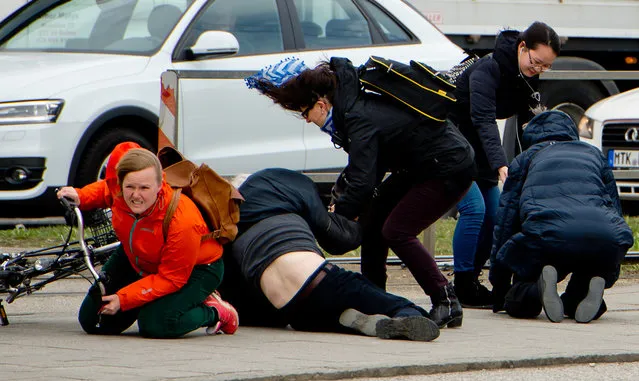
Pedestrians are falling after a gust of wind in Munich southern Germany, Tuesday, March 31, 2015. (Photo by Sven Hoppe/AP Photo/DPA)

Pedestrians are falling after a gust of wind in Munich southern Germany, Tuesday, March 31, 2015. One of the strongest storm fronts in years hit Germany on Tuesday, as Storm “Niklas” uncovered roofs, toppled scaffolding and caused severe disruption to rail services. (Photo by Sven Hoppe/AP Photo/DPA)
Details
01 Apr 2015 11:30:00
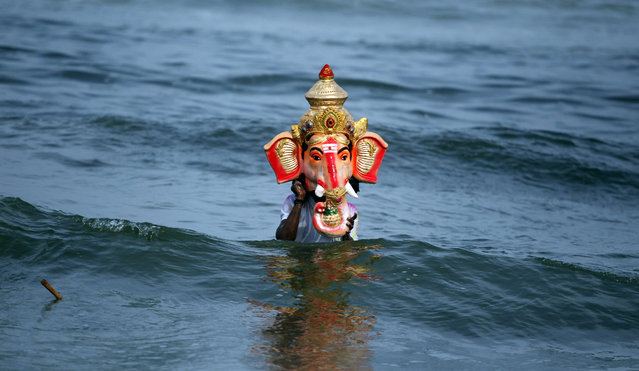
A man holds an idol of  Hindu God Ganesha before immersing it in the Bay of Bengal during Ganesh Chaturthi festival in Chennai, India, Sunday, September 20, 2015. The festival marks the birth of Ganesha who is widely worshiped by Hindus as the god of wisdom, prosperity and good fortune. (Photo by Arun Sankar K./AP Photo)

A man holds an idol of Hindu God Ganesha before immersing it in the Bay of Bengal during Ganesh Chaturthi festival in Chennai, India, Sunday, September 20, 2015. The festival marks the birth of Ganesha who is widely worshiped by Hindus as the god of wisdom, prosperity and good fortune. (Photo by Arun Sankar K./AP Photo)
Details
23 Sep 2015 08:04:00
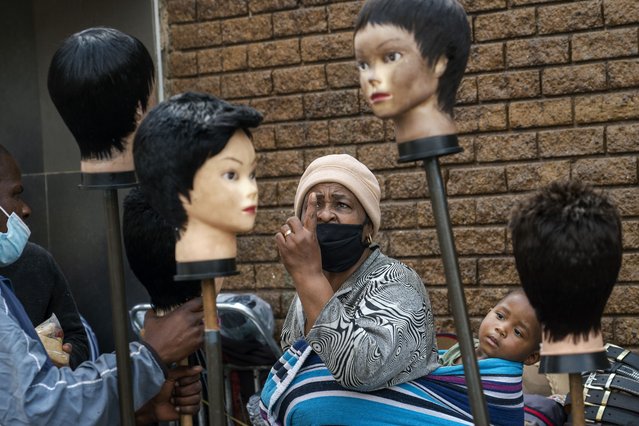
A woman carrying a child on her back looks at wigs on sale at the Baragwanath Taxi Rank in Soweto, South Africa, Wednesday, September 16, 2020. South African president Cyril Ramaphosa is scheduled to address the nation later in the day, as case numbers and death from COVID-19 hit the lowest in months. (Photo by Jerome Delay/AP Photo)

A woman carrying a child on her back looks at wigs on sale at the Baragwanath Taxi Rank in Soweto, South Africa, Wednesday, September 16, 2020. South African president Cyril Ramaphosa is scheduled to address the nation later in the day, as case numbers and death from COVID-19 hit the lowest in months. (Photo by Jerome Delay/AP Photo)
Details
24 Sep 2020 00:03:00
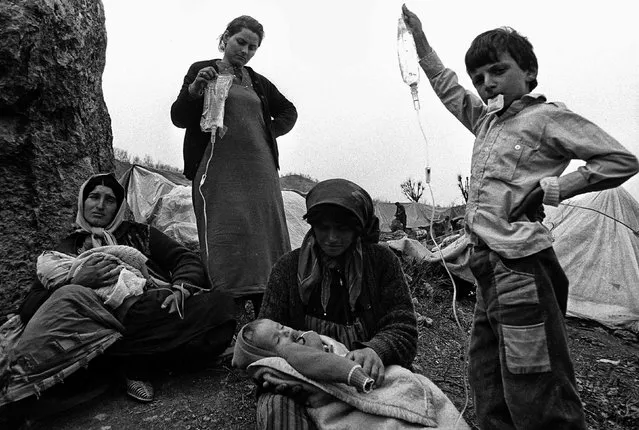
Iraqi Kurdish refugees wait with children in Cukurca refugee camp in Turkey April 8, 1991. Reuters photographers have chronicled Kurdish refugee crises over the years. In 1991 Srdjan Zivulovic documented refugees in Cukurca who had escaped a military operation by Saddam Hussein's government in Iraq aimed at “Arabising” Kurdish areas in the north. (Photo by Srdjan Zivulovic/Reuters)

Iraqi Kurdish refugees wait with children in Cukurca refugee camp in Turkey April 8, 1991. Reuters photographers have chronicled Kurdish refugee crises over the years. In 1991 Srdjan Zivulovic documented refugees in Cukurca who had escaped a military operation by Saddam Hussein's government in Iraq aimed at “Arabising” Kurdish areas in the north. Hundreds of thousands fled into Turkey and Iran. Images shot in recent months show familiar scenes as crowds of people flee Islamic State militants in Syria. There are as many as 30 million Kurds, spread through Turkey, Iraq, Syria and Iran. Most Kurds are Sunni Muslims, but tend to feel more loyalty to their Kurdishness, rather than their religion. (Photo by Srdjan Zivulovic/Reuters)
Details
14 Nov 2014 14:09:00