Loading...
Done
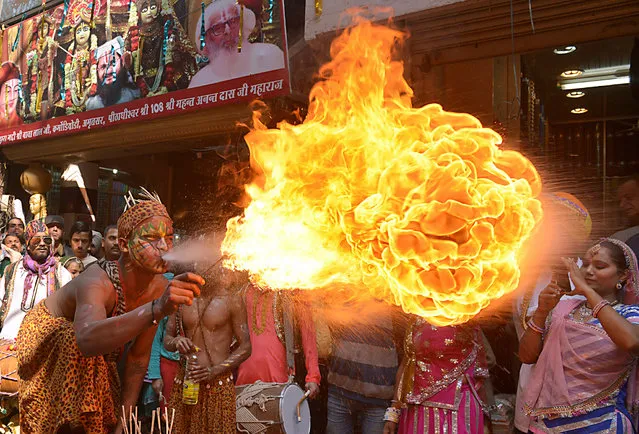
Indian dancers perform a fire breathing act during a procession to mark the 661st anniversary of the birth of Hindu guru Bawa Lal Dayal Maharaj in Amritsar on February 9, 2016. Bawa Lal Dayal Maharaj, a popular leader of his time, is especially revered by devotees of a temple in the town of Dhyanpur, some 45 kms north of Amritsar. (Photo by Narinder Nanu/AFP Photo)

Indian dancers perform a fire breathing act during a procession to mark the 661st anniversary of the birth of Hindu guru Bawa Lal Dayal Maharaj in Amritsar on February 9, 2016. Bawa Lal Dayal Maharaj, a popular leader of his time, is especially revered by devotees of a temple in the town of Dhyanpur, some 45 kms north of Amritsar. (Photo by Narinder Nanu/AFP Photo)
Details
13 Feb 2016 09:02:00
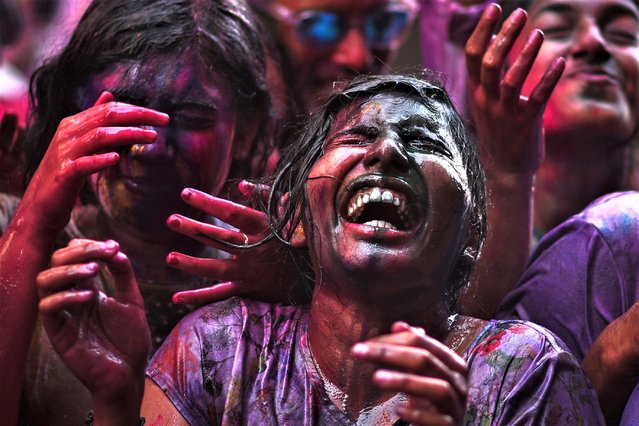
Revelers stained with colored powder cheer during the Holi festival celebrations in Chennai, India, 08 March 2023. Holi, also known as the “Festival Of Colors” is an ancient Indian Hindu festival symbolizing the victory of good over evil and marking the arrival of spring. It is celebrated with joyful gatherings during which revelers cover each other in colored powders. (Photo by Idrees Mohammed/EPA/EFE)

Revelers stained with colored powder cheer during the Holi festival celebrations in Chennai, India, 08 March 2023. Holi, also known as the “Festival Of Colors” is an ancient Indian Hindu festival symbolizing the victory of good over evil and marking the arrival of spring. It is celebrated with joyful gatherings during which revelers cover each other in colored powders. (Photo by Idrees Mohammed/EPA/EFE)
Details
01 Jul 2024 04:22:00
Revellers take part in the Holi Party Festival at the Niemeyer Center in Aviles, northern Spain, August 29, 2015. (Photo by Eloy Alonso/Reuters)

Revellers take part in the Holi Party Festival at the Niemeyer Center in Aviles, northern Spain, August 29, 2015. The event is inspired by the Hindu Holi spring festival of colour celebrated mostly in India but has recently spread to other countries. (Photo by Eloy Alonso/Reuters)
Details
30 Aug 2015 11:18:00
A Hindu devotee offers prayers at the Sangam, the confluence of three rivers – the Ganges, the Yamuna and the mythical Saraswati, to take a ritualistic bath during Makar Sankranti festival that falls during the annual traditional fair of Magh Mela festival, one of the most sacred pilgrimages in Hinduism, in Prayagraj, India. Friday, January 14, 2022. (Photo by Rajesh Kumar Singh/AP Photo)

A Hindu devotee offers prayers at the Sangam, the confluence of three rivers – the Ganges, the Yamuna and the mythical Saraswati, to take a ritualistic bath during Makar Sankranti festival that falls during the annual traditional fair of Magh Mela festival, one of the most sacred pilgrimages in Hinduism, in Prayagraj, India. Friday, January 14, 2022. (Photo by Rajesh Kumar Singh/AP Photo)
Details
26 Jan 2022 07:40:00
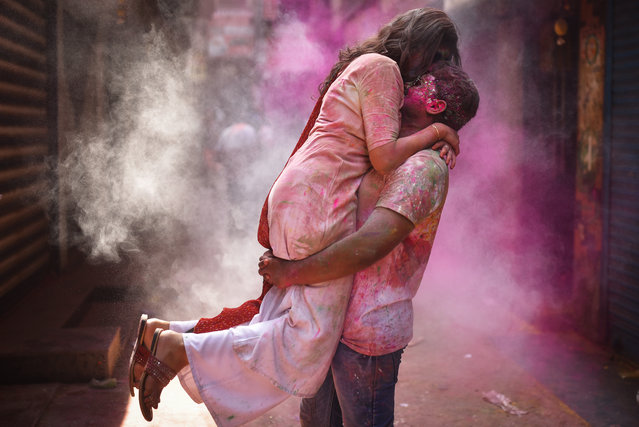
An Indian couple stained with colored powder enjoys a loving moment during the Holi festival celebrations in Chennai, India, 18 March 2022. Holi, also known as the “Festival Of Colors” is an ancient Indian Hindu festival symbolizing the victory of good over evil and marking the arrival of spring. It is held with joyful gatherings during which revelers cover each other in colored powders. (Photo by Idrees Mohammed/EPA/EFE)

An Indian couple stained with colored powder enjoys a loving moment during the Holi festival celebrations in Chennai, India, 18 March 2022. Holi, also known as the “Festival Of Colors” is an ancient Indian Hindu festival symbolizing the victory of good over evil and marking the arrival of spring. It is held with joyful gatherings during which revelers cover each other in colored powders. (Photo by Idrees Mohammed/EPA/EFE)
Details
23 Mar 2022 05:53:00
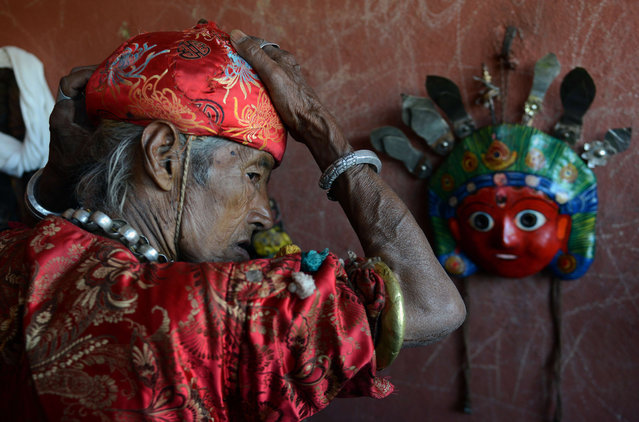
A Nepalese Hindu devotee dresses as a deity as he prepares to participate in festivities at the Shikali Temple during celebrations for the Shikali Jatra festival in the village of Khokana, on the outskirts of Kathmandu, on October 19, 2015. Local villagers, who normally do not celebrate the country's most famous festival of Dashain, celebrate the Shikali Jatra each year. (Photo by Prakash Mathema/AFP Photo)

A Nepalese Hindu devotee dresses as a deity as he prepares to participate in festivities at the Shikali Temple during celebrations for the Shikali Jatra festival in the village of Khokana, on the outskirts of Kathmandu, on October 19, 2015. Local villagers, who normally do not celebrate the country's most famous festival of Dashain, celebrate the Shikali Jatra each year. (Photo by Prakash Mathema/AFP Photo)
Details
22 Oct 2015 08:04:00
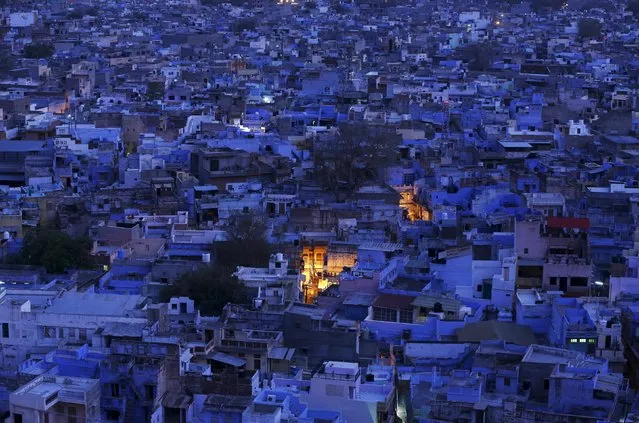
A general view of the residential area is pictured during dusk at Jodhpur in Rajasthan, April 5, 2015. Jodhpur, also known as the blue city in the desert Indian state of Rajasthan, which residents say originally, was used to show where the highest caste of priestly Hindus live, who wanted to set them apart from the rest of the population. Later the rest of the population followed suit. Another reason for the city to be blue is to keep the buildings cool during the summers, local residents said. (Photo by Adnan Abidi/Reuters)

A general view of the residential area is pictured during dusk at Jodhpur in Rajasthan, April 5, 2015. Jodhpur, also known as the blue city in the desert Indian state of Rajasthan, which residents say originally, was used to show where the highest caste of priestly Hindus live, who wanted to set them apart from the rest of the population. Later the rest of the population followed suit. Another reason for the city to be blue is to keep the buildings cool during the summers, local residents said. (Photo by Adnan Abidi/Reuters)
Details
12 Apr 2015 08:27:00
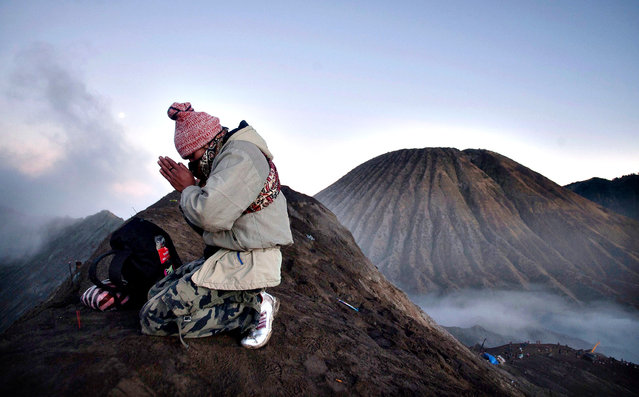
A Tengger tribesman prays at Mount Bromo during the annual Kasada ceremony in East Java on August 12, 2014. The Kasada ceremony is a festival held every 14th day of the Kasada month in the traditional Hindu lunar calender to honour Sang Hyang Widhi (God Almighty) and is based on the legend of Roro Anteng and Joko Seger from the Majapahit Kingdom, from which their Tengger tribe name originates. (Photo by Juni Kriswanto/AFP Photo)

A Tengger tribesman prays at Mount Bromo during the annual Kasada ceremony in East Java on August 12, 2014. The Kasada ceremony is a festival held every 14th day of the Kasada month in the traditional Hindu lunar calender to honour Sang Hyang Widhi (God Almighty) and is based on the legend of Roro Anteng and Joko Seger from the Majapahit Kingdom, from which their Tengger tribe name originates. Hundreds of worshippers from the Tengger tribe offer food and livestock as a symbolic sacrifice which they throw into the crater for the blessings of safety and prosperity to their familyies and community. (Photo by Juni Kriswanto/AFP Photo)
Details
16 Aug 2014 11:19:00