Loading...
Done
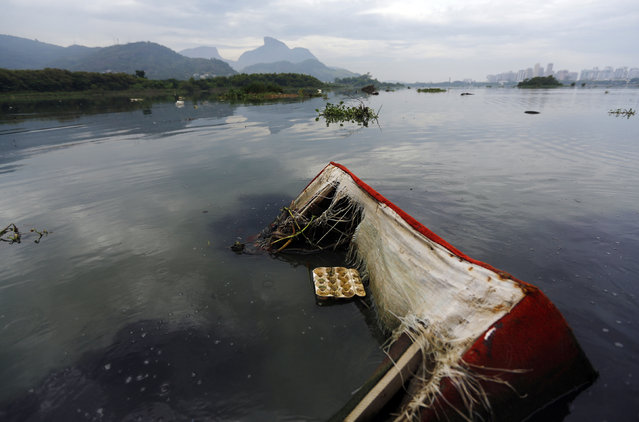
A sofa floats in the polluted waters of Jacarepagua Lagoon, during a press tour in Rio de Janeiro, March 9, 2015. A press tour was organised by biologist Mario Moscatelli, to call attention to pollution on the waters of the lagoons which surround the Rio 2016 Olympic Park. (Photo by Ricardo Moraes/Reuters)

A sofa floats in the polluted waters of Jacarepagua Lagoon, during a press tour in Rio de Janeiro, March 9, 2015. A press tour was organised by biologist Mario Moscatelli, to call attention to pollution on the waters of the lagoons which surround the Rio 2016 Olympic Park. (Photo by Ricardo Moraes/Reuters)
Details
09 Aug 2015 11:04:00
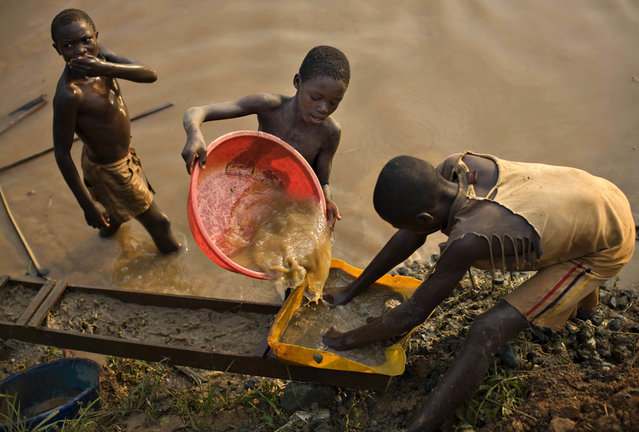
Boys pan for gold on a riverside at Iga Barriere, 25 km (15 miles) from Bunia, in the resource-rich Ituri region of eastern Congo February 16, 2009. Ituri is one of many areas of the country to have experienced bitter ethnic conflict between rival tribes in recent years. Massacres have left tens of thousands dead. It is this fighting that led U.S. authorities to take the unprecedented step of naming Congo in section 1502 of the Dodd-Frank financial regulation act, which says U.S.-listed companies that source gold, tungsten, tantalum and tin from Congo or its neighbours must assure the U.S. stock exchange regulator that their business is not helping fund conflict. (Photo by Finbarr O'Reilly/Reuters)

Boys pan for gold on a riverside at Iga Barriere, 25 km (15 miles) from Bunia, in the resource-rich Ituri region of eastern Congo February 16, 2009. Ituri is one of many areas of the country to have experienced bitter ethnic conflict between rival tribes in recent years. Massacres have left tens of thousands dead. It is this fighting that led U.S. authorities to take the unprecedented step of naming Congo in section 1502 of the Dodd-Frank financial regulation act, which says U.S.-listed companies that source gold, tungsten, tantalum and tin from Congo or its neighbours must assure the U.S. stock exchange regulator that their business is not helping fund conflict. (Photo by Finbarr O'Reilly/Reuters)
Details
12 Nov 2016 10:24:00
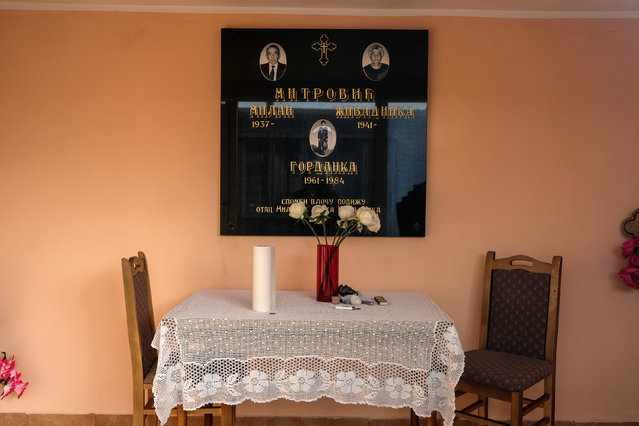
Pictures of deceased people are seen inside a chapel at a cemetery in the village of Smoljinac, Serbia, October 25, 2016. (Photo by Marko Djurica/Reuters)

Pictures of deceased people are seen inside a chapel at a cemetery in the village of Smoljinac, Serbia, October 25, 2016. From a distance, the cemetery in the eastern Serbian village of Smoljinac looks like a residential neighbourhood eerily placed among graves. But once inside the grounds, after passing a section with the usual stone slabs, visitors find rows of small bungalows painted in pastel colours. They have one or two rooms, large windows and ornate plaques – some inside, some outside – memorialising the deceased. These are the burial chapels of Smoljinac, cosy cabins with a furnished room inside, a storage place for wreaths and funeral paraphernalia, and the family crypt below. Some even have electric power inside. (Photo by Marko Djurica/Reuters)
Details
12 Nov 2016 10:37:00
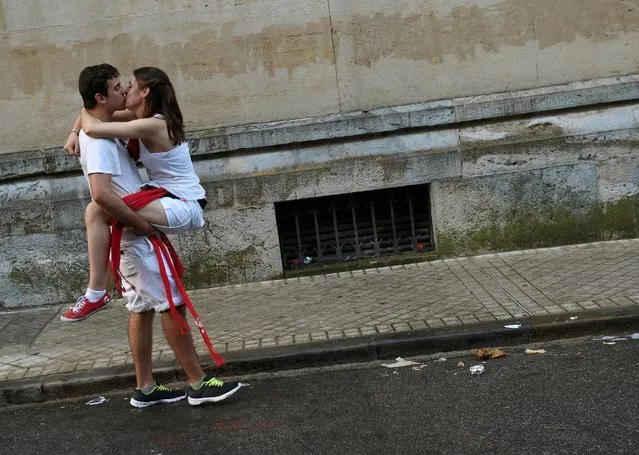
A couple embraces at the San Fermin festival in Pamplona, northern Spain, July 10, 2016. (Photo by Eloy Alonso/Reuters)

A couple embraces at the San Fermin festival in Pamplona, northern Spain, July 10, 2016. (Photo by Eloy Alonso/Reuters)
Details
11 Jul 2016 12:41:00
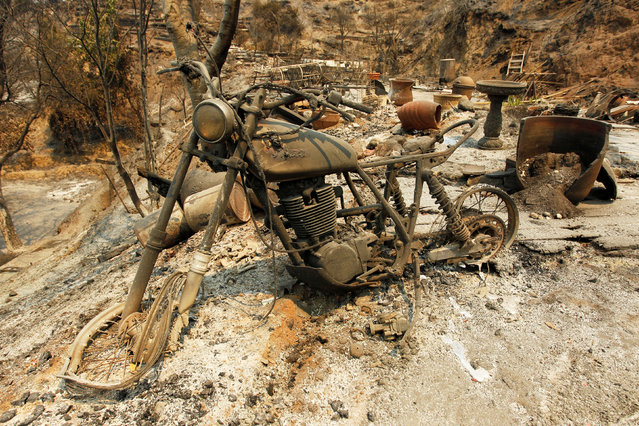
A motorcycle sits at the site of a destroyed home after the Soberanes Fire burned through the Palo Colorado area, north of Big Sur, California, July 31, 2016. (Photo by Michael Fiala/Reuters)

A motorcycle sits at the site of a destroyed home after the Soberanes Fire burned through the Palo Colorado area, north of Big Sur, California, July 31, 2016. (Photo by Michael Fiala/Reuters)
Details
02 Aug 2016 07:53:00
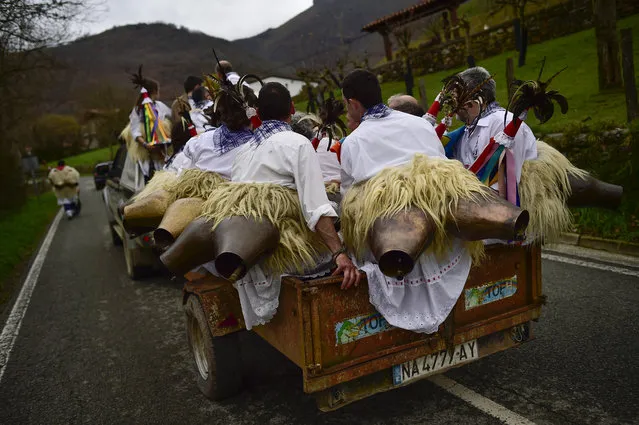
Joaldunaks return in a trailer to their town at the end of Carnival between of the Pyrenees villages of Ituren and Zubieta, northern Spain, Monday, February 1, 2016. In one of the most ancient carnivals in Europe, dating from before the Roman empire, companies of Joaldunak (cowbells) made up of residents of two towns, Ituren and Zubieta, parade the streets costumed in sandals, lace petticoats, sheepskins around the waist and shoulders, coloured neckerchiefs, conical caps with ribbons and a hyssop of horsehair in their right hands and cowbells hung across their lower back. (Photo by Alvaro Barrientos/AP Photo)

Joaldunaks return in a trailer to their town at the end of Carnival between of the Pyrenees villages of Ituren and Zubieta, northern Spain, Monday, February 1, 2016. In one of the most ancient carnivals in Europe, dating from before the Roman empire, companies of Joaldunak (cowbells) made up of residents of two towns, Ituren and Zubieta, parade the streets costumed in sandals, lace petticoats, sheepskins around the waist and shoulders, coloured neckerchiefs, conical caps with ribbons and a hyssop of horsehair in their right hands and cowbells hung across their lower back. (Photo by Alvaro Barrientos/AP Photo)
Details
02 Feb 2016 13:07:00
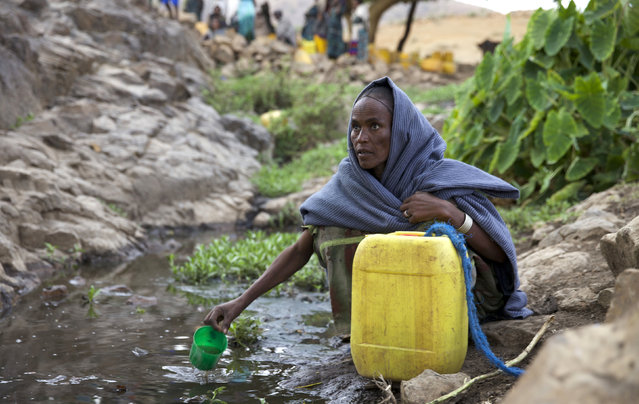
A woman collects water from a stream outside the village of Tsemera in Ethiopia's northern Amhara region, February 13, 2016. (Photo by Katy Migiro/Reuters)

A woman collects water from a stream outside the village of Tsemera in Ethiopia's northern Amhara region, February 13, 2016. (Photo by Katy Migiro/Reuters)
Details
02 Mar 2016 13:13:00
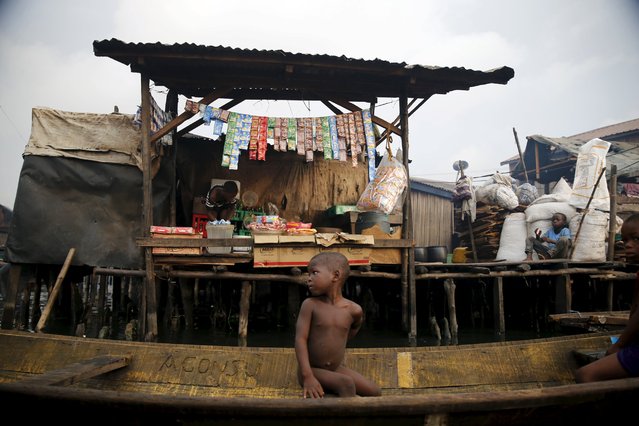
A boy sits in a canoe in front of a shed built on a raft in the Makoko fishing community on the Lagos Lagoon, Nigeria February 29, 2016. Makoko, a vast slum of houses on stilts in a Lagos lagoon, now boasts a new school – pyramid-shaped, floating and capable of withstanding the waterways' extreme weather, it is a beacon of hope for the nearly 100,000 Nigerians who live there.  (Photo by Akintunde Akinleye/Reuters)

A boy sits in a canoe in front of a shed built on a raft in the Makoko fishing community on the Lagos Lagoon, Nigeria February 29, 2016. In Makoko, a sprawling slum of Nigeria's megacity Lagos, a floating school capable of holding up to a hundred pupils has since November brought free education to the waterways known as the Venice of Lagos. It offers the chance of social mobility for youngsters who, like most of the city's 21 million inhabitants, lack a reliable electricity and water supply and whose water-based way of life is threatened by climate change as well as rapid urbanisation. (Photo by Akintunde Akinleye/Reuters)
Details
05 Mar 2016 12:01:00