Loading...
Done
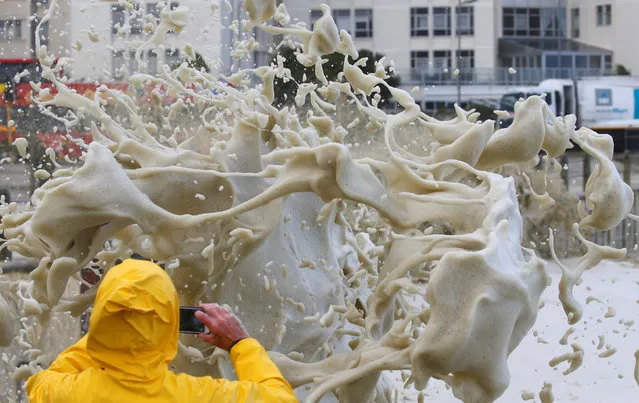
A man takes a picture of sea spray as storms hit Cape Town, South Africa, June 7, 2017. (Photo by Mike Hutchings/Reuters)

A man takes a picture of sea spray as storms hit Cape Town, South Africa, June 7, 2017. (Photo by Mike Hutchings/Reuters)
Details
10 Jun 2017 08:44:00
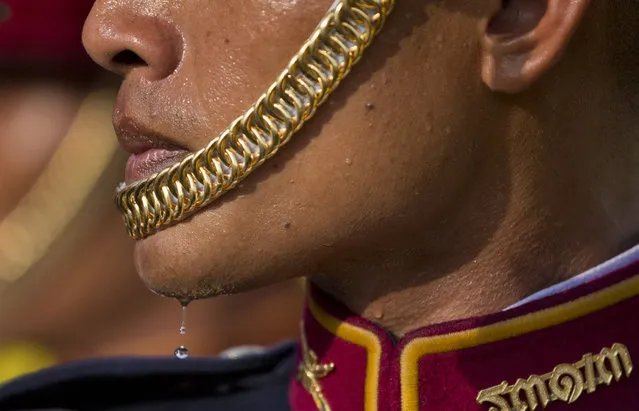
A solders in ceremonial attire sweats as he waits outside Suddhaisavarya Prasad Hall, in which Thailand's King Maha Vajiralongkorn scheduled to grant a public audience in Bangkok, Thailand, Monday, May 6, 2019. King Maha Vajiralongkorn was officially crowned amid the splendour of the country's Grand Palace, taking the central role in an elaborate centuries-old royal ceremony that was last held almost seven decades ago. (Photo by Gemunu Amarasinghe/AP Photo)

A solders in ceremonial attire sweats as he waits outside Suddhaisavarya Prasad Hall, in which Thailand's King Maha Vajiralongkorn scheduled to grant a public audience in Bangkok, Thailand, Monday, May 6, 2019. King Maha Vajiralongkorn was officially crowned amid the splendour of the country's Grand Palace, taking the central role in an elaborate centuries-old royal ceremony that was last held almost seven decades ago. (Photo by Gemunu Amarasinghe/AP Photo)
Details
14 May 2019 00:01:00
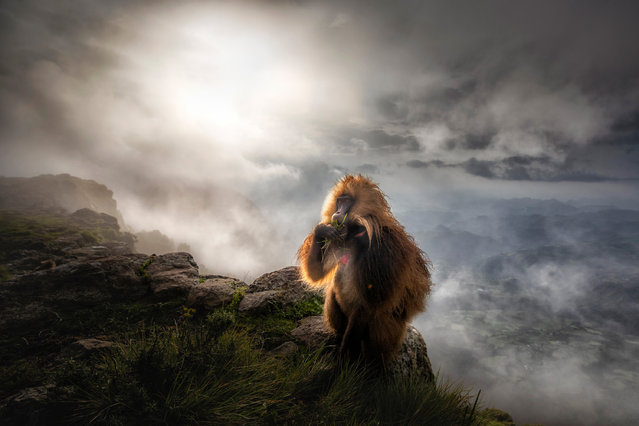
Highly commended, mammals: Gelada after the storm – Marco Gaiotti (Italy). “Gelada baboons are the only monkey species in the world that feed on grasses. They are native to the tableland of Ethiopia. Every morning large family groups wander from their sleeping places in the steep rock face, up to 1,000 metres high, to the feeding grounds at the tablelands. This image clearly depicts their feeding strategy: they pull out bunches of grass, sort the stalks and then lift them to their mouth. This shot was taken towards the end of the rainy season after a heavy storm”. (Photo by Marco Gaiotti/2019 GDT European Wildlife Photographer of the Year)

Highly commended, mammals: Gelada after the storm – Marco Gaiotti (Italy). “Gelada baboons are the only monkey species in the world that feed on grasses. They are native to the tableland of Ethiopia. Every morning large family groups wander from their sleeping places in the steep rock face, up to 1,000 metres high, to the feeding grounds at the tablelands. This image clearly depicts their feeding strategy: they pull out bunches of grass, sort the stalks and then lift them to their mouth. This shot was taken towards the end of the rainy season after a heavy storm”. (Photo by Marco Gaiotti/2019 GDT European Wildlife Photographer of the Year)
Details
31 Oct 2019 00:03:00
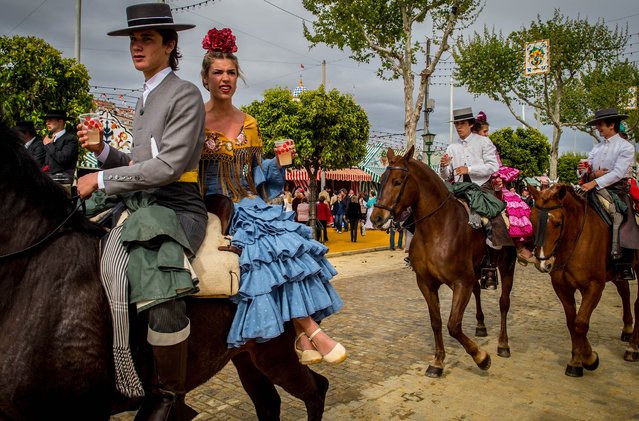
Participants in traditional dress ride on horseback as they enjoy the atmosphere at the Feria de Abril (April's Fair) on April 12, 2016 in Seville, Spain. The Feria de Abril has a history that dates back to 1857 and takes place a fortnight after Easter each year. The origin of the fair was a cattle market but the event quickly turned its goal from commerce to having fun. More than 1 million local and international participants are expected to attend the Feria de Abril. (Photo by David Ramos/Getty Images)

Participants in traditional dress ride on horseback as they enjoy the atmosphere at the Feria de Abril (April's Fair) on April 12, 2016 in Seville, Spain. The Feria de Abril has a history that dates back to 1857 and takes place a fortnight after Easter each year. The origin of the fair was a cattle market but the event quickly turned its goal from commerce to having fun. More than 1 million local and international participants are expected to attend the Feria de Abril. (Photo by David Ramos/Getty Images)
Details
14 Apr 2016 12:25:00
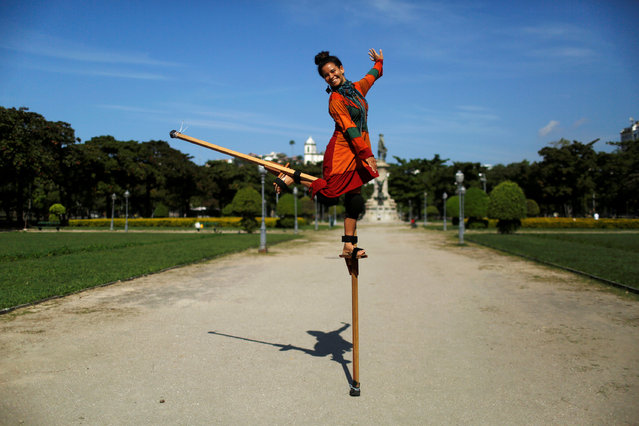
Raquel Poti, a 32-year-old street artist, poses at a park in Rio de Janeiro, Brazil, June 25, 2016. Raquel thinks the Olympics promotes a lifestyle that combines sports, culture and education. She is concerned about the large investment for the event while the population needs improvements in basic services. (Photo by Pilar Olivares/Reuters)

Just a week before Rio de Janeiro hosts South America's first Olympics, city residents expressed mixed feelings about the cost and security of the Games, while holding out hope they will bring joy to a nation facing economic and political crises. The conflicted thoughts mirror a recent survey by the Datafolha polling group showing that half of Brazilians were opposed to holding the Games, while 63 percent think the costs of hosting the event will outweigh benefits. (Photo by Pilar Olivares/Reuters)
Details
03 Aug 2016 11:51:00
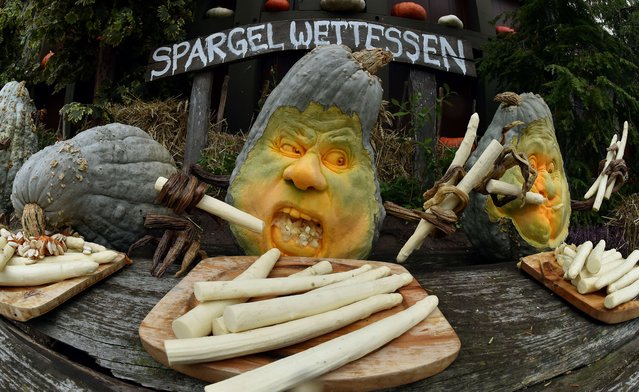
An “asparagus eating contest” made of asparagus and carved pumpkins is on display on the sidelines of the Giant Vegetable Competition in Klaistow, northeastern Germany, on September 20, 2015. The vegetable giants compete in seven categories. (Photo by Bernd Settnik/AFP Photo)

An “asparagus eating contest” made of asparagus and carved pumpkins is on display on the sidelines of the Giant Vegetable Competition in Klaistow, northeastern Germany, on September 20, 2015. The vegetable giants compete in seven categories. (Photo by Bernd Settnik/AFP Photo)
Details
22 Sep 2015 11:25:00
On August 31, 2012, a long filament of solar material that had been hovering in the sun's atmosphere, the corona, erupted out into space at 4:36 p.m. EDT. The coronal mass ejection, or CME, traveled at over 900 miles per second. The CME did not travel directly toward Earth, but did connect with Earth's magnetic environment, or magnetosphere, causing aurora to appear on the night of Monday, September 3. (Photo by NASA/GSFC/SDO)

On August 31, 2012, a long filament of solar material that had been hovering in the sun's atmosphere, the corona, erupted out into space at 4:36 p.m. EDT. The coronal mass ejection, or CME, traveled at over 900 miles per second. The CME did not travel directly toward Earth, but did connect with Earth's magnetic environment, or magnetosphere, causing aurora to appear on the night of Monday, September 3. (Photo by NASA/GSFC/SDO via The Atlantic)
Details
14 Sep 2012 09:01:00
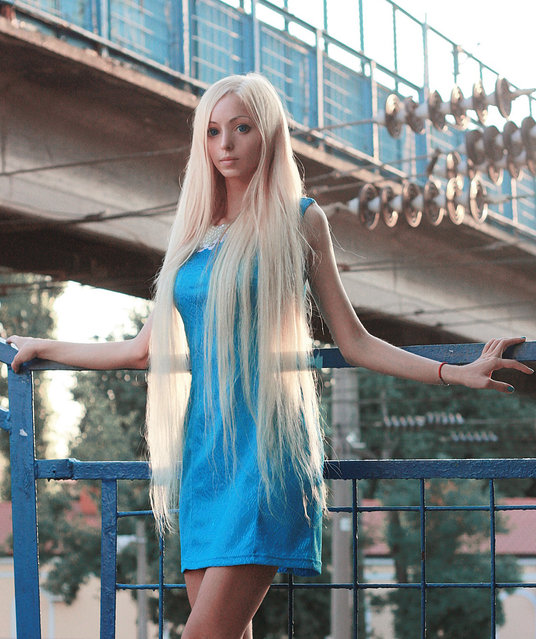
Real life doll Alina Kovalevskaya poses for a photograph on May 29, 2014 in Odessa, Ukraine. Alina Kovalevskaya is a walking, talking, breathing living doll on the lookout for her real-life Ken. (Photo by Aleksey Solodunov/Barcroft Media)

Real life doll Alina Kovalevskaya poses for a photograph on May 29, 2014 in Odessa, Ukraine. Alina Kovalevskaya is a walking, talking, breathing living doll on the lookout for her real-life Ken. The 21-year-old is from Odessa, Ukraine – the same city as real-life Barbie Valeria Lukyanova, who has made headlines around the world for her unique look and controversial opinions. The pair were friends, but their relationship has since soured. Alina has made a splash online, with her YouTube videos showing off her doll-like charms attracting hundreds of thousands of views. (Photo by Aleksey Solodunov/Barcroft Media)
Details
13 Jul 2014 11:14:00