Loading...
Done
Female sea lion “Sarasa” holds a hose with her mouse to help a trainer clean her room at the Shinagawa Aqua Stadium aquarium in Tokyo on December 30, 2014. The aquarium is carrying out year-end general cleaning of their facilities. (Photo by Yoshikazu Tsuno/AFP Photo)

Female sea lion “Sarasa” holds a hose with her mouse to help a trainer clean her room at the Shinagawa Aqua Stadium aquarium in Tokyo on December 30, 2014. The aquarium is carrying out year-end general cleaning of their facilities. (Photo by Yoshikazu Tsuno/AFP Photo)
Details
03 Jan 2015 13:40:00
A Sadhu or a Hindu holy man offers prayers while sitting inside a circle of burning “Upale” (or dried cow dung cakes) on the occasion to mark the Basant or spring festival, on the banks of river Ganga in the northern Indian city of Allahabad January 24, 2015. Basant is celebrated mainly in the northern Indian states marking the start of the spring season. (Photo by Jitendra Prakash/Reuters)

A Sadhu or a Hindu holy man offers prayers while sitting inside a circle of burning “Upale” (or dried cow dung cakes) on the occasion to mark the Basant or spring festival, on the banks of river Ganga in the northern Indian city of Allahabad January 24, 2015. Basant is celebrated mainly in the northern Indian states marking the start of the spring season. (Photo by Jitendra Prakash/Reuters)
Details
25 Jan 2015 09:07:00
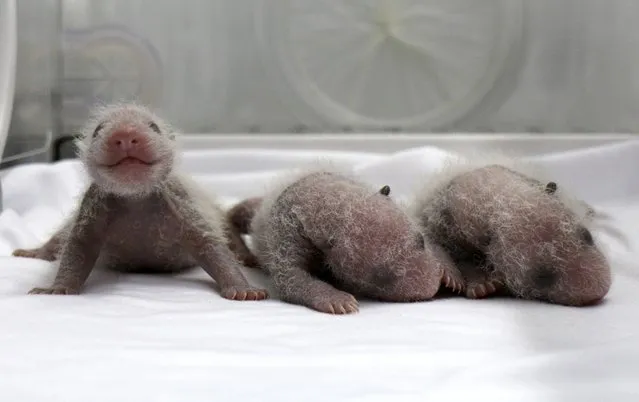
Newborn giant panda triplets, which were born to giant panda Juxiao (not pictured), are seen inside an incubator at the Chimelong Safari Park in Guangzhou, Guangdong province August 9, 2014. (Photo by Reuters/China Daily)

Newborn giant panda triplets, which were born to giant panda Juxiao (not pictured), are seen inside an incubator at the Chimelong Safari Park in Guangzhou, Guangdong province August 9, 2014. According to local media, this is the fourth set of giant panda triplets born with the help of artificial insemination procedures in China, and the birth is seen as a miracle due to the low reproduction rate of giant pandas. (Photo by Reuters/China Daily)
Details
13 Aug 2014 09:57:00
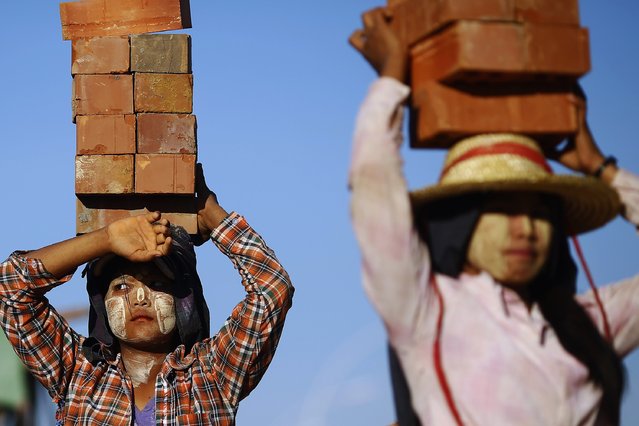
Construction workers carry bricks on their heads near the country's parliament building in Naypyitaw November 11, 2014. Yangon lost its status as Myanmar's capital in 2005, after the former military junta carved a new seat of government from a parched wilderness some 380 km (236 miles) to the north and called it Naypyitaw (“Abode of Kings”). (Photo by Damir Sagolj/Reuters)

Construction workers carry bricks on their heads near the country's parliament building in Naypyitaw November 11, 2014. Yangon lost its status as Myanmar's capital in 2005, after the former military junta carved a new seat of government from a parched wilderness some 380 km (236 miles) to the north and called it Naypyitaw (“Abode of Kings”). (Photo by Damir Sagolj/Reuters)
Details
15 Nov 2014 12:29:00
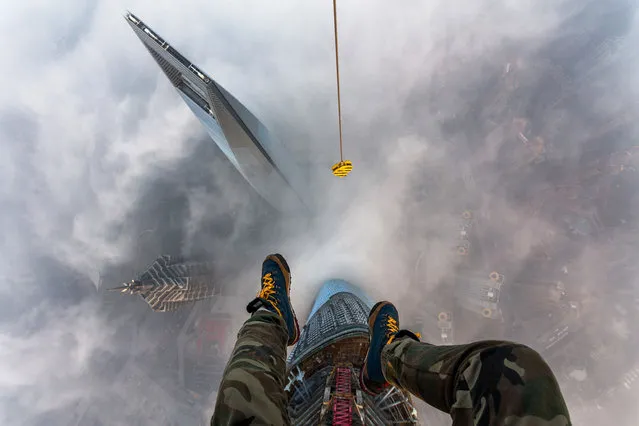
Vitaly Raskalov's feet dangle from the top of the Shanghai Tower, high above the Shanghai World Financial Centre. (Photo by Vitaly Raskalov/Caters News Agency)

China’s new tallest building has received unexpected publicity thanks to Russian free climbers Vadim Makhorov and Vitaly Raskalov. The pair took two hours to climb 650 metres up the unfinished Shanghai Tower. They did not use safety equipment on their ascent to the top of a crane attached to the tower, from where they took these extraordinary pictures of Shanghai. Photo: Vitaly Raskalov's feet dangle from the top of the Shanghai Tower, high above the Shanghai World Financial Centre. (Photo by Vitaly Raskalov/Caters News Agency)
Details
18 Feb 2014 14:47:00
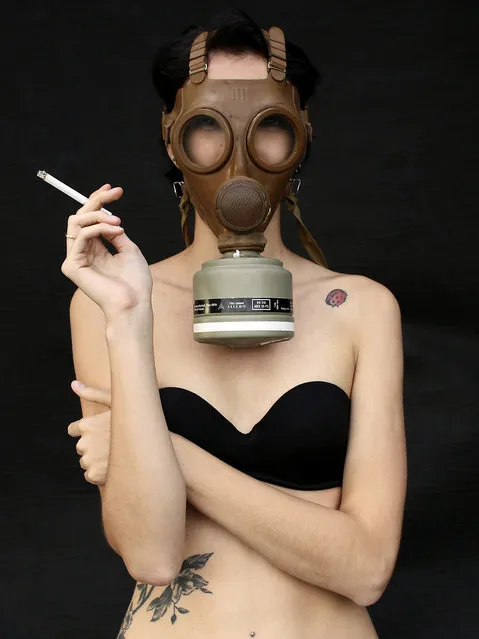
“É proibido proibir”. (Photo by Thais Nuzzi)

“É proibido proibir”. (Photo by Thais Nuzzi)
Details
07 Jun 2015 11:50:00
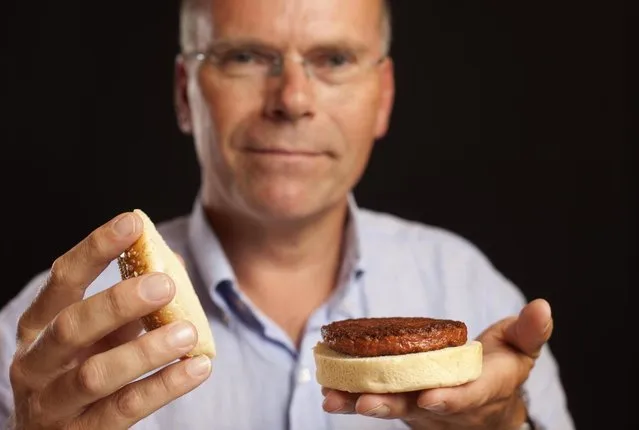
In this handout image provided by Ogilvy, a burger made from cultured beef, which has been developed by Professor Mark Post of Maastricht University in the Netherlands (pictured) is shown to the media during a press conference on August 5, 2013 in London, England. Cultured Beef could help solve the coming food crisis and combat climate change with commercial production of Cultured Beef beginning within ten to twenty years. (Photo by David Parry via Getty Images)

In this handout image provided by Ogilvy, a burger made from cultured beef, which has been developed by Professor Mark Post of Maastricht University in the Netherlands (pictured) is shown to the media during a press conference on August 5, 2013 in London, England. The in-vitro burger, cultured from cattle stem cells, the first example of what its creator says could provide an answer to global food shortages and help combat climate change, was fried in a pan and tasted by two volunteers. The burger is the result of years of research by Dutch scientist Mark Post, a vascular biologist at the University of Maastricht, who is working to show how meat grown in petri dishes might one day be a true alternative to meat from livestock.The meat in the burger has been made by knitting together around 20,000 strands of protein that has been cultured from cattle stem cells in Post's lab. (Photo by David Parry)

Details
06 Aug 2013 08:48:00
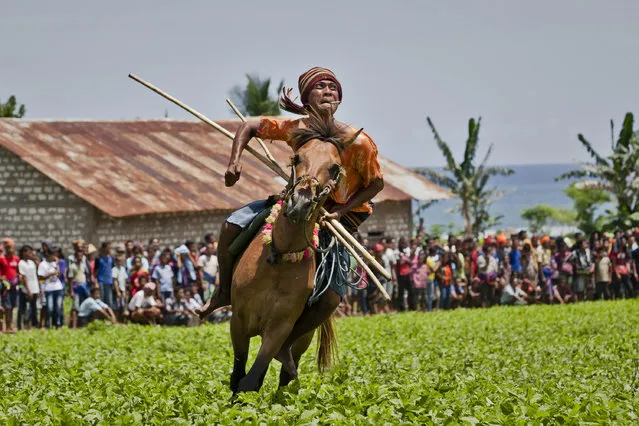
A Pasola rider reacts after throwing his spear during the Pasola war festival at Ratenggaro village on March 22, 2014 in Sumba Island, Indonesia. The Pasola Festival is an important annual event to welcome the new harvest season, which coincides with the arrival of  “Nyale” sea worms during February or March each year. Pasola, an ancient ritual fighting game, involves two teams of men on horseback charging towards each other while trying to hit their rivals with “pasol” javelins and avoid being hit themselves. (Photo by Ulet Ifansasti/Getty Images)

A Pasola rider reacts after throwing his spear during the Pasola war festival at Ratenggaro village on March 22, 2014 in Sumba Island, Indonesia. The Pasola Festival is an important annual event to welcome the new harvest season, which coincides with the arrival of “Nyale” sea worms during February or March each year. Pasola, an ancient ritual fighting game, involves two teams of men on horseback charging towards each other while trying to hit their rivals with “pasol” javelins and avoid being hit themselves. (Photo by Ulet Ifansasti/Getty Images)
Details
25 Mar 2014 07:54:00