Loading...
Done
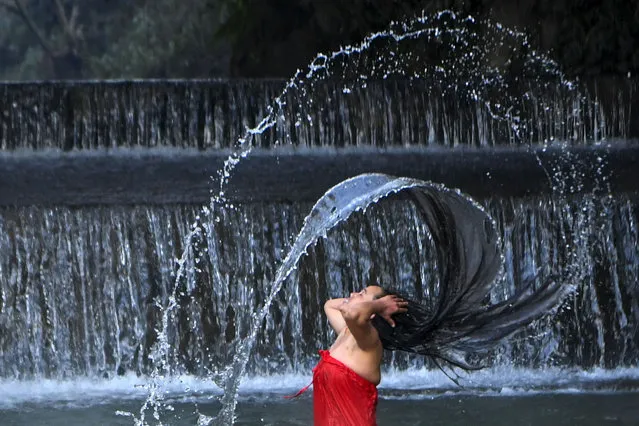
A Hindu devotee bathes in the Shali River during the Swasthani Brata Katha festival, marked with auspicious bathing in water bodies hoping for a prosperous life and conjugal happiness, on the outskirts of Kathmandu on January 28, 2021. (Photo by Prakash Mathema/AFP Photo)

A Hindu devotee bathes in the Shali River during the Swasthani Brata Katha festival, marked with auspicious bathing in water bodies hoping for a prosperous life and conjugal happiness, on the outskirts of Kathmandu on January 28, 2021. (Photo by Prakash Mathema/AFP Photo)
Details
01 Mar 2021 08:42:00
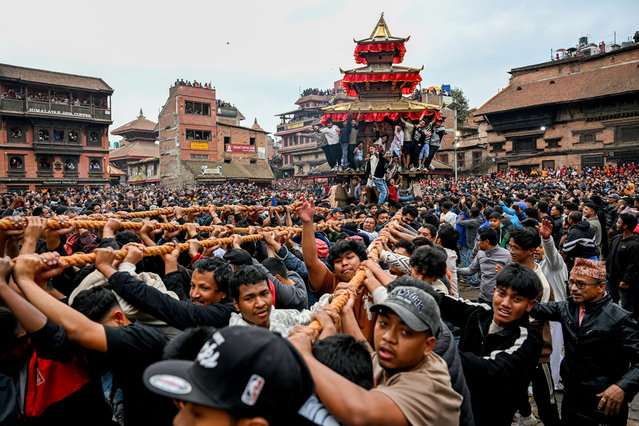
Devotees pull a wooden chariot carrying an idol of the Hindu deity Bhairav during 'Bisket Jatra' festival to mark the Nepali New Year, in Bhaktapur, on the outskirts of Kathmandu, on April 10, 2025. (Photo by Prakash Mathema/AFP Photo)

Devotees pull a wooden chariot carrying an idol of the Hindu deity Bhairav during 'Bisket Jatra' festival to mark the Nepali New Year, in Bhaktapur, on the outskirts of Kathmandu, on April 10, 2025. (Photo by Prakash Mathema/AFP Photo)
Details
26 Apr 2025 02:12:00
Women in Kimono holding an umbrella walk on a street at Ginza shopping district in Tokyo, Japan, March 31, 2016. (Photo by Yuya Shino/Reuters)

Women in Kimono holding an umbrella walk on a street at Ginza shopping district in Tokyo, Japan, March 31, 2016. (Photo by Yuya Shino/Reuters)
Details
05 Sep 2016 11:09:00
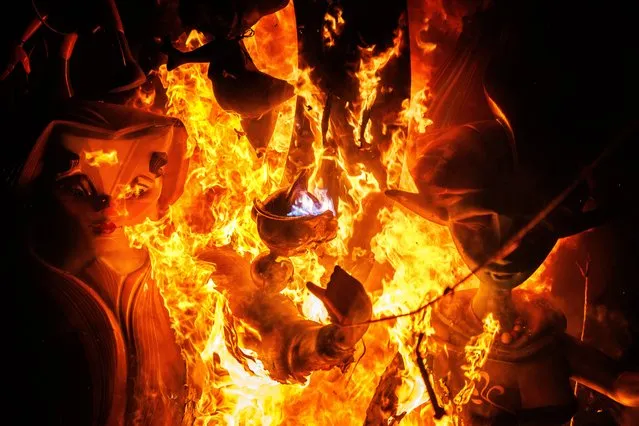
Papier-mache sculptures, also known as “ninots”, burn during the “Nit de la Crema” (Fire Night) of the Fallas Festival in Valencia, eastern Spain, 19 March 2024. Fallas is a fortnight-long fiesta in which installations of parodic papier-mache, cardboard, and wooden sculptures are traditionally burnt every year on the last day of the event in the so-called “Crema” to end the festivities. (Photo by Biel Alino/EPA/EFE)

Papier-mache sculptures, also known as “ninots”, burn during the “Nit de la Crema” (Fire Night) of the Fallas Festival in Valencia, eastern Spain, 19 March 2024. Fallas is a fortnight-long fiesta in which installations of parodic papier-mache, cardboard, and wooden sculptures are traditionally burnt every year on the last day of the event in the so-called “Crema” to end the festivities. (Photo by Biel Alino/EPA/EFE)
Details
29 Apr 2024 05:27:00
A rare fog bow over Needles Headland on the Isle of Wight in UK late Wednesday afternoon, March 26, 2025. (Photo by Paul Jacobs/Picture Exclusive)

A rare fog bow over Needles Headland on the Isle of Wight in UK late Wednesday afternoon, March 26, 2025. (Photo by Paul Jacobs/Picture Exclusive)
Details
18 Oct 2025 04:25:00
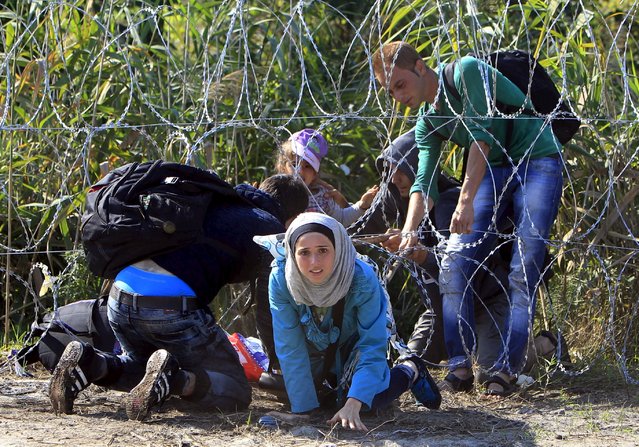
A Syrian migrant family enters Hungary at the border with Serbia near Roszke, Hungary August 28, 2015. (Photo by Bernadett Szabo/Reuters)

A Syrian migrant family enters Hungary at the border with Serbia near Roszke, Hungary August 28, 2015. As Europe struggles with its worst migrant crisis since World War II, Hungary has become, like Italy and Greece, a “frontline” state. So far this year, police say around 141,500 migrants have been intercepted crossing into Hungary, mostly from neighbouring Serbia. (Photo by Bernadett Szabo/Reuters)
Details
29 Aug 2015 11:33:00
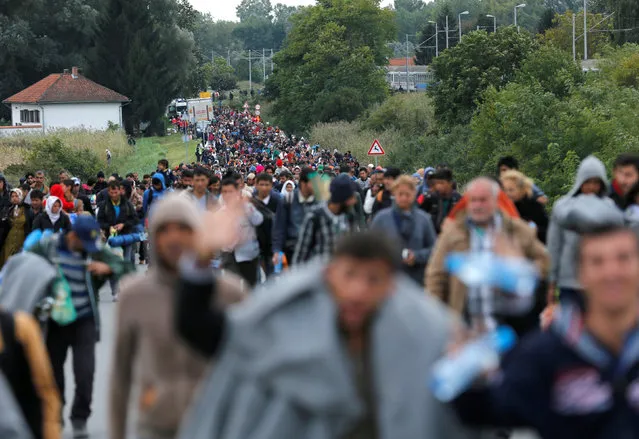
A year after hundreds of thousands of migrants and refugees snaked their way across southeastern Europe and onto television screens worldwide, the roads through the Balkans are now clear, depriving an arguably worsening tragedy of its poignant visibility. Europe's migrant crisis is at the very least numerically worse than it was last year. More people are arriving and more are dying. (Photo by Antonio Bronic/Reuters)

A year after hundreds of thousands of migrants and refugees snaked their way across southeastern Europe and onto television screens worldwide, the roads through the Balkans are now clear, depriving an arguably worsening tragedy of its poignant visibility. Reuters photographer, Antonio Bronic revisiting the people-packed locations where he and his colleagues captured last year's diaspora, found empty roads, unencumbered railway tracks and bucolic countryside. (Photo by Antonio Bronic/Reuters)


Details
12 Aug 2016 12:10:00
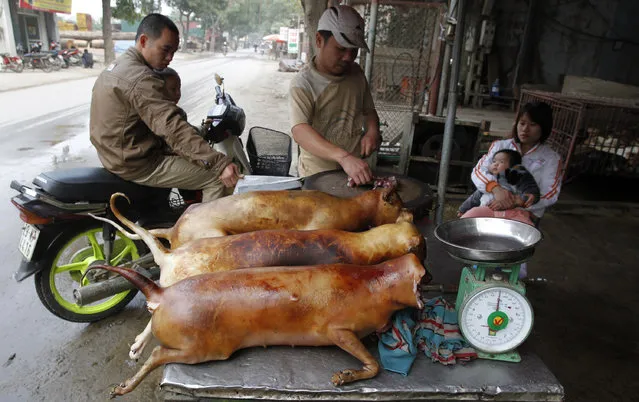
A vendor (C) cuts slaughtered dogs for sale at his roadside stall in Duong Noi village, outside Hanoi December 16, 2011. While animal rights activists have condemned eating dog meat as cruel treatment of the animals, it is still an accepted popular delicacy for some Vietnamese, as well in some other Asian countries. (Photo by Reuters/Kham)

A vendor (C) cuts slaughtered dogs for sale at his roadside stall in Duong Noi village, outside Hanoi December 16, 2011. While animal rights activists have condemned eating dog meat as cruel treatment of the animals, it is still an accepted popular delicacy for some Vietnamese, as well in some other Asian countries. Duong Noi is well-known as a dog-meat village, where hundreds of dogs are killed each day for sale as popular traditional food. Dog-eating as a custom is rooted in Vietnam and was developed as a result of poverty. One kilogram of dog meat costs about 130,000 dongs ($6.2). (Photo by Reuters/Kham)
Details
16 Jul 2013 11:40:00