Loading...
Done
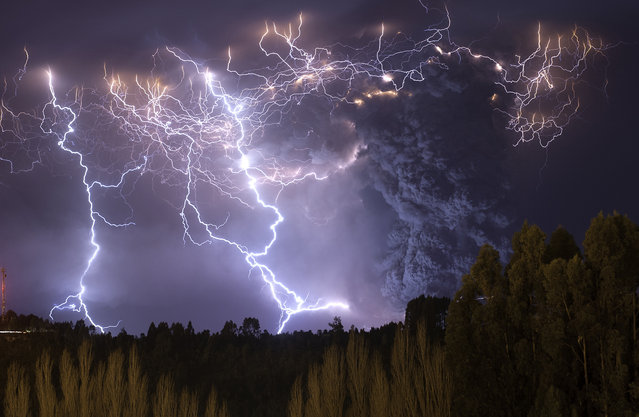
The eruption of Cordon Caulle began on June 4, 2011, located in the Region of Los Rios in Chile. For about 12 months, people and animals became accustomed to living with the daily fall of ash, which also caused problems in the air traffic in South America. The explosions and lightning during first days of the eruption could be seen from hundreds of miles around. This photograph was taken on the second night of eruption from the town of Lago Ranco. (Photo and caption by Francisco Negroni/National Geographic Traveler Photo Contest)

The eruption of Cordon Caulle began on June 4, 2011, located in the Region of Los Rios in Chile. For about 12 months, people and animals became accustomed to living with the daily fall of ash, which also caused problems in the air traffic in South America. The explosions and lightning during first days of the eruption could be seen from hundreds of miles around. This photograph was taken on the second night of eruption from the town of Lago Ranco. (Photo and caption by Francisco Negroni/National Geographic Traveler Photo Contest)

ATTENTION! All pictures are presented in high resolution. To see Hi-Res images – just TWICE click on any picture. In other words, click small picture – opens the BIG picture. Click BIG picture – opens VERY BIG picture.
Details
23 Jun 2013 11:24:00
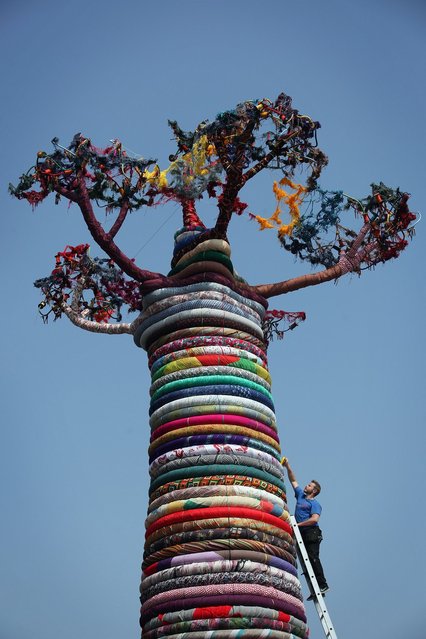
The Pirate Technics Sculpture “Under The Baobab”  by Mike De Butts Is Installed At The Southbank Centre

Mike De Butts adds the finishing touches to a giant Baobab Tree sculpture entitled “Under the Baobab”, outside the Southbank Centre on May 24, 2012 in London, England. The Pirate Technics' installation is made from a selection of brightly coloured fabrics from around the world, and is part of the Southbank Centre's “Festival of the World” exhibition, which includes a series of large scale pieces of art that will be in place around the Southbank centre over the Summer. (Photo by Dan Kitwood)
Details
29 May 2012 10:42:00
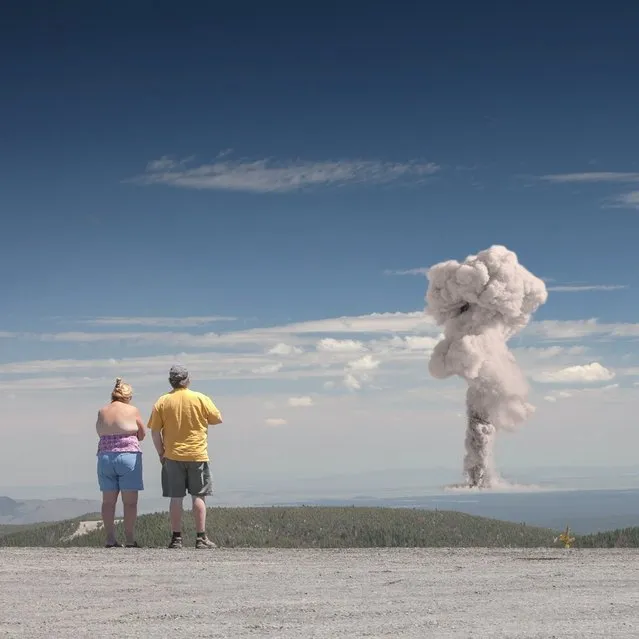
Atomic Overlook by Clay Lipsky

Clay Lipsky has created a great series called Atomic Overlook. The project takes terribly boring scenic shots and combines them with some exciting nuclear testing. “Tourists will line up for anything and I always found humor in vacation destinations that are nothing but a bunch of people looking into a great abyss”, he says. “I understand the allure of a beautiful landscape, but as the world’s population grows so do the lines to view the “nothingness”. Atomic Overlook flips the script on that and gives new purpose to those suntanned masses”. (Photo by Clay Lipsky)
Details
29 Sep 2012 08:27:00
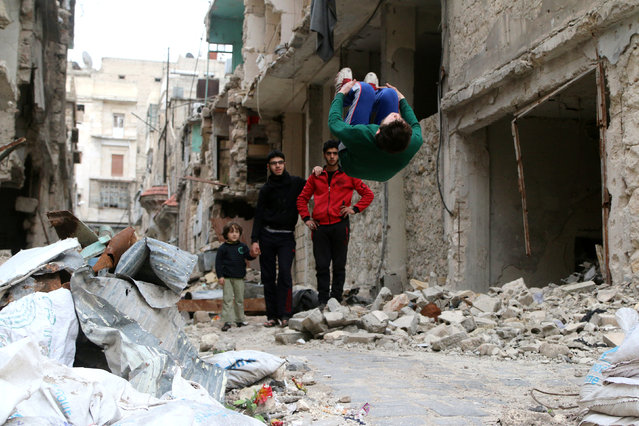
Gymnast Ahmad al-Sawas performs gymnastic moves near damaged buildings in the rebel-held Bustan al-Qasr neighbourhood of Aleppo, Syria March 26, 2016. As Syrian gymnast Ahmad al-Sawas watched his country fall apart, his Olympic dream collapsed too. The last national champion before the fighting began, he knew that supporting the anti-government side in the five-year-old civil war would prevent him from being selected for the Rio Games. “I chose to be an athlete who participates in the revolution”, said Ahmad, who trains where he can for two hours a day – be it on a mattress on a soccer field, in a local hall or somersaulting off a wall. (Photo by Abdalrhman Ismail/Reuters)

Gymnast Ahmad al-Sawas performs gymnastic moves near damaged buildings in the rebel-held Bustan al-Qasr neighbourhood of Aleppo, Syria March 26, 2016. As Syrian gymnast Ahmad al-Sawas watched his country fall apart, his Olympic dream collapsed too. The last national champion before the fighting began, he knew that supporting the anti-government side in the five-year-old civil war would prevent him from being selected for the Rio Games. (Photo by Abdalrhman Ismail/Reuters)
Details
05 Aug 2016 13:25:00
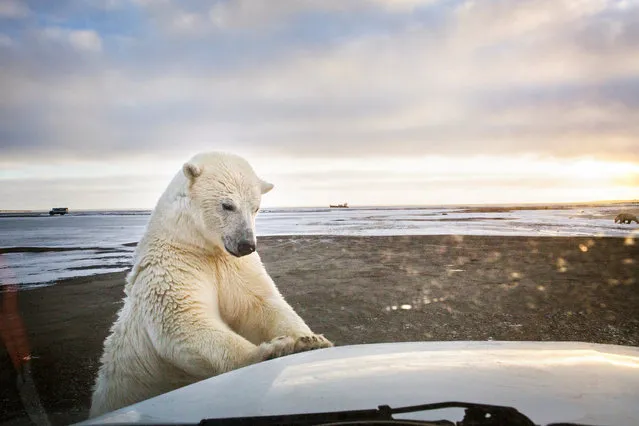
In late summer and early autumn polar bears flock to the native village of Kaktovik in the Alaskan Arctic to eat at “the boneyard” – the remains of whales annually hunted by the community. (Photo by Katie Orlinsky/Getty Images)

A selection of work by four photojournalists who have won grants of $10,000 and editorial support from the agency. Here: “Chasing Winter” by Katie Orlinksy. In late summer and early autumn polar bears flock to the native village of Kaktovik in the Alaskan Arctic to eat at “the boneyard” – the remains of whales annually hunted by the community. (Photo by Katie Orlinsky/Getty Images)
Details
02 Sep 2016 13:55:00
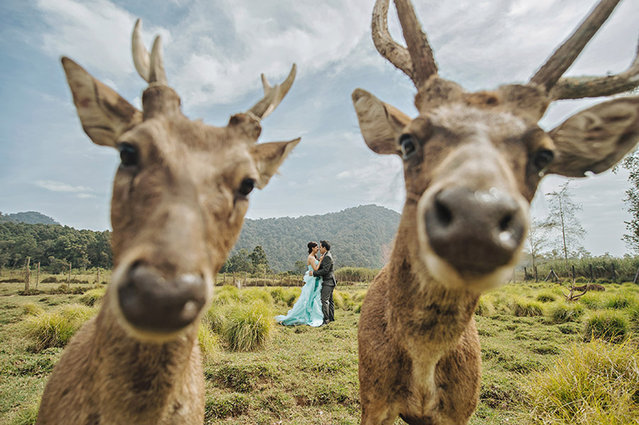
Couples wedding photo photobombed by deer. (Photo by Hendra Lesmana/Caters News Agency/ISPWP)

These hilarious photos will leave people wedding themselves with laughter. The images – which include photobombs, wardrobe malfunctions and unexpected animal behaviour – have been released by the International Society of Professional Wedding Photographs (ISPWP). Each year the society holds quarterly competitions, celebrating a variety of the best image from couples special days. Other categories in the ISPWPs completions include the likes Getting Ready, First Dance, Family Love, and a selection of portrait possibilities. Here: Couples wedding photo photobombed by deer. (Photo by Hendra Lesmana/Caters News Agency/ISPWP)
Details
14 Jan 2016 08:02:00
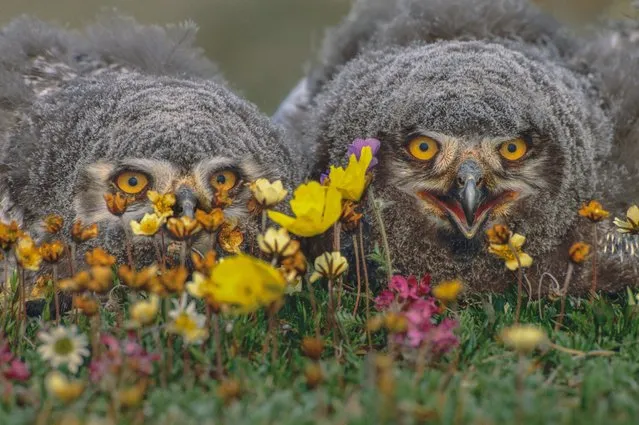
Snowy owlets (Bubo scandiacus), Arctic National Wildlife Refuge, Alaska, USA. “A pair of gray-feathered snowy owlets hunker down in the abundant flowers that flourish in the dropping-enriched soil of their nest mound”. (Photo by Art Wolfe/Art Wolfe Stock)

The photography of Art Wolfe covers the globe, capturing landscapes, wildlife, and cultures from every continent; here he talks through a selection of his favourite images. Art Wolfe is an American photographer and conservationist. His photographs have been noted by environmental advocacy groups for their “stunning” visual impact. Here: Snowy owlets (Bubo scandiacus), Arctic National Wildlife Refuge, Alaska, USA. (Photo by Art Wolfe/Art Wolfe Stock)
Details
19 Mar 2018 00:05:00
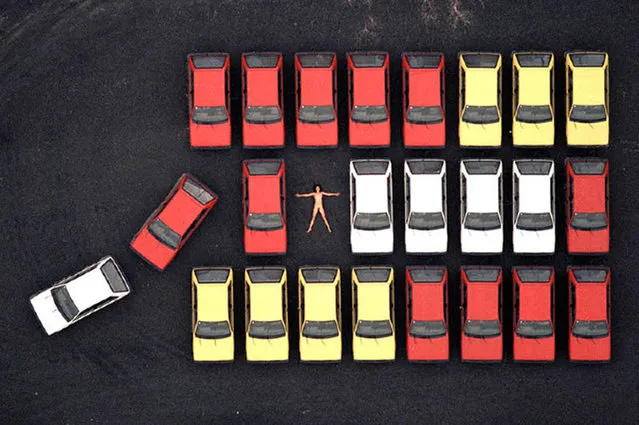
Aerial Nudes by John Crawford

John Crawford was always fascinated of a birds eye view, looking straight down in a vertical perspective. In his series ‘Aerial Nudes’ he is photographing single naked bodies from a high elevation. Perfectly timed photographs show a distant nude body laying down in a series of interesting locations. On each selected shoot day Crawford would deliver his model Carina to the location in the helicopter, positioning her in the carefully arranged set-up, then flying to 600 feet and capturing the image, which would take no more than ten minutes.
Details
09 Aug 2012 11:35:00