Loading...
Done
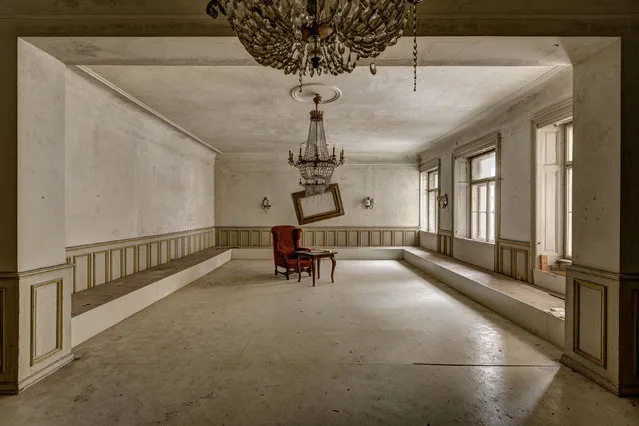
Grand banqueting halls, opulent lobbies and vast ballrooms; you could easily be forgiven for thinking this was a collection of photographs was documenting some of Europe’s grandest hotels. However, a closer look will reveal the majestic rooms to be engulfed in swathes of dust and moss; hotels that once hosted royals and high society abandoned to the elements. (Photo by Thomas Windisch/Caters News)

Grand banqueting halls, opulent lobbies and vast ballrooms; you could easily be forgiven for thinking this was a collection of photographs was documenting some of Europe’s grandest hotels. However, a closer look will reveal the majestic rooms to be engulfed in swathes of dust and moss; hotels that once hosted royals and high society abandoned to the elements. This is the latest result of urban exploration photography, going beyond “no entry” signs to capture images of dilapidated buildings across Europe. IT worker Thomas Windisch, from Graz in Austria, indulged his passion for photography by traveling across the continent, visiting over 100 abandoned hotels along the way. Here: inside a hotel in Austria. (Photo by Thomas Windisch/Caters News)
Details
24 Mar 2015 10:26:00
A Ukranian soldier hugs his wife in the city of Irpin, north of Kyiv, on March 10, 2022. Russian forces on March 10, 2022 rolled their armoured vehicles up to the northeastern edge of Kyiv, edging closer in their attempts to encircle the Ukrainian capital. Kyiv's northwest suburbs such as Irpin and Bucha have been enduring shellfire and bombardments for more than a week, prompting a mass evacuation effort. (Photo by Aris Messinis/AFP Photo)

A Ukranian soldier hugs his wife in the city of Irpin, north of Kyiv, on March 10, 2022. Russian forces on March 10, 2022 rolled their armoured vehicles up to the northeastern edge of Kyiv, edging closer in their attempts to encircle the Ukrainian capital. Kyiv's northwest suburbs such as Irpin and Bucha have been enduring shellfire and bombardments for more than a week, prompting a mass evacuation effort. (Photo by Aris Messinis/AFP Photo)
Details
11 Mar 2022 06:00:00


The Enigma coding machine used by the Germans in WWII on display at Bletchley Park National Code Centre, November 25, 2004 in Bletchley, England. (Photo by Ian Waldie/Getty Images)
Details
24 Apr 2011 13:14:00
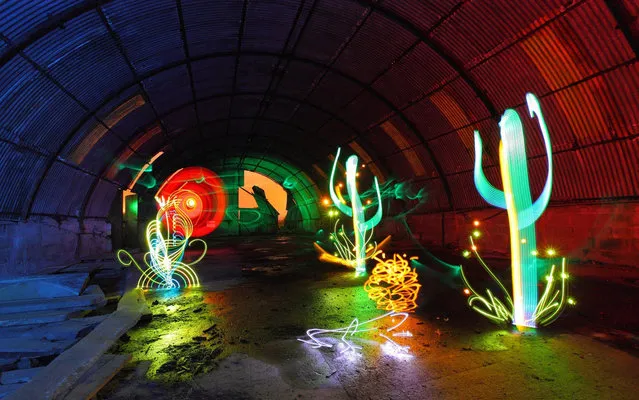
Michael Bosanko By Light Artist

Light painting photographer Michael Bosanko has been capturing light since 2004. He discovered light painting on accident, Michael says this of his moment of discovery, “the moon formed part of the scene, but the camera shake caused the moon to make a streak.

Details
18 Feb 2013 10:45:00


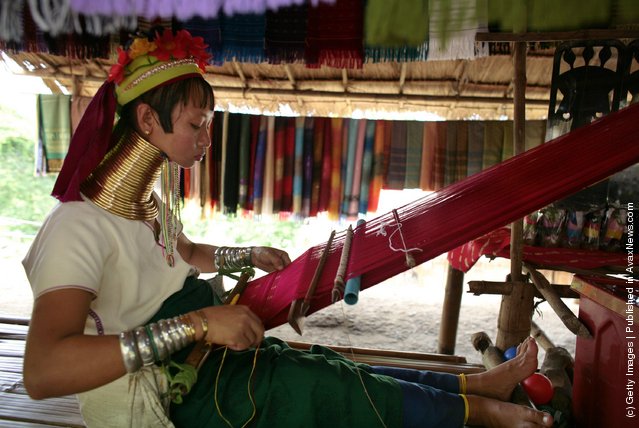
Mah Chan, a Long Neck Padaung hill tribe woman weaves a scraf for sale to tourists in a small village where 30 familes live July 13, 2006 in Chiang Dao, Thailand. All the Long Neck villages are set up for tourists and just over a year ago the hill tribe members were hand picked to move closer to Chiang Mai from more remote communities so that they could be more accessible. The Padaung women famously wear brass rings around their necks, beginning at five-years-old, to distort the growth of their collarbones and making them look like they have long necks. They are originally from eastern Burma near the Thailand border. (Photo by Paula Bronstein/Getty Images)
Details
19 Apr 2011 11:56:00
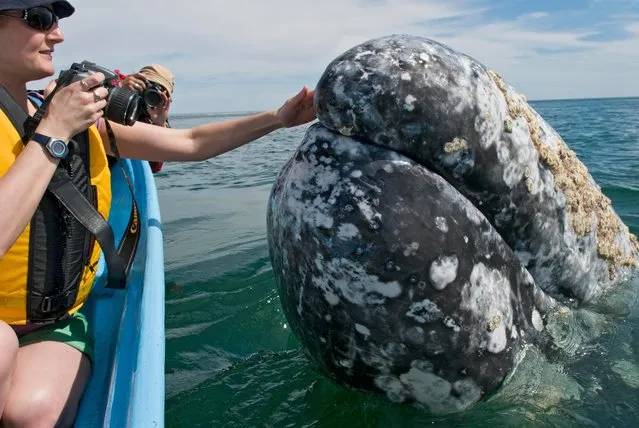
A grey whale greets tourists in boat in, Baja California, Mexico, March 2017. (Photo by  Mark Carwardine/Barcroft Images)

A grey whale greets tourists in boat in, Baja California, Mexico, March 2017. A pair of newly born grey whale calves intrigued by visiting tourists eagerly swim over to the group to get a closer look. Urged on by their mother, the small calves confidently went up to the tour group who were visiting San Ignacio Lagoon in Baja California, Mexico. This adorable moment was captured by zoologist and wildlife photographer, Mark Carwardine on his visit to the area in March 2017. (Photo by Mark Carwardine/Barcroft Images)
Details
11 Jul 2017 06:14:00
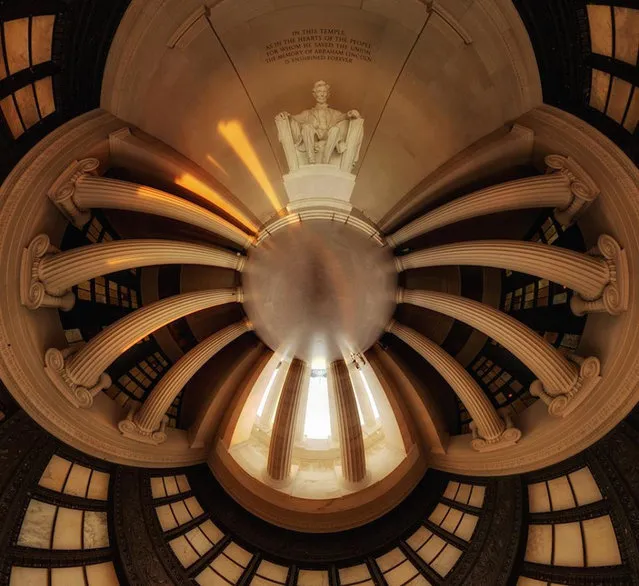
Alternative Perspectives By Randy Scott Slavin Part 2

Randy Scott Slavin's photography is surrealism based in reality. His work portrays land and cityscapes in a 360 degree view, a perspective closer to that of the human eye than a 2D photograph, he says. Slavin's "Alternate Perspectives" is a series of photographs of a single location or landmark pieced together to create a 360 degree perspective in a flat image. The results are whimsical, and occasionally eerie, scenes that reflect the portion and scale of Slavin's surroundings when he took the photo.
Details
25 Dec 2013 08:45:00
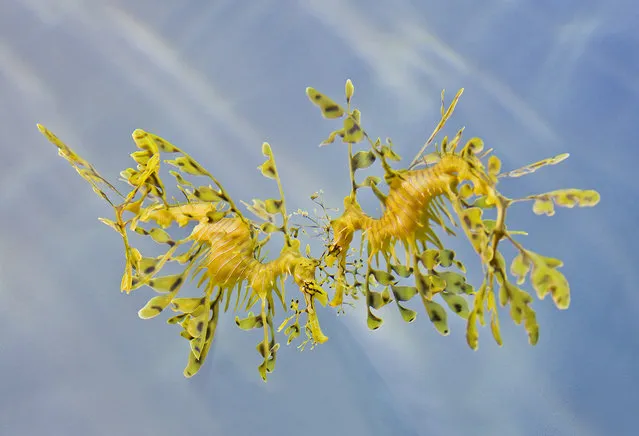
Leafy sea dragon

The leafy seadragon or Glauert's seadragon, Phycodurus eques, is a marine fish in the family Syngnathidae, which also includes the seahorses. It is the only member of the genus Phycodurus. It is found along the southern and western coasts of Australia. The name is derived from the appearance, with long leaf-like protrusions coming from all over the body. These protrusions are not used for propulsion; they serve only as camouflage. The leafy seadragon propels itself by means of a pectoral fin on the ridge of its neck and a dorsal fin on its back closer to the tail end. These small fins are almost completely transparent and difficult to see as they undulate minutely to move the creature sedately through the water, completing the illusion of floating seaweed.
Details
05 Sep 2012 08:51:00