Loading...
Done
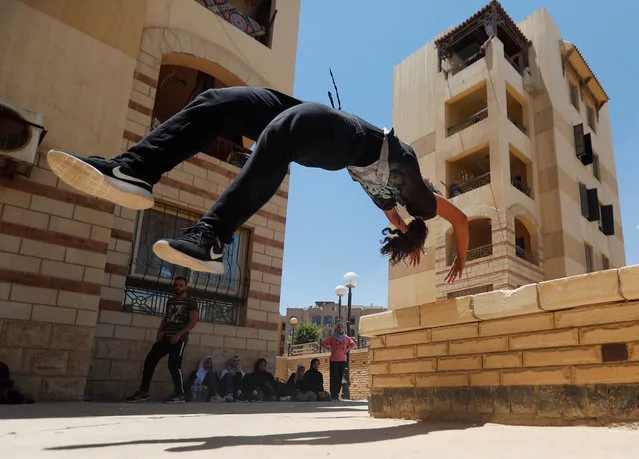
Mariam Emad from Parkour Egypt “PKE” practices her parkour skills around buildings on the outskirts of Cairo, Egypt on July 20, 2018. A group of Egyptian women gather at an abandoned park in a Cairo suburb once a week, climbing walls and jumping around in the strenuous physical discipline known as Parkour, while also challenging the country's conservative social norms. (Photo by Amr Abdallah Dalsh/Reuters)

Mariam Emad from Parkour Egypt “PKE” practices her parkour skills around buildings on the outskirts of Cairo, Egypt on July 20, 2018. A group of Egyptian women gather at an abandoned park in a Cairo suburb once a week, climbing walls and jumping around in the strenuous physical discipline known as Parkour, while also challenging the country's conservative social norms. (Photo by Amr Abdallah Dalsh/Reuters)
Details
25 Jul 2018 00:01:00
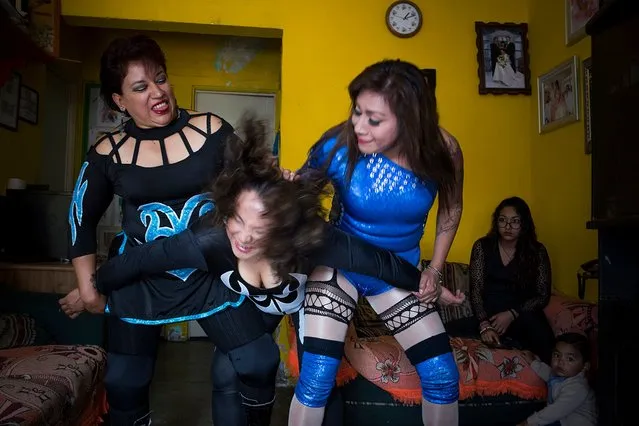
Juliza meets with colleagues at her home. (Photo by Diana Bagnoli/The Washington Post)

Lucha libre is Mexico’s version of what in the United States refer to as pro wrestling. Its dates to 1863, when a Mexican wrestler named Enrique Ugartechea developed a form of “freestyle” wrestling that was based on Greco-Roman wrestling. Lucha libre began to soar in popularity in Mexico after two Italian businessmen started promoting fights in the early 1900s. It has since become popular around the globe. Here: Juliza meets with colleagues at her home. (Photo by Diana Bagnoli/The Washington Post)
Details
15 Jun 2018 00:05:00
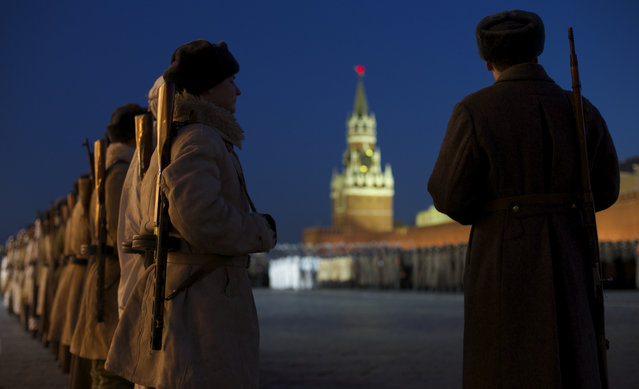
Russian soldiers dressed in Red Army World War II uniforms attend a rehearsal for the Nov. 7 parade in the Red Square with Spassky Tower in the background, in Moscow, Russia, Friday, November 6, 2015. The parade marks the 74th anniversary of a November 7 parade on Red Square when soldiers went directly to the front during World War II. For decades Nov. 7 was a holiday celebrating the 1917 Bolshevik Revolution. (Photo by Ivan Sekretarev/AP Photo)

Russian soldiers dressed in Red Army World War II uniforms attend a rehearsal for the Nov. 7 parade in the Red Square with Spassky Tower in the background, in Moscow, Russia, Friday, November 6, 2015. The parade marks the 74th anniversary of a November 7 parade on Red Square when soldiers went directly to the front during World War II. For decades Nov. 7 was a holiday celebrating the 1917 Bolshevik Revolution. (Photo by Ivan Sekretarev/AP Photo)
Details
09 Nov 2015 08:03:00
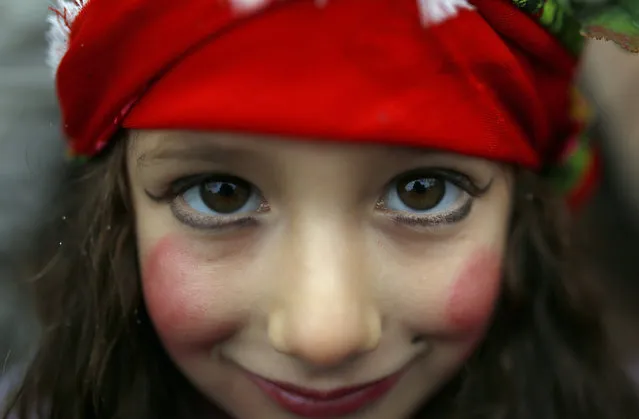
Revellers participate in a parade on the street during a carnival in the village of Vevcani, south of Skopje, Macedonia January 13, 2016. Vevcani village marks the annual Orthodox St. Vasilij Day with a carnival that features a 1,400-year-old celebration with pagan roots. The highlights of the carnival include a political satire where masked villagers act out current events. (Photo by Ognen Teofilovski/Reuters)

Revellers participate in a parade on the street during a carnival in the village of Vevcani, south of Skopje, Macedonia January 13, 2016. Vevcani village marks the annual Orthodox St. Vasilij Day with a carnival that features a 1,400-year-old celebration with pagan roots. The highlights of the carnival include a political satire where masked villagers act out current events. (Photo by Ognen Teofilovski/Reuters)
Details
15 Jan 2016 08:05:00
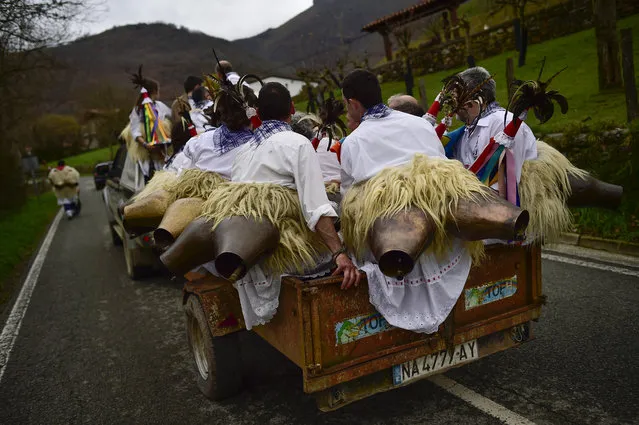
Joaldunaks return in a trailer to their town at the end of Carnival between of the Pyrenees villages of Ituren and Zubieta, northern Spain, Monday, February 1, 2016. In one of the most ancient carnivals in Europe, dating from before the Roman empire, companies of Joaldunak (cowbells) made up of residents of two towns, Ituren and Zubieta, parade the streets costumed in sandals, lace petticoats, sheepskins around the waist and shoulders, coloured neckerchiefs, conical caps with ribbons and a hyssop of horsehair in their right hands and cowbells hung across their lower back. (Photo by Alvaro Barrientos/AP Photo)

Joaldunaks return in a trailer to their town at the end of Carnival between of the Pyrenees villages of Ituren and Zubieta, northern Spain, Monday, February 1, 2016. In one of the most ancient carnivals in Europe, dating from before the Roman empire, companies of Joaldunak (cowbells) made up of residents of two towns, Ituren and Zubieta, parade the streets costumed in sandals, lace petticoats, sheepskins around the waist and shoulders, coloured neckerchiefs, conical caps with ribbons and a hyssop of horsehair in their right hands and cowbells hung across their lower back. (Photo by Alvaro Barrientos/AP Photo)
Details
02 Feb 2016 13:07:00
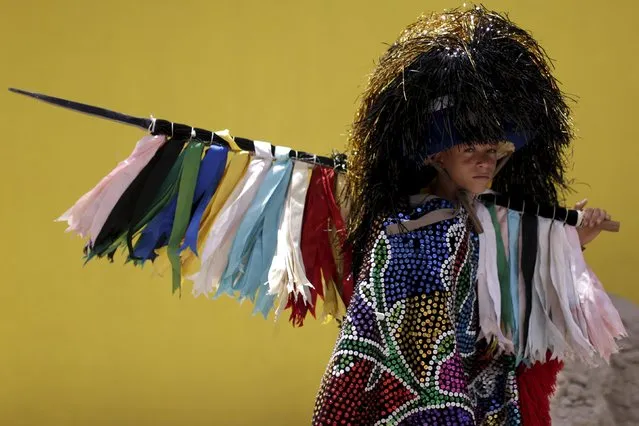
A reveller is photographed during a traditional Maracatu carnival in Olinda, Brazil February 8, 2016. (Photo by Ueslei Marcelino/Reuters)

A reveller is photographed during a traditional Maracatu carnival in Olinda, Brazil February 8, 2016. (Photo by Ueslei Marcelino/Reuters)
Details
10 Feb 2016 11:53:00
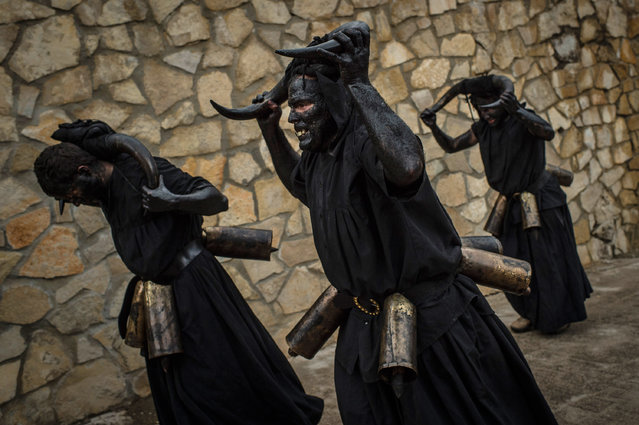
People with his face covered in oil and soot and carrying bull horns representing a devil join a carnival festival on February 14, 2015 in Luzon, Spain. (Photo by David Ramos/Getty Images)

People with his face covered in oil and soot and carrying bull horns representing a devil join a carnival festival on February 14, 2015 in Luzon, Spain. (Photo by David Ramos/Getty Images)
Details
15 Feb 2015 15:09:00
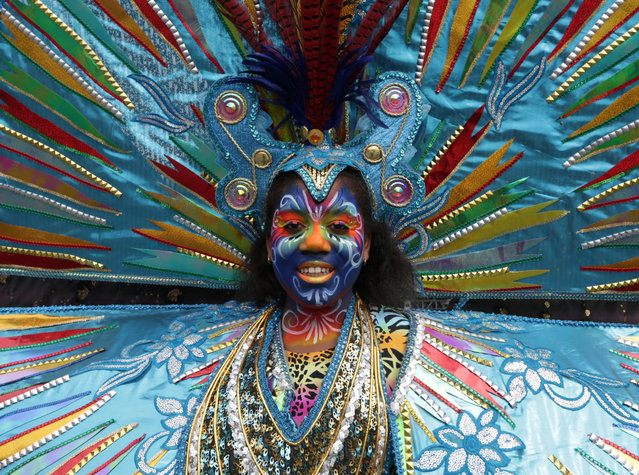
A young reveller participates in the annual Trinidad and Tobago Red Cross Society's Children's Carnival Competition at the Queen's Park Savannah in Port-Of-Spain, Trinidad and Tobago February 18, 2017. (Photo by Andrea De Silva/Reuters)

A young reveller participates in the annual Trinidad and Tobago Red Cross Society's Children's Carnival Competition at the Queen's Park Savannah in Port-Of-Spain, Trinidad and Tobago February 18, 2017. (Photo by Andrea De Silva/Reuters)
Details
21 Feb 2017 00:05:00