Loading...
Done
The newly-discovered gaseous planet Kepler-16b orbits it's two stars

The newly-discovered gaseous planet Kepler-16b orbits it's two stars. NASA's Kepler Mission discoverd the world orbiting two Stars, the larger a K dwarf and the smaller a red dwarf. (Photo by NASA/JPL-Caltech/T. Pyle via Getty Images)
Details
07 Dec 2011 12:28:00
Rosa Osiria

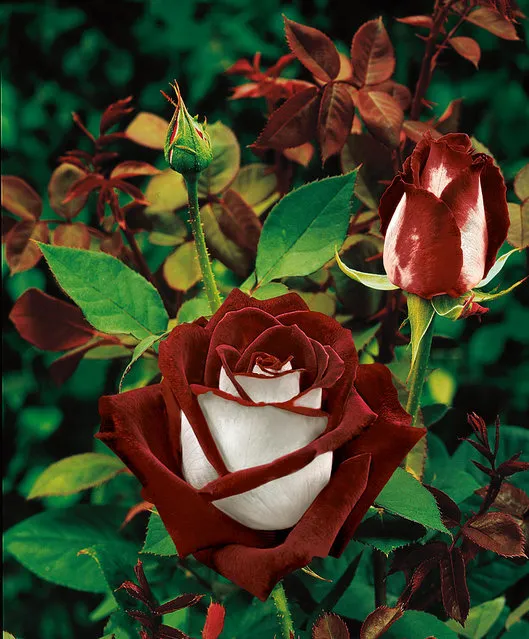
Standard Rose 'Osiria' distinguishes itself from other roses due to its nicely-shaped and attractive flowers. This well-known fragrant floribunda rose is now available as a colourful standard. This very striking rose has an unusual colour combination. The petals are flaming red on the inside and white on the outside.
Details
12 Aug 2013 08:21:00
Huge Portrait Made Of 750 Pairs Of Socks

Shanghai-based artist Hong Yi, also known as Red, used 750 pair of socks to create a rather unusual sock portrait of famous Chinese film director Zhang Yimou. Yi, which is famous for her Coffee Stain Portrait, spent over three weeks on the project and used black, white and grey socks. (Photo by Ohiseered.com)
Details
29 Apr 2012 11:55:00
art works of Chris Parks

Artist Chris Parks has created works for clients, such as Hasbro, Iron Fist, Nike, PBR, Vans, Etnies, Globe, Red Bull, The Cartoon Network and many others. The cool thing is that many of Parks’ works can be purchased as individual prints, skateboard decks, and clothing apparel at his website.
Details
19 May 2012 13:56:00
1 Tonne Gold Kangaroo Coin

The first Australian Kangaroo gold coin issued by The Perth Mint in 1989 featured an iconic bounding Red Kangaroo. Designed by Dr Stuart Devlin AO CMG, goldsmith and jeweller to Her Majesty Queen Elizabeth II, this classic creation has since been featured on the kilo release each year in the highly sought-after bullion series.
Details
31 Aug 2014 15:21:00
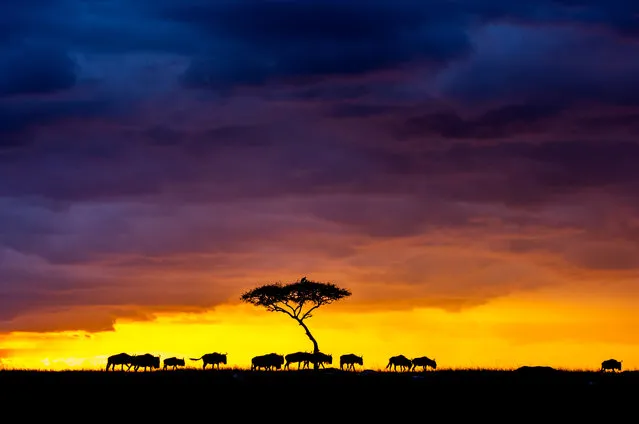
A herd of wildebeest cross the skyline against the fading light in Masai Mara, Kenya, 25 August 2017. Stunning sunset photos silhouette Africa’s wildlife against streaks of orange and red sky. In August, German photographer Ingo Gerlach was on safari in the Masai Mara when he convinced his safari guide to stop and take in the sunset. The wildlife photographer was rewarded with his patience by an eye-catching sunset, which cast Africa’s wildlife into dark shadows against the vibrant skies. (Photo by Ingo Gerlach/Barcroft Images)

A herd of wildebeest cross the skyline against the fading light in Masai Mara, Kenya, 25 August 2017. Stunning sunset photos silhouette Africa’s wildlife against streaks of orange and red sky. In August, German photographer Ingo Gerlach was on safari in the Masai Mara when he convinced his safari guide to stop and take in the sunset. The wildlife photographer was rewarded with his patience by an eye-catching sunset, which cast Africa’s wildlife into dark shadows against the vibrant skies. (Photo by Ingo Gerlach/Barcroft Images)
Details
14 Sep 2017 08:17:00
This handout picture released by Jordan's Aqaba Special Economic Zone Authority (ASEZA) on July 23, 2019 shows a Jordanian Armed Forces armored vehicle lies on the seabed of the Red Sea off the coast of the southern port city of Aqaba, part of a new underwater military museum. (Photo by Aqaba Special Economic Zone Authority via Reuters)

This handout picture released by Jordan's Aqaba Special Economic Zone Authority (ASEZA) on July 23, 2019 shows a Jordanian Armed Forces armored vehicle lies on the seabed of the Red Sea off the coast of the southern port city of Aqaba, part of a new underwater military museum. (Photo by Aqaba Special Economic Zone Authority via Reuters)
Details
26 Jul 2019 00:07:00
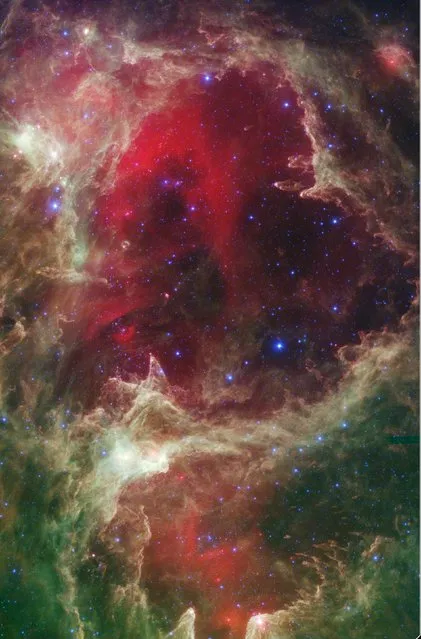
An infrared portrait from NASA's Spitzer Space Telescope which shows generations of stars is seen in this undated NASA handout image released February 14, 2013. In this wispy star-forming region, called W5, the oldest stars can be seen as blue dots in the centers of the two hollow cavities (other blue dots are background and foreground stars not associated with the region). Red shows heated dust that pervades the region's cavities, while green highlights dense clouds. (Photo by NASA/Reuters/JPL-Caltech/Harvard-Smithsonian/Handout)

An infrared portrait from NASA's Spitzer Space Telescope which shows generations of stars is seen in this undated NASA handout image released February 14, 2013. In this wispy star-forming region, called W5, the oldest stars can be seen as blue dots in the centers of the two hollow cavities (other blue dots are background and foreground stars not associated with the region). Red shows heated dust that pervades the region's cavities, while green highlights dense clouds. (Photo by NASA/Reuters/JPL-Caltech/Harvard-Smithsonian/Handout)
Details
03 Mar 2013 08:44:00