Loading...
Done
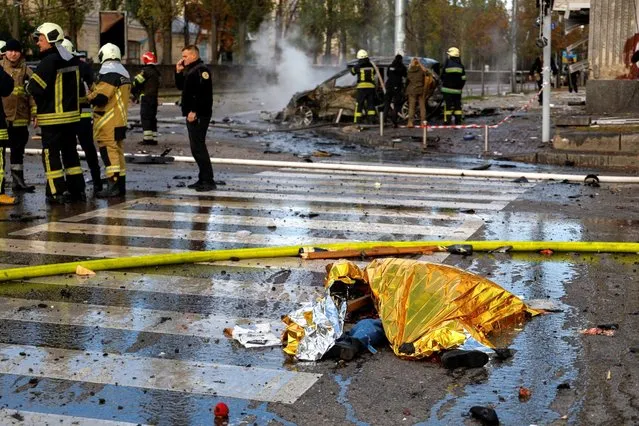
Covered body is seen at the site of missile strike downtown Kyiv, Ukraine, October 10, 2022. Ukrainian officials report that at least eight people were killed and 24 wounded in the Ukrainian capital. (Photo by Valentyn Ogirenko/Reuters)

Covered body is seen at the site of missile strike downtown Kyiv, Ukraine, October 10, 2022. Ukrainian officials report that at least eight people were killed and 24 wounded in the Ukrainian capital. (Photo by Valentyn Ogirenko/Reuters)
Details
12 Oct 2022 04:08:00
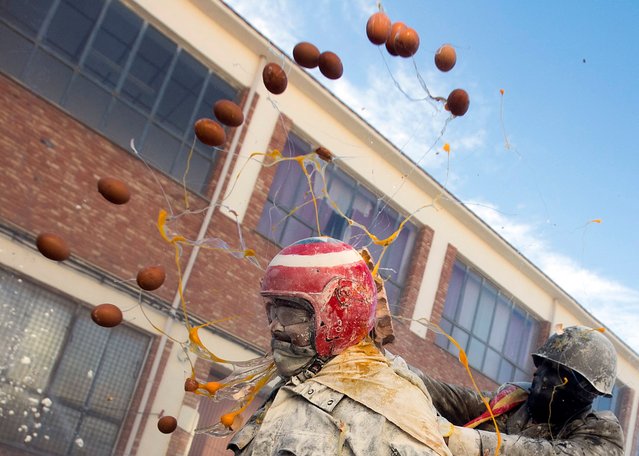
Revellers dressed in mock military garb take part in “Els Enfarinats” food-battle in the southeastern Spanish town of Ibi on December 28, 2022. (Photo by Jaime Reina/AFP Photo)

Revellers dressed in mock military garb take part in “Els Enfarinats” food-battle in the southeastern Spanish town of Ibi on December 28, 2022. (Photo by Jaime Reina/AFP Photo)
Details
30 Dec 2022 06:08:00
Girls accompany grooms as they sit separate from the brides during a mass wedding for 150 couples in Beit Lahiya town in the northern Gaza Strip July 20, 2015. The wedding was funded by al-Basheer Society for Relief and Development. (Photo by Suhaib Salem/Reuters)

Girls accompany grooms as they sit separate from the brides during a mass wedding for 150 couples in Beit Lahiya town in the northern Gaza Strip July 20, 2015. The wedding was funded by al-Basheer Society for Relief and Development. (Photo by Suhaib Salem/Reuters)
Details
04 Aug 2015 11:36:00
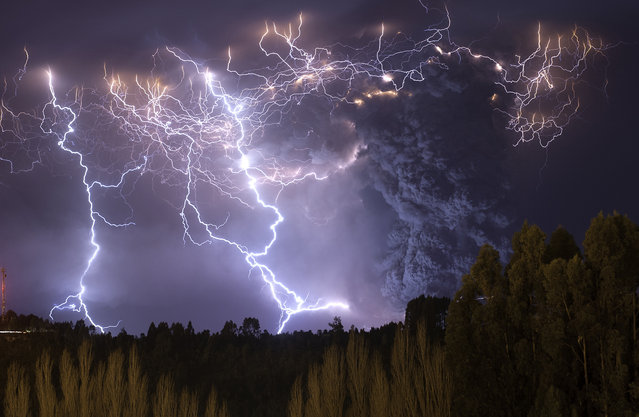
The eruption of Cordon Caulle began on June 4, 2011, located in the Region of Los Rios in Chile. For about 12 months, people and animals became accustomed to living with the daily fall of ash, which also caused problems in the air traffic in South America. The explosions and lightning during first days of the eruption could be seen from hundreds of miles around. This photograph was taken on the second night of eruption from the town of Lago Ranco. (Photo and caption by Francisco Negroni/National Geographic Traveler Photo Contest)

The eruption of Cordon Caulle began on June 4, 2011, located in the Region of Los Rios in Chile. For about 12 months, people and animals became accustomed to living with the daily fall of ash, which also caused problems in the air traffic in South America. The explosions and lightning during first days of the eruption could be seen from hundreds of miles around. This photograph was taken on the second night of eruption from the town of Lago Ranco. (Photo and caption by Francisco Negroni/National Geographic Traveler Photo Contest)

ATTENTION! All pictures are presented in high resolution. To see Hi-Res images – just TWICE click on any picture. In other words, click small picture – opens the BIG picture. Click BIG picture – opens VERY BIG picture.
Details
23 Jun 2013 11:24:00
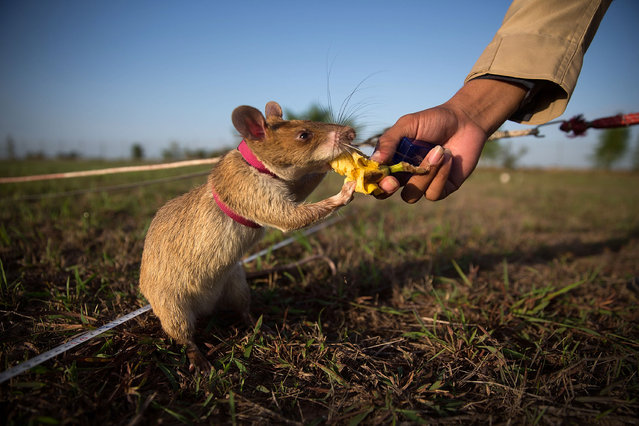
A mine detection rat is given banana as a reward after successfully identifying an inactive mine on July 2, 2015 in Siem Reap, Cambodia. (Photo by Taylor Weidman/Getty Images)

A mine detection rat is given banana as a reward after successfully identifying an inactive mine on July 2, 2015 in Siem Reap, Cambodia. The Cambodian Mine Action Center (CMAC) working with the Belgian NGO APOPO has recently begun testing the feasability of using large mine detection rats from Tanzania to help clear fields of mines and unexploded ordnance in one of the most bombed and mined countries in the world. (Photo by Taylor Weidman/Getty Images)
Details
03 Jul 2015 13:31:00
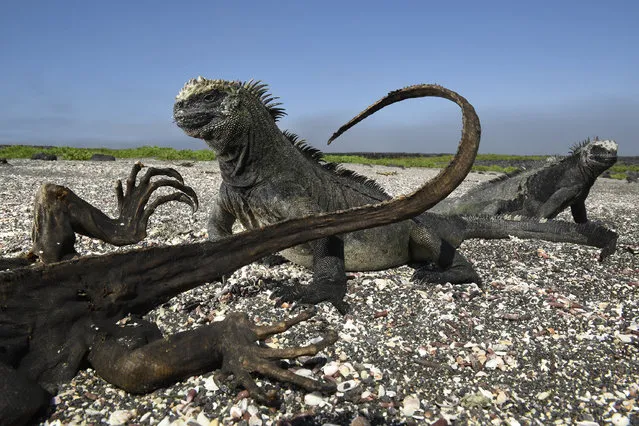
Galapagos – Rocking the Cradle: Four major ocean currents converge along the Galapagos archipelago, creating the conditions for an extraordinary diversity of animal life, April 25, 2016. The islands are home to at least 7,000 flora and fauna species, of which 97 percent of the reptiles, 80 percent of the land birds, 50 percent of the insects and 30 percent of the plants are endemic. The local ecosystem is highly sensitive to the changes in temperature, rainfall and ocean currents that characterize the climatic events known as El Niño and La Niña. These changes cause marked fluctuations in weather and food availability. Many scientists expect the frequency of El Niño and La Niña to increase as a result of climate change, making the Galapagos a possible early-warning location for its effects. (Photo by Thomas P. Peschak for National Geographic/World Press Photo)

Galapagos – Rocking the Cradle: Four major ocean currents converge along the Galapagos archipelago, creating the conditions for an extraordinary diversity of animal life, April 25, 2016. The islands are home to at least 7,000 flora and fauna species, of which 97 percent of the reptiles, 80 percent of the land birds, 50 percent of the insects and 30 percent of the plants are endemic. (Photo by Thomas P. Peschak for National Geographic/World Press Photo)
Details
16 Apr 2018 00:01:00
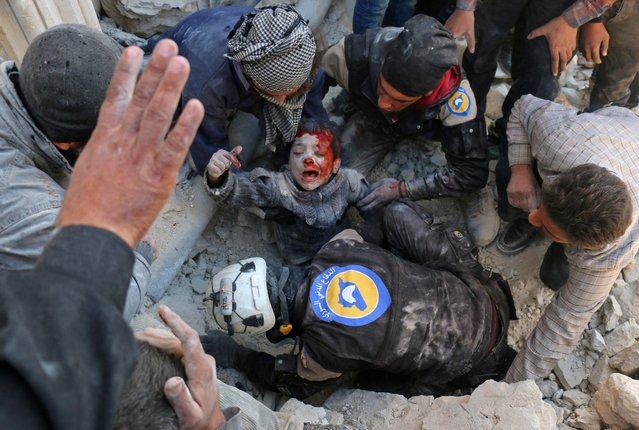
Syrian civil defence volunteers, known as the White Helmets, rescue a boy from the rubble following a reported barrel bomb attack on the Bab al- Nairab neighbourhood of the northern Syrian city of Aleppo on November 24, 2016. (Photo by Ameer Alhalbi/AFP Photo)

Syrian civil defence volunteers, known as the White Helmets, rescue a boy from the rubble following a reported barrel bomb attack on the Bab al- Nairab neighbourhood of the northern Syrian city of Aleppo on November 24, 2016. (Photo by Ameer Alhalbi/AFP Photo)
Details
04 Dec 2016 09:49:00
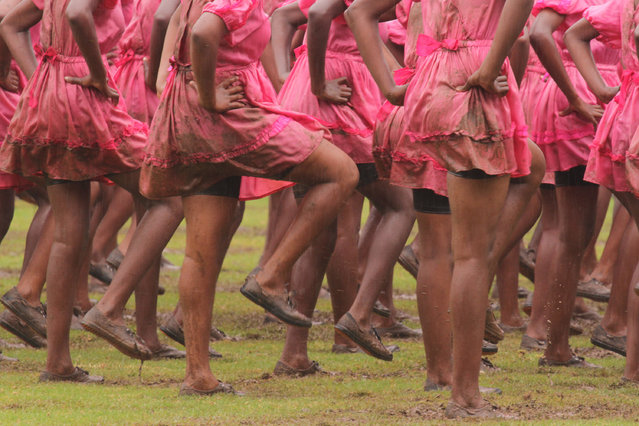
Schoolchildren perfom during celebrations to mark 35 years of Zimbabwe's Independence at the National sports stadium in Harare, Saturday, April 18, 2015. President Robert Mugabe, 91, the central figure in Zimbabwean politics 35 years after Independence from Britain, has led the country since 1980. (Photo by Tsvangirayi Mukwazhi/AP Photo)

Schoolchildren perfom during celebrations to mark 35 years of Zimbabwe's Independence at the National sports stadium in Harare, Saturday, April 18, 2015. President Robert Mugabe, 91, the central figure in Zimbabwean politics 35 years after Independence from Britain, has led the country since 1980. (Photo by Tsvangirayi Mukwazhi/AP Photo)
Details
25 Apr 2015 09:08:00