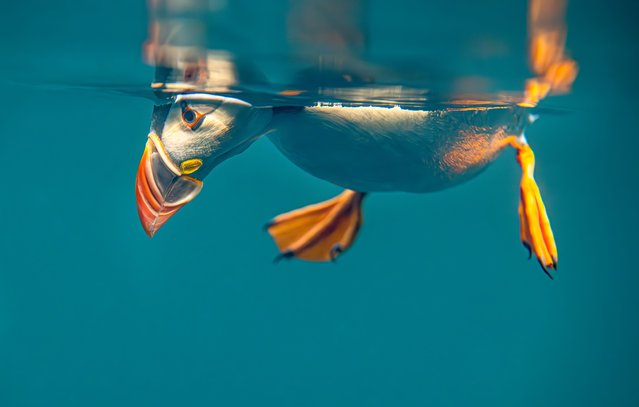
A puffin swims underwater in search for fish off the coast of the Farne Islands in Northumberland, North East England in the last decade of July 2025. (Photo by Brian Matthews/Solent News & Photo Agency)
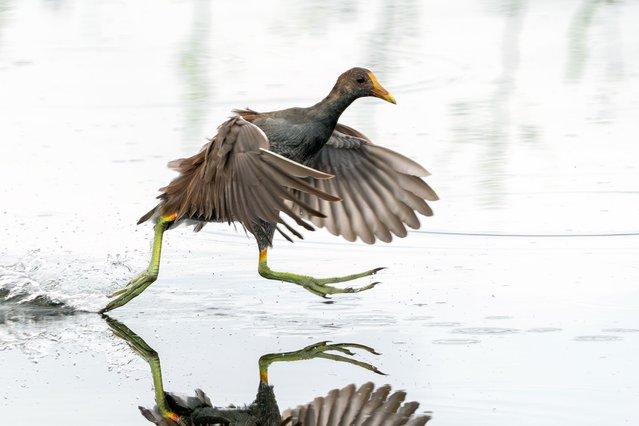
A common gallinule runs across the water to escape a nearby alligator at Green Cay Nature Center in Boynton Beach, Florida on September 4, 2025. Unlike most waterbirds, gallinules have long toes that allow them to walk on floating vegetation. The species is known for its loud, cackling calls that often echo through wetlands. (Photo by Ronen Tivony/NurPhoto/Rex Features/Shutterstock)
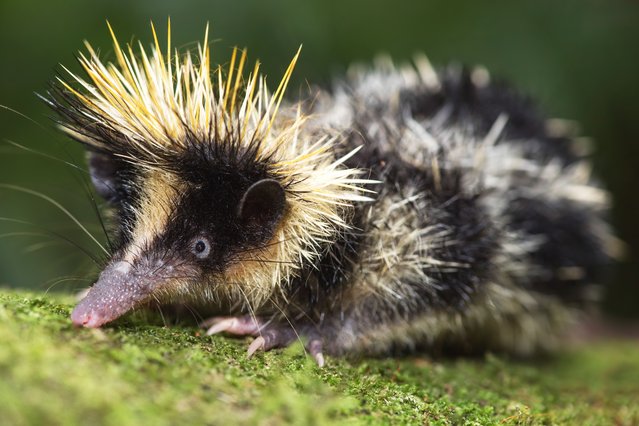
This spiky tenrec was spotted in Madagascar’s Mantadia National Park in the last decade of September 2025. Mostly nocturnal and rarely seen, it puffs out its spines when threatened. Spiky tenrecs are excellent swimmers — unlike most spiny mammals, some species of tenrec can forage in streams and rivers, using their spines for protection while hunting aquatic insects and small prey. (Photo by Dale Morris/Solent News & Photo Agency)
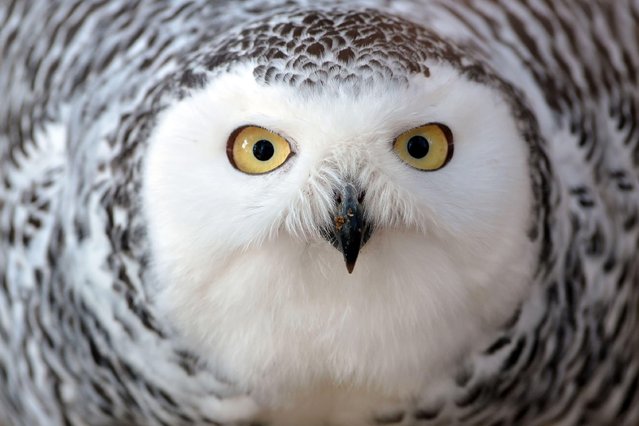
A snowy owl (Bubo scandiacus) raised by a falconer as part of a captive-breeding program, pictured in its enclosure in Vysocina, Czech Republic on October 22, 2025. (Photo by Slavek Ruta/ZUMA Press Wire via Alamy Live News)
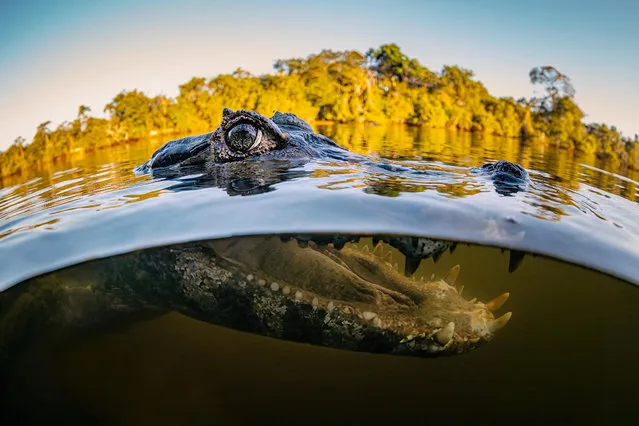
A caiman in the Pantanal region of Brazil in 2021. They are used to seeing humans, allowing the photographer, Leighton Lum, a close-up shot. (Photo by Leighton Lum/Caters News Agency)
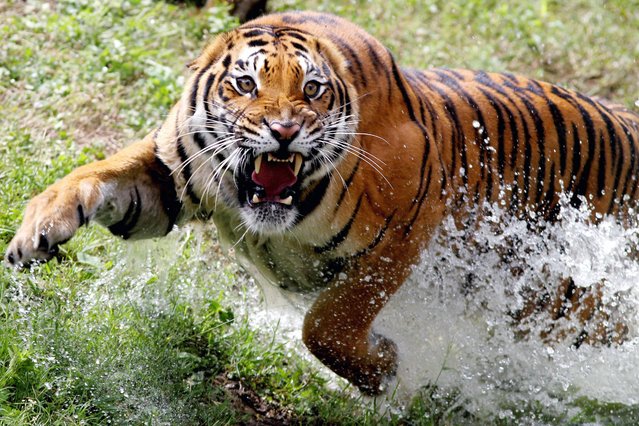
A Bengal tigress who gave birth to four cubs at the Guadalajara Zoo, Jalisco state, Mexico runs at the zoo on October 5, 2021. (Photo by Ulises Ruiz/AFP Photo)
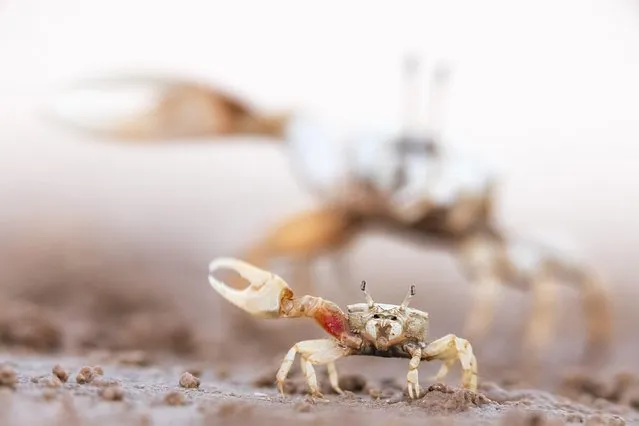
A young male fiddler crab is dwarfed by an older male of the same species, looming behind it at Morua estuary, in the Gulf of California, Mexico on January 4, 2022. Whereas female fiddler crabs have small claws of equal sizes, the males’ pincers can vary in size, with the small one used to pick up food and the larger to impress females. (Photo by Claudio Contreras/Solent News)