Loading...
Done
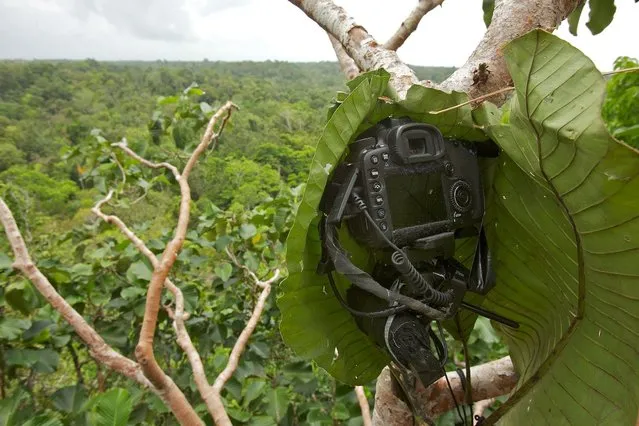
Tim Laman - Wildlife Photojournalist

Tim Laman is a field biologist and wildlife photojournalist. His pioneering research in the rain forest canopy in Borneo led to a PhD from Harvard and his first National Geographic article in 1997. Since then, he has pursued his passion for exploring wild places and documenting little-known and endangered wildlife by becoming a regular contributor to National Geographic. He has eighteen articles to his credit to date, all of which have had a conservation message. Some have focused on endangered species such as Orangutans or Hornbills, while others, such as a series of articles on Conservation International’s Biodiversity Hotspots, have highlighted regions under intense pressure.
Details
14 Sep 2013 10:13:00
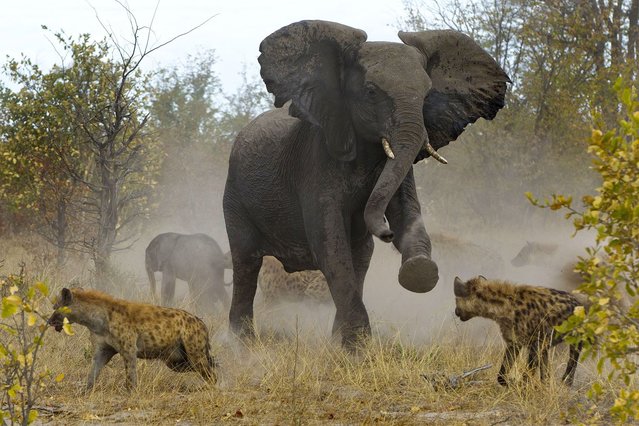
The elephant is seen charging at the hyenas to ward them off its offspring. (Photo by Jayesh Mehta/Caters News)

Elephant fights off hyenas to save baby. “This is the incredible moment an elephant came to the rescue of one of its babies being attacked by a pack of hyenas. The elephant is seen charging at the hyenas to ward them off its offspring. The photos were captured by American photographer Jayesh Mehta, 47, in the Savuti region of the Chobe National Park in Botswana”. Photo: The elephant is seen charging at the hyenas to ward them off its offspring. (Photo by Jayesh Mehta/Caters News)
Details
29 May 2015 16:05:00
Ring of Life - The Amazing Metal Structure In Fushun China

The Ring of Life is a 515-foot (approximately 157 meters) landmark built in the city of Fushun, China. The landmark is built with an observation deck accessible by elevator, as well as 12,000 LED lights. Having abandoned local entertainment projects due to the small local population, urban planners settled on building a sightseeing landmark instead in order to attract a tourist industry to the region. The structure uses approximately 3,000 tons of steel and cost an estimated $16M U.S. dollars.
Details
18 Jun 2013 10:22:00
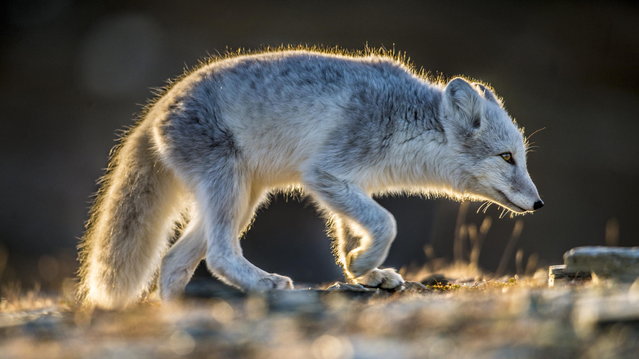
Arctic Fox. (Photo by Trond Eriksen)

“The arctic fox (Vulpes lagopus), also known as the white fox, polar fox, or snow fox, is a small fox native to the Arctic regions of the Northern Hemisphere and is common throughout the Arctic tundra biome. It is well adapted to living in cold environments. It has a deep thick fur which is brown in summer and white in winter. It averages in size at about 85.3 cm (33.6 in) in body length, with a generally rounded body shape to minimize the escape of body heat. – Wikipedia. (Photo by Trond Eriksen)
Details
26 May 2014 14:09:00
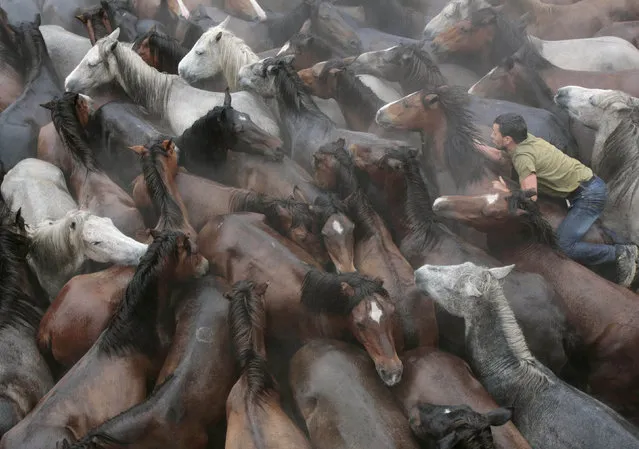
A reveller tries to hold on to a wild horse during the “Rapa Das Bestas” traditional event in the Spanish northwestern village of Sabucedo July 5, 2014. (Photo by Miguel Vidal/Reuters)

A reveller tries to hold on to a wild horse during the “Rapa Das Bestas” traditional event in the Spanish northwestern village of Sabucedo July 5, 2014. On the first weekend of the month of July, hundreds of wild horses are rounded up, trimmed and groomed in different villages in the Spanish northwestern region of Galicia. (Photo by Miguel Vidal/Reuters)
Details
07 Jul 2014 12:58:00


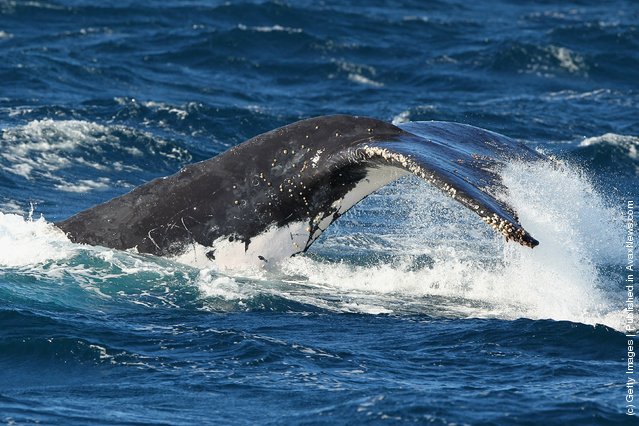
A humpback whale is seen at the beginning of whale watching season during a Manly Whale Watching tour on June 8, 2011 in Sydney, Australia. The first day of winter in New South Wales, June 1st, marks the start of the Humback and southern right whales migration from southern regions to the north to warmer waters. Whale watchers should expect tohave plenty to see with the whale population increasing each year. The migration north continues through July and with the whales returning between September and November. (Photo by Cameron Spencer/Getty Images)
Details
08 Jun 2011 09:49:00


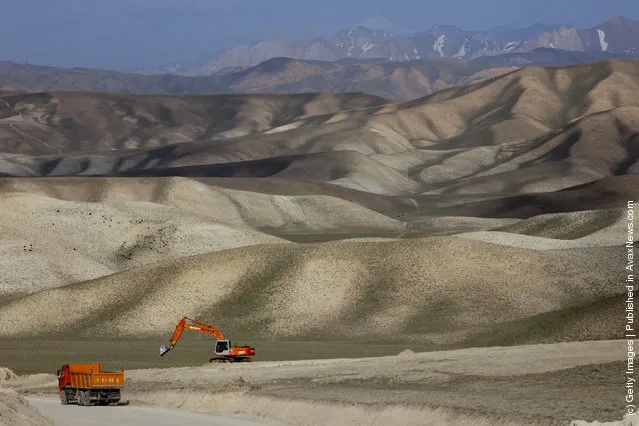
Heavy equipment works along the still under construction Bamiyan-Yakawlang road June 10, 2011 in Yakawlang, Afghanistan. The 69 Million US$ project is supported by the Government of Japan and World Bank. The 90K road project was started three years ago and is slated to be finished within another year. This new road means faster travel from Bamiyan to Afghanistan's only national park, Band-e-Amir. This is in of the safest parts of the country and the hope is to expand tourism in the region. (Photo by Paula Bronstein/Getty Images)
Details
11 Jun 2011 12:32:00
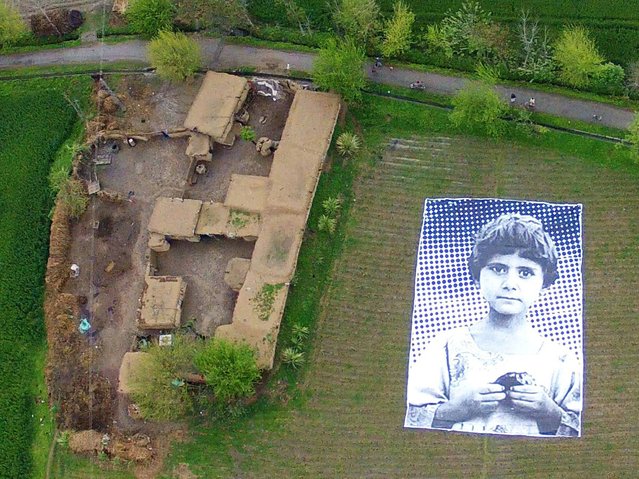
In this undated handout photograph from the “Inside Out Project”, a poster bearing the image of a Pakistani girl whose parents, lawyers say, were killed in a drone strike, lies in a field at an undisclosed location in the northwestern Khyber-Pakhtunkhwa province. (Photo by AFP Photo)

In this undated handout photograph from the “Inside Out Project”, a poster bearing the image of a Pakistani girl whose parents, lawyers say, were killed in a drone strike, lies in a field at an undisclosed location in the northwestern Khyber-Pakhtunkhwa province. A group of artists in Pakistan are hoping to generate “empathy” among US drone operators by placing giant posters of children in the country's troubled tribal regions. (Photo by AFP Photo)
Details
08 Apr 2014 10:39:00