Loading...
Done
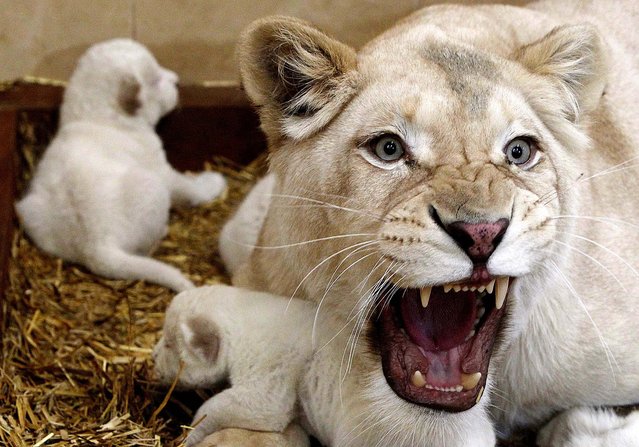
White lioness Azira lies in the cage with her three white cubs, on February 4, 2014. Zoo owner Andrzej Pabich says white lions often have defects that prevent giving birth, or the mother rejects her cubs, but Azira has been patiently feeding and caring for her little ones. (Photo by Czarek Sokolowski/Associated Press)

White lioness Azira lies in the cage with her three white cubs, on February 4, 2014. Zoo owner Andrzej Pabich says white lions often have defects that prevent giving birth, or the mother rejects her cubs, but Azira has been patiently feeding and caring for her little ones. (Photo by Czarek Sokolowski/Associated Press)
Details
08 Feb 2014 15:52:00
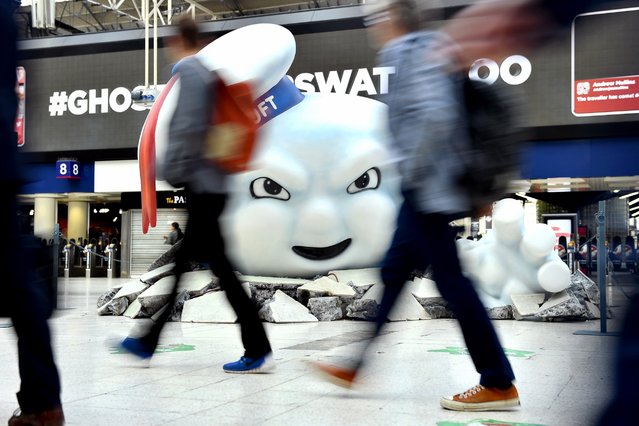
Stay Puft Marshmallow Man is seen on the concourse at Waterloo Station, July 11, 2016, in London. Ghostbusters take over Waterloo Station as Stay Puft Marshmallow Man smashes through the concourse during the morning rush-hour. (Photo by Gareth Cattermole/Getty Images)

Stay Puft Marshmallow Man is seen on the concourse at Waterloo Station, July 11, 2016, in London. Ghostbusters take over Waterloo Station as Stay Puft Marshmallow Man smashes through the concourse during the morning rush-hour. (Photo by Gareth Cattermole/Getty Images)
Details
12 Jul 2016 12:31:00
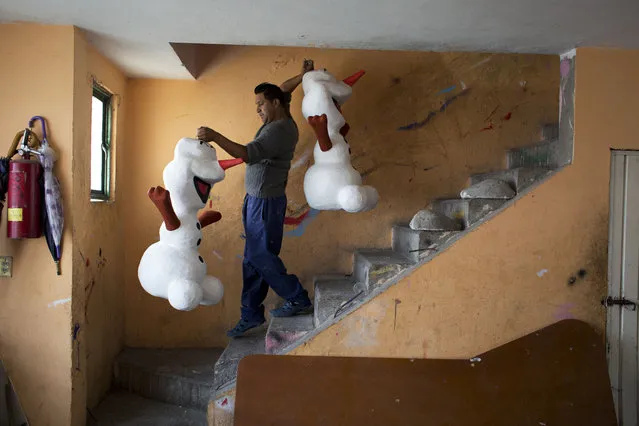
In this January 23, 2015 photo, Guillermo Luna Martinez, 36, carries freshly painted piñatas representing Disney's Frozen snowman character Olaf downstairs to where his wife Elvia Vicente Albarran will use paper to craft the character's eyes, teeth, and distinctive tuft of hair, at the family's workshop in the Iztapalapa neighborhood of Mexico City. (Photo by Rebecca Blackwell/AP Photo)

In this January 23, 2015 photo, Guillermo Luna Martinez, 36, carries freshly painted piñatas representing Disney's Frozen snowman character Olaf downstairs to where his wife Elvia Vicente Albarran will use paper to craft the character's eyes, teeth, and distinctive tuft of hair, at the family's workshop in the Iztapalapa neighborhood of Mexico City. Though Luna and his wife have chosen to work in the family business, they plan to let their children, Guillermo, 10, and Melissa, 9, decide for themselves. “Who knows if the business will last forever”, said Luna, “I'd prefer that they study and get a career, for them to have a better future”. (Photo by Rebecca Blackwell/AP Photo)
Details
01 Feb 2015 10:43:00
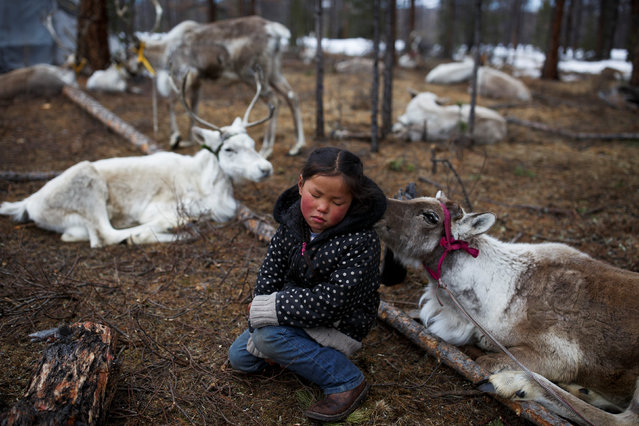
Tsetse, six-year-old daughter of Dukha herder Erdenebat Chuluu, sits among her family's reindeer in a forest near the village of Tsagaannuur, Khovsgol aimag, Mongolia, April 21, 2018. (Photo by Thomas Peter/Reuters)

Tsetse, six-year-old daughter of Dukha herder Erdenebat Chuluu, sits among her family's reindeer in a forest near the village of Tsagaannuur, Khovsgol aimag, Mongolia, April 21, 2018. Nyamaa is an ethnic Darkhad, herders of northern Mongolia who have historically inhabited the steppe that borders the Taiga forests. (Photo by Thomas Peter/Reuters)
Details
26 May 2018 00:03:00
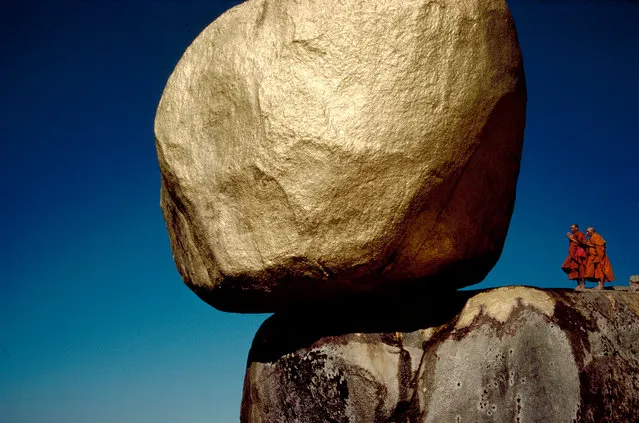
Kyaiktiyo, Burma, 1978. The Golden Rock at Shwe Pyi Daw (the Golden Country), the Buddhist holy place. Hiroji Kubota writes: “I was desperate to keep a distance from America for a while; luckily, I found Burma and its gentle and compassionate people. In the spring of 1978, on the top of the hill where I took this photo, I had two Leica bodies: the one with Tri-X and the other with Kodachrome 64. Soon after, I realised that the colour one looked very colourful and was more powerful. That was my decisive moment, to become a colour photographer”. (Photo by Hiroji Kubota/Magnum Photos)

Kyaiktiyo, Burma, 1978. The Golden Rock at Shwe Pyi Daw (the Golden Country), the Buddhist holy place. Hiroji Kubota writes: “I was desperate to keep a distance from America for a while; luckily, I found Burma and its gentle and compassionate people. In the spring of 1978, on the top of the hill where I took this photo, I had two Leica bodies: the one with Tri-X and the other with Kodachrome 64. Soon after, I realised that the colour one looked very colourful and was more powerful. That was my decisive moment, to become a colour photographer”. (Photo by Hiroji Kubota/Magnum Photos)
Details
10 Jun 2016 13:30:00
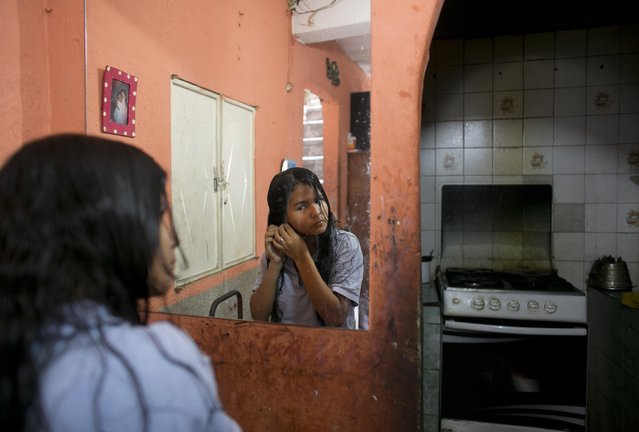
In this June 1, 2016 photo, Maria Arias stands near her kitchen as she puts on earrings while getting ready for school in Caracas, Venezuela. So many students have fainted from hunger at Maria's school that administrators told parents to keep their children home until they could find more food. (Photo by Ariana Cubillos/AP Photo)

In this June 1, 2016 photo, Maria Arias stands near her kitchen as she puts on earrings while getting ready for school in Caracas, Venezuela. So many students have fainted from hunger at Maria's school that administrators told parents to keep their children home until they could find more food. (Photo by Ariana Cubillos/AP Photo)
Details
17 Jun 2016 13:03:00
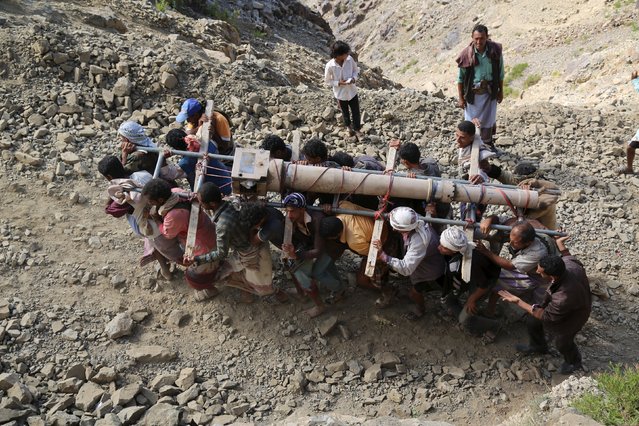
Fighters of the pro-government Popular Resistance Committees militia carry a cannon as they transport it in parts to Yemen's southwestern war-torn city of Taiz December 26, 2015. (Photo by Reuters/Stringer)

Fighters of the pro-government Popular Resistance Committees militia carry a cannon as they transport it in parts to Yemen's southwestern war-torn city of Taiz December 26, 2015. (Photo by Reuters/Stringer)
Details
29 Dec 2015 08:06:00
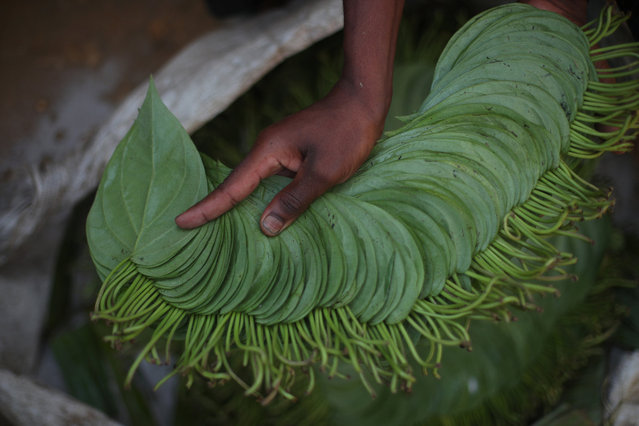
Faruk, 17, a Rohingya refugee trader holds betel leaves which are on sale at a stall in Palong Khali refugee camp near Cox's Bazar, Bangladesh, November 3, 2017. He left his village in Myanmar when the military opened fire towards the Rohingya. “I buy this betel leaf from Palong Khali market, in one bundle there are 160 pieces, I buy it for 80 taka and I sell it for 100 taka. Bangladeshi's and I sell for the same rate in the camp. Outside in the local market it is 80 taka per bundle. My problem is that I don't have money so I can't buy anything to eat, I can't buy fish to eat”, he said. (Photo by Hannah McKay/Reuters)

Faruk, 17, a Rohingya refugee trader holds betel leaves which are on sale at a stall in Palong Khali refugee camp near Cox's Bazar, Bangladesh, November 3, 2017. He left his village in Myanmar when the military opened fire towards the Rohingya. “I buy this betel leaf from Palong Khali market, in one bundle there are 160 pieces, I buy it for 80 taka and I sell it for 100 taka (1 Bangladeshi Taka = 0.012 US Dollar). Bangladeshi's and I sell for the same rate in the camp. Outside in the local market it is 80 taka per bundle. My problem is that I don't have money so I can't buy anything to eat, I can't buy fish to eat”, he said. (Photo by Hannah McKay/Reuters)
Details
27 Nov 2017 08:54:00