Loading...
Done
A sandstorm hits the city of Zhangye in Gansu province, China on November 27, 2018. (Photo by Reuters/China Stringer Network)

A sandstorm hits the city of Zhangye in Gansu province, China on November 27, 2018. (Photo by Reuters/China Stringer Network)
Details
29 Nov 2018 00:07:00
Actress Millie Bobby Brown (with her dog) during an interview with host Jimmy Fallon on Thursday, February 29, 2024 in New York. (Photo by: Todd Owyoung/NBC via Getty Images)

Actress Millie Bobby Brown (with her dog) during an interview with host Jimmy Fallon on Thursday, February 29, 2024 in New York. (Photo by: Todd Owyoung/NBC via Getty Images)
Details
07 Mar 2024 06:14:00
A girl uses her mobile phone during the evening at the National Park in Khartoum, Sudan, April 24, 2015. (Photo by Mohamed Nureldin Abdallah/Reuters)

A girl uses her mobile phone during the evening at the National Park in Khartoum, Sudan, April 24, 2015. (Photo by Mohamed Nureldin Abdallah/Reuters)
Details
14 Jul 2015 13:23:00
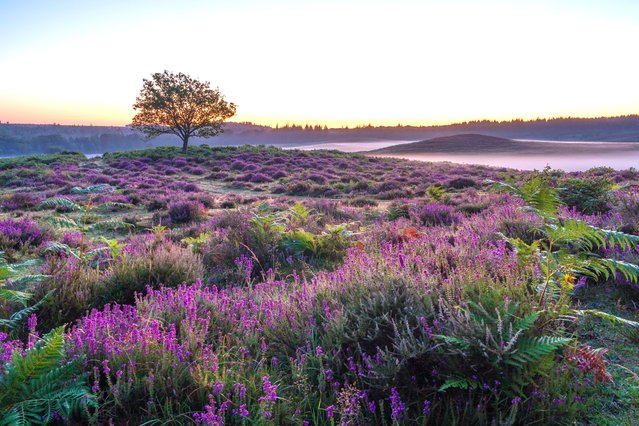
Sunrise at Rockford Common in the New Forest, UK where the heather is in bloom on July 28, 2024. (Photo by Steve Hogan/Picture Exclusive)

Sunrise at Rockford Common in the New Forest, UK where the heather is in bloom on July 28, 2024. (Photo by Steve Hogan/Picture Exclusive)
Details
22 Oct 2024 04:29:00
American reality TV superstar Kylie Jenner looks stunning in a new advertising campaign for luxury fashion firm Dolce & Gabbana's DG Logo Bag on April 6, 2023. (Photo by Dolce & Gabbana/TNI Press Ltd)

American reality TV superstar Kylie Jenner looks stunning in a new advertising campaign for luxury fashion firm Dolce & Gabbana's DG Logo Bag on April 6, 2023. (Photo by Dolce & Gabbana/TNI Press Ltd)
Details
20 Apr 2023 03:21:00
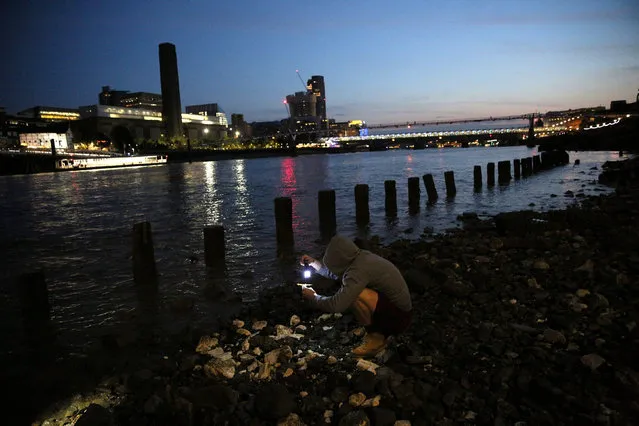
A mudlark uses a torch to look for items on the bank of the River Thames in London, Britain June 06, 2016. Mudlarking is believed to trace its origins to the 18th and 19th century, when scavengers searched the Thames' shores for items to sell. These days, history and archaeology fans are the ones hoping to find old relics such as coins, ceramics, artifacts or everyday items from across centuries. They wait for the low tide and then scour specific areas of exposed shores. "If you're in a field you could be out all day long, with the river you're restricted to about two or three hours," mudlark Nick Stevens said. While many just use the naked eye for their searches, others rely on metal detectors for which a permit from the Port of London Authority is needed. Digging also requires consent. (Photo by Neil Hall/Reuters)

A mudlark uses a torch to look for items on the bank of the River Thames in London, Britain June 06, 2016. Mudlarking is believed to trace its origins to the 18th and 19th century, when scavengers searched the Thames' shores for items to sell. These days, history and archaeology fans are the ones hoping to find old relics such as coins, ceramics, artifacts or everyday items from across centuries. their finds with the Portable Antiquities Scheme. Any item over 300 years old must be recorded. (Photo by Neil Hall/Reuters)

Details
27 Aug 2016 10:43:00
People in face masks cross a near-empty street after the government announced a state of emergency for the capital and some prefectures following the coronavirus disease (COVID-19) outbreak, in Tokyo, Japan on April 16, 2020. (Photo by Kim Kyung-Hoon/Reuters)

People in face masks cross a near-empty street after the government announced a state of emergency for the capital and some prefectures following the coronavirus disease (COVID-19) outbreak, in Tokyo, Japan on April 16, 2020. (Photo by Kim Kyung-Hoon/Reuters)
Details
26 Apr 2020 00:01:00
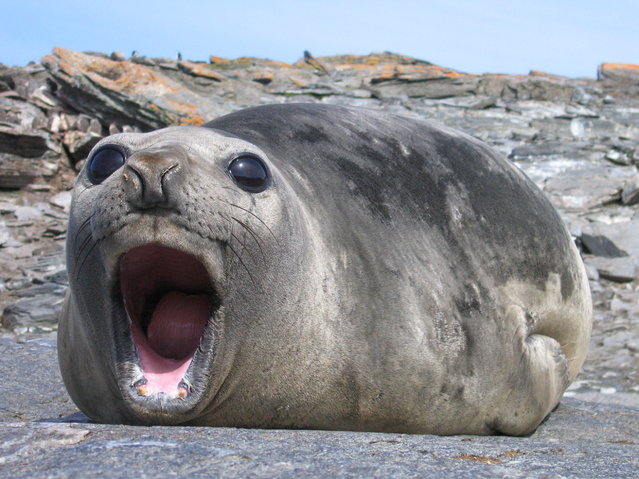
Weddell seal numbers in 2025 have declined sharply on Signy Island, part of the South Orkney Islands in the Southern Ocean, where British Antarctic Survey researchers have tracked seal populations for nearly 50 years to understand the impact of melting sea ice. (Photo by Michael Dunn/The Times)

Weddell seal numbers in 2025 have declined sharply on Signy Island, part of the South Orkney Islands in the Southern Ocean, where British Antarctic Survey researchers have tracked seal populations for nearly 50 years to understand the impact of melting sea ice. (Photo by Michael Dunn/The Times)
Details
06 Jul 2025 03:34:00