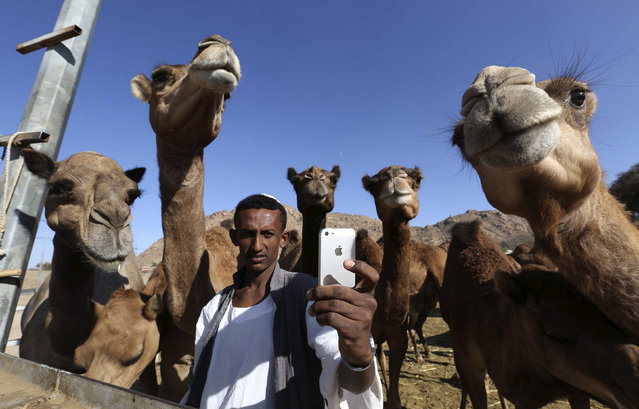
A man takes a “selfie” with camels at a farm in Taif November 1, 2014. Saudi Arabia said late on Wednesday it had detected six new cases of the deadly Middle East Respiratory Syndrome (MERS) in 24 hours, the biggest daily jump for months with officials blaming lax hospital procedures. Scientists are not sure of the origin of the virus, but several studies have linked it to camels and some experts think it is being passed to humans through close physical contact or through the consumption of camel meat or camel milk. (Photo by Mohamed Alhwaity/Reuters)
A student shouts slogans against Venezuelan President Nicola Maduro during a protest on the main highway in Caracas on March 30, 2017. Venezuela' s Supreme Court took over legislative powers Wednesday from the opposition- majority National Assembly, whose speaker accused leftist President Nicolas Maduro of staging a “coup”. (Photo by Juan Barreto/AFP Photo)
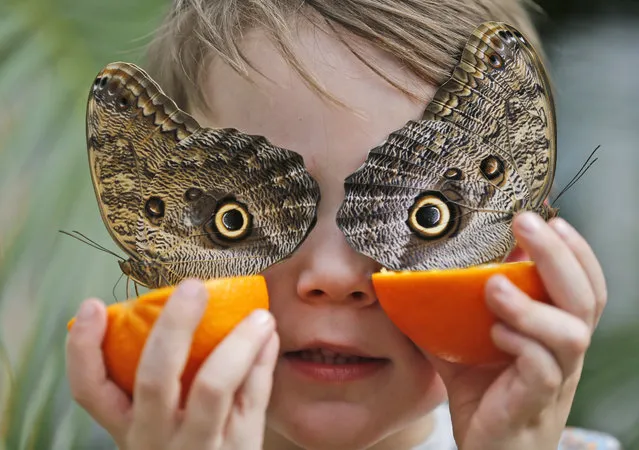
Five year old George holds an orange to feed the Owl butterflies at the Natural History Museum in London, Thursday, March 30, 2017. Hundreds of tropical butterflies were released to launch the Natural History Museum's Sensational Butterflies exhibition, starting for the public on March 31, 2017. (Photo by Frank Augstein/AP Photo)
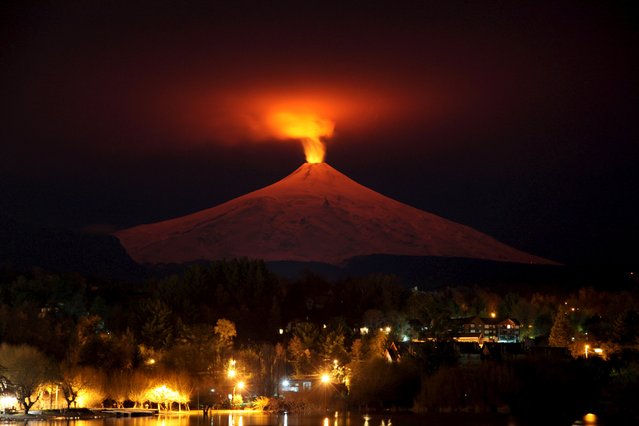
The Villarrica Volcano is seen at night from Pucon town, Chile, July 12, 2015. Villarrica, located near the popular tourist resort of Pucon, is among the most active volcanoes in South America. (Photo by Cristobal Saavedra/Reuters)
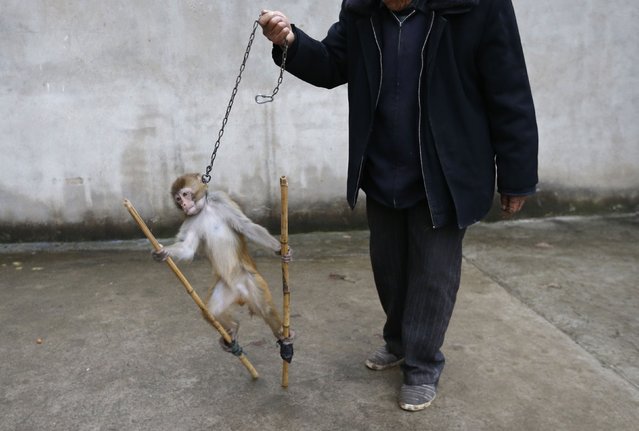
A monkey is led by its trainer Qi Defang during training for a circus in Suzhou, Anhui province, November 29, 2014. Suzhou is known as the hometown of circus troupes in China and has more than 300 circus troupes. (Photo by William Hong/Reuters)
Performers take part in a rain soaked Notting Hill Carnival on August 25th, 2014 in London, England. Despite the bad weather over 1 million visitors are expected to attend the two-day event which is the largest of its kind in Europe. The event has taken place on the West London streets every August Bank Holiday weekend since 1964. (Photo by Mary Turner/Getty Images)
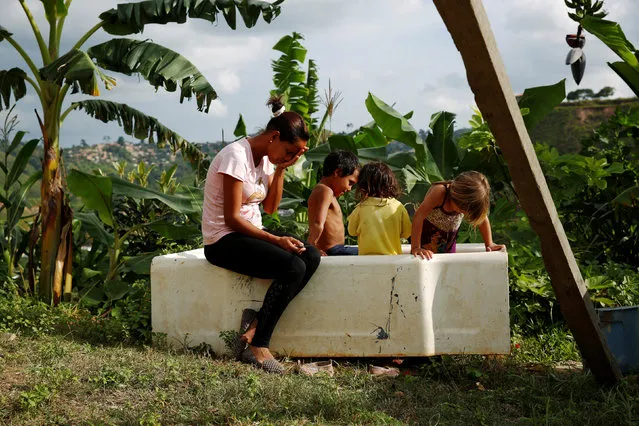
Venezuela's food shortages, inflation and crumbling medical sector have become such a source of anguish that a growing number of young women are reluctantly opting for sterilizations rather than face the hardship of pregnancy and child-rearing. Traditional contraceptives like condoms or birth control pills have virtually vanished from store shelves, pushing women towards the hard-to-reverse surgery. While no recent national statistics on sterilizations are available, doctors and health workers say demand for the procedure is growing. (Photo by Carlos Garcia Rawlins/Reuters)