Loading...
Done
Workers hang thousands of different colorful fabrics on iron wires tied between a bamboo framework and constantly turn them so that they dry perfectly in a flooded field in Narayanganj, Bangladesh on March 16, 2022. Iron wires are used between a bamboo framework to create giant washing lines for the final part of the dying process as the fabrics are dried in the sun. Bright strands of blue, pink, orange and green-dyed cloths hang above the grassy field in a dazzling network of interlocking colors. This is the final part of the dying process after which the cloth is made into t-shirts and vests at the garment factory. (Photo by Joy Saha/ZUMA Press Wire/Rex Features/Shutterstock)

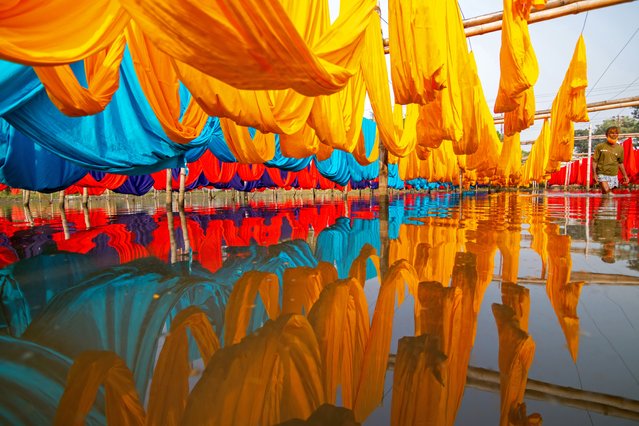
Workers hang thousands of different colorful fabrics on iron wires tied between a bamboo framework and constantly turn them so that they dry perfectly in a flooded field in Narayanganj, Bangladesh on March 16, 2022. (Photo by Joy Saha/ZUMA Press Wire/Rex Features/Shutterstock)
Details
25 Mar 2022 05:47:00
Dog photos by Jessica Trinh

I am 17 years old and an aspiring photographer. Ever since I set my hands on a camera, I knew I had unlocked a new dimension. One where you can expand your imagination and run for endless miles. Photography makes you look at things differently. You notice rain drops and the way the sun kisses the Earth. You breath in every moment of your life. You love to live and live to love. There is no time to waste because there is an urgency to capture each loving gesture, smile, and laugh in both humans and animals. Then every photograph becomes timeless and you smile, knowing that you hold a few split seconds in your hands. I live in a box called a camera with the lens as my window and everyday I sit on my couch watching the world outside through a different perspective. No worries, my dogs are right beside me looking at it the same way.

Jessica Trinh
Details
17 Dec 2012 13:46:00
Lowry Park Zoo elephants Matjeka, 23, and her 1-year-old daughter, Mavi, apply a liberal coating of “sunscreen”  to themselves in a clay mud wallow at the park Tuesday, August 12, 2014, in Tampa, Fla., on the park's first observation of World Elephant Day to raise awareness of the wild African elephant crisis. (Photo by Cherie Diez/AP Photo/The Tampa Bay Times)

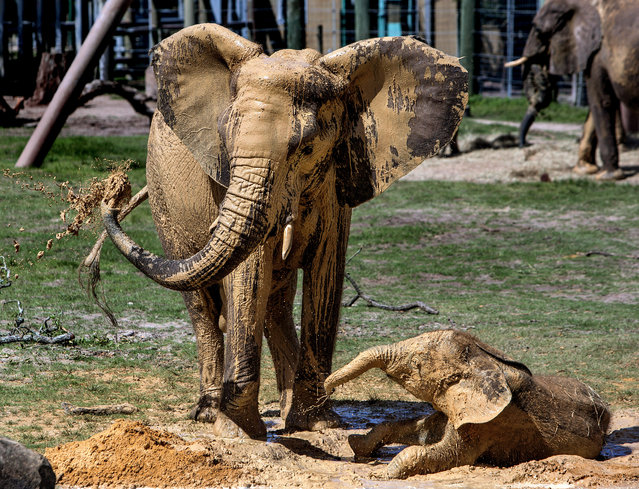
Lowry Park Zoo elephants Matjeka, 23, and her 1-year-old daughter, Mavi, apply a liberal coating of “sunscreen” to themselves in a clay mud wallow at the park Tuesday, August 12, 2014, in Tampa, Fla., on the park's first observation of World Elephant Day to raise awareness of the wild African elephant crisis. “Elephants are prone to being sunburned”, said associate curator Chris Massaro. “What they need is lot of mud or clay to roll around in and cover up their skin so it will protect it from the sun”. (Photo by Cherie Diez/AP Photo/The Tampa Bay Times)
Details
16 Aug 2014 11:38:00
Highly commended birds : Crested guan by Tim Hunt (UK). ‘This photo shows a crested guan in the cloud forests of Costa Rica as it pauses while foraging on a lone branch. Due to the clouds that are so typical for this habitat, I could often only photograph the bird’s silhouette against a grey sky. (Photo by Tim Hunt/GDT European Wildlife Photographer of the Year 2015)

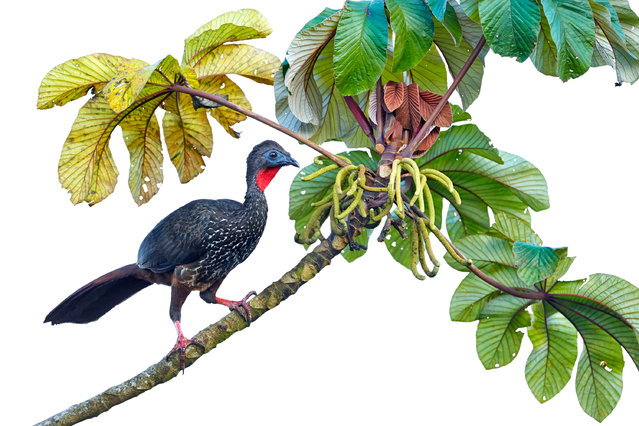
Highly commended birds : Crested guan by Tim Hunt (UK). ‘This photo shows a crested guan in the cloud forests of Costa Rica as it pauses while foraging on a lone branch. Due to the clouds that are so typical for this habitat, I could often only photograph the bird’s silhouette against a grey sky. But then, for a short moment only, the sun broke through the clouds, and I overexposed the image by over two stops in order to blow out the background and allow this beautifully marked bird to stand out’. (Photo by Tim Hunt/GDT European Wildlife Photographer of the Year 2015)
Details
24 Nov 2015 08:01:00
Shoppers wrestle over a television as they compete to purchase retail items on “Black Friday” at an Asda superstore in Wembley, north London November 28, 2014. Britain's high streets, malls and online sites were awash with discounts on Friday as more retailers than ever embraced U.S.-style “Black Friday” promotions, seeking to kickstart trading in the key Christmas period. (Photo by Luke MacGregor/Reuters)

Shoppers wrestle over a television as they compete to purchase retail items on “Black Friday” at an Asda superstore in Wembley, north London November 28, 2014. Britain's high streets, malls and online sites were awash with discounts on Friday as more retailers than ever embraced U.S.-style “Black Friday” promotions, seeking to kickstart trading in the key Christmas period. In the United States the Friday following the Thanksgiving Day holiday is called Black Friday because spending usually surges and indicates the point at which American retailers begin to turn a profit for the year, or go “into the black”. (Photo by Luke MacGregor/Reuters)
Details
29 Nov 2014 12:48:00
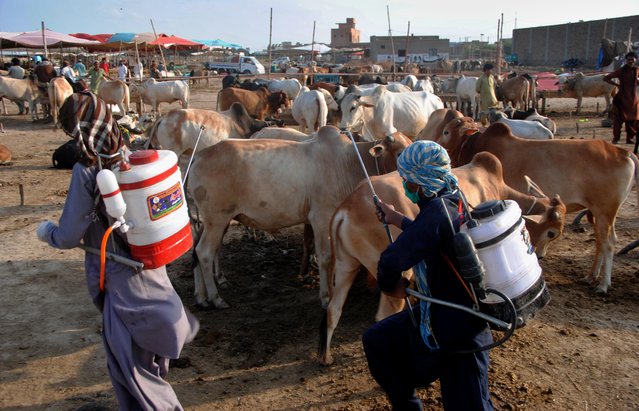
Health workers wearing face masks spray disinfectant liquid on sacrificial animals amid concerns over the spread of the SARS-CoV-2 coronavirus that causes the pandemic COVID-19 disease ahead of the Muslim festival of Eid al-Adha at an animal market in Hyderabad, southern Pakistan, 21 July 2020. Eid al-Adha, also known as the Festival of the Sacrifice, is the second and holiest of the two main Islamic holidays celebrated each year (the other one being Eid al-Fitr). Every year, on the 10th day of the Islamic lunar month of Dhu al-Hijjah, Muslims around the world ritually slaughter a sacrificial animal and split the meat into three parts: one is reserved for the family, another for friends and relatives, and the third is given to the poor and needy. The Saudi Supreme Court has declared that the first day of Eid al-Adha this year falls on 31 July. (Photo by Nadeem Khawar/EPA/EFE)

Health workers wearing face masks spray disinfectant liquid on sacrificial animals amid concerns over the spread of the SARS-CoV-2 coronavirus that causes the pandemic COVID-19 disease ahead of the Muslim festival of Eid al-Adha at an animal market in Hyderabad, southern Pakistan, 21 July 2020. (Photo by Nadeem Khawar/EPA/EFE)
Details
23 Jul 2020 00:07:00
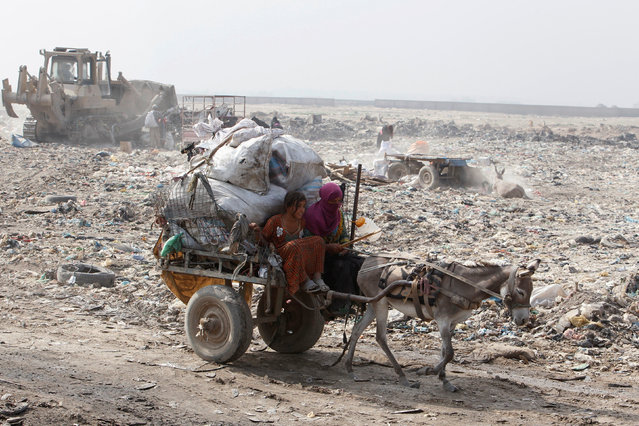
Garbage pickers collect ride on donkey cart while looking for recyclable materials at a rubbish dump in the outskirts of Baghdad, Iraq, August 23, 2016. Despite its huge untapped oil and gas reserves and steadily rising oil output and revenue, 23 percent of the population live below the poverty line, according to the Ministry of Planning. Eg, for 12-year-old Mohammed, life in Sadr City means long days during his school holidays scrabbling through the refuse in the scorching summer heat before selling his daily haul to a middleman. He sells each kilogram (2.2 lb) of plastic bottles or soda cans for 250 Iraqi dinars (around 20 U.S. cents), earning between 2,000 to 4,000 dinars ($1.50–$3) a day. A International Labor Organization report listing dangerous jobs in which children are engaged across the world mentioned collecting garbage as one of the activities in which minors risked suffering violence and injury. (Photo by Khalid al Mousily/Reuters)

Garbage pickers collect ride on donkey cart while looking for recyclable materials at a rubbish dump in the outskirts of Baghdad, Iraq, August 23, 2016. Despite its huge untapped oil and gas reserves and steadily rising oil output and revenue, 23 percent of the population live below the poverty line, according to the Ministry of Planning. (Photo by Khalid al Mousily/Reuters)
Details
24 Aug 2016 11:52:00
Tourists take photographs as a wild sika deer eats a bag on June 6, 2019 in Nara, Japan. Nara's free-roaming deer have become a huge attraction for tourists. However, an autopsy on a deer that was recently found dead near one of the city's famous temples discovered 3.2kg of plastic in its stomach and caused concern at the effect of tourism as Japan struggles to cope with a huge increase in domestic and international tourists. Alongside a growing Japanese tendency to holiday domestically, a record 31 million people visited the country in 2018 up 8.7 percent from the previous year, with many people now worrying about the environmental impact caused by such large visitor numbers. (Photo by Carl Court/Getty Images)

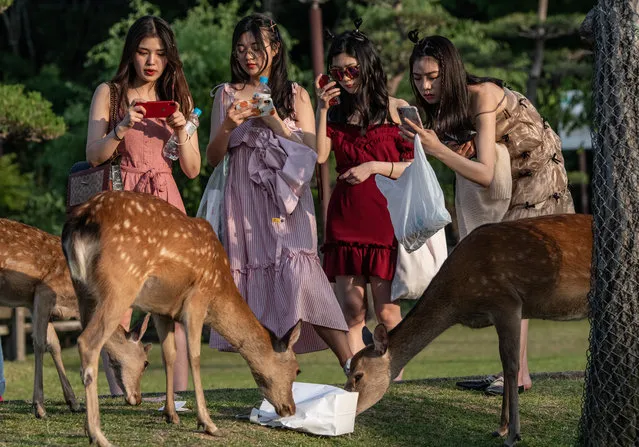
Tourists take photographs as a wild sika deer eats a bag on June 6, 2019 in Nara, Japan. Nara's free-roaming deer have become a huge attraction for tourists. However, an autopsy on a deer that was recently found dead near one of the city's famous temples discovered 3.2kg of plastic in its stomach and caused concern at the effect of tourism as Japan struggles to cope with a huge increase in domestic and international tourists. (Photo by Carl Court/Getty Images)
Details
19 Jun 2019 00:03:00