Loading...
Done
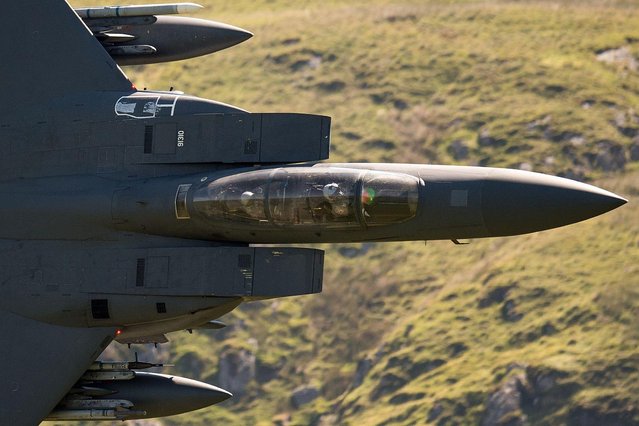
A United States Air Force (USAF) F-15 fighter jet travels at low altitude through the “Mach Loop” series of valleys near Dolgellau, north Wales on June 26, 2018. (Photo by Oli Scarff/AFP Photo)

A United States Air Force (USAF) F-15 fighter jet travels at low altitude through the “Mach Loop” series of valleys near Dolgellau, north Wales on June 26, 2018. The Mach Loop valleys, situated between Dolgellau and Machynlleth, are regularly used by the military for operational low flying training which can take place as low as 76 metres from the nearest terrain. The USAF regularly use the loop to practice low-altitude flight, which confuses radar systems. (Photo by Oli Scarff/AFP Photo)
Details
29 Jun 2018 00:05:00
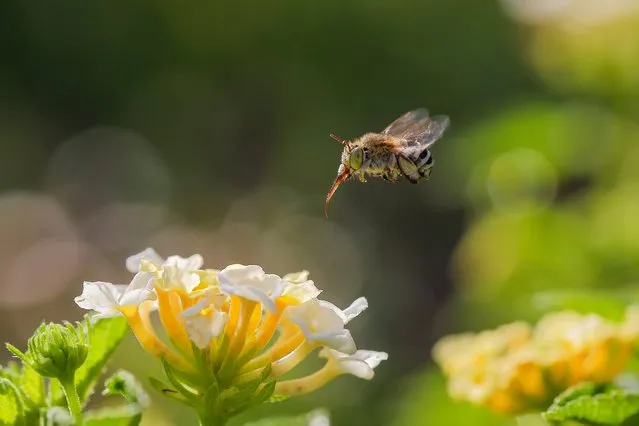
“Tasty Nature” by Dipesh Bhatt. “The blue banded bee (Amegilla cingulata) is pointing this sheath towards the flowers in preparation for sipping nectar”. Taken in Gujarat, India. (Photo by Dipesh Bhatt/2016 Royal Society of Biology Photographer of the Year competition)

“Tasty Nature” by Dipesh Bhatt. “The blue banded bee (Amegilla cingulata) is pointing this sheath towards the flowers in preparation for sipping nectar”. Taken in Gujarat, India. (Photo by Dipesh Bhatt/2016 Royal Society of Biology Photographer of the Year competition)
Details
30 Sep 2016 09:32:00
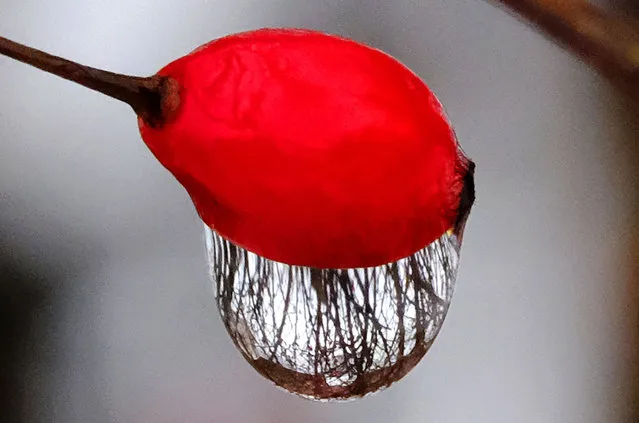
A photograph taken on November 20, 2021 shows the barberry berries with water drops after a rain in the garden outside Moscow. (Photo by Yuri Kadobnov/AFP Photo)

A photograph taken on November 20, 2021 shows the barberry berries with water drops after a rain in the garden outside Moscow. (Photo by Yuri Kadobnov/AFP Photo)
Details
08 Apr 2022 06:08:00
Women sells vegetables at Kaporo market in Conakry, Guinea Monday, September 13, 2021. (Photo by Sunday Alamba/AP Photo)

Women sells vegetables at Kaporo market in Conakry, Guinea Monday, September 13, 2021. (Photo by Sunday Alamba/AP Photo)
Details
02 Dec 2021 09:53:00
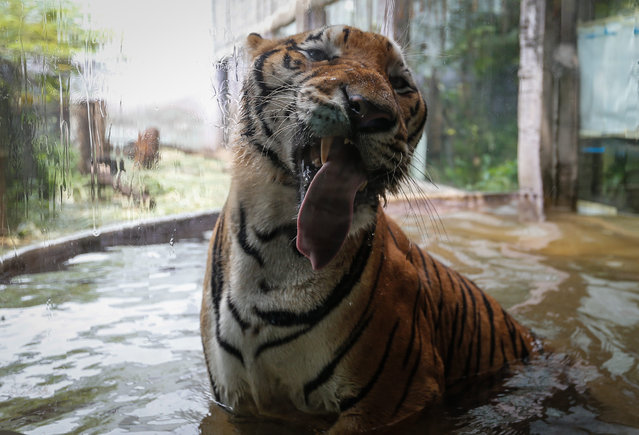
A Bengal tiger licks a glass enclosure during a presentation of Bengial tiger cubs at the Malabon Zoo in Malabon City, north of Manila, Philippines, 14 July 2016. The Bengal tiger cubs, which were born at the zoo, are two months old and named “Tiger Duterte” and “Tiger Leni”. The Malabon Zoo has one of the largest private collections of exotic and endemic animals in the Philippines. (Photo by Mark R. Cristino/EPA)

A Bengal tiger licks a glass enclosure during a presentation of Bengial tiger cubs at the Malabon Zoo in Malabon City, north of Manila, Philippines, 14 July 2016. The Bengal tiger cubs, which were born at the zoo, are two months old and named “Tiger Duterte” and “Tiger Leni”. The Malabon Zoo has one of the largest private collections of exotic and endemic animals in the Philippines. (Photo by Mark R. Cristino/EPA)
Details
17 Jul 2016 11:06:00
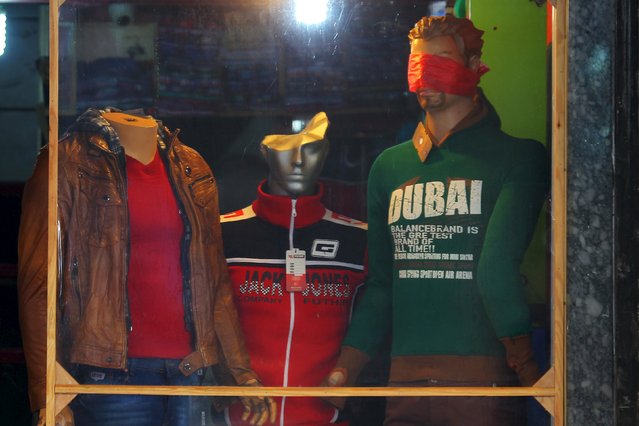
A clothing shop displays its merchandise in the rebel-controlled city of Idlib, Syria November 7, 2015. (Photo by Ammar Abdullah/Reuters)

A clothing shop displays its merchandise in the rebel-controlled city of Idlib, Syria November 7, 2015. (Photo by Ammar Abdullah/Reuters)
Details
07 Feb 2016 07:05:00


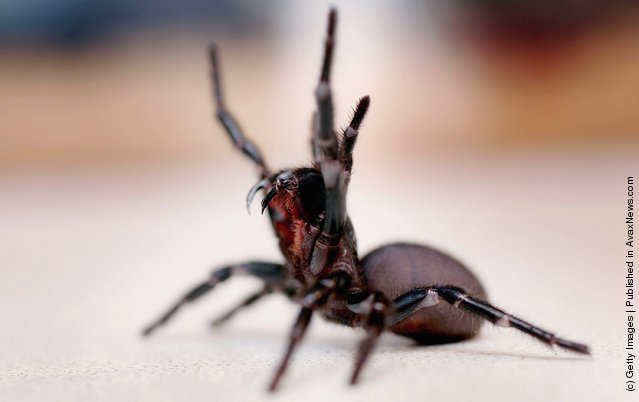
A Funnel Web spider is pictured at the Australian Reptile Park January 23, 2006 in Sydney, Australia. The Funnel Web is one of Australia's deadliest animals, with a venom that is packed with at least 40 different toxic proteins. A bite from a Funnel Web causes massive electrical over-load in the body's nervous system. Finally, fatalities occur from either heart attack or a pulmonary oedema, where the capillaries around the lungs begin to leak fluid and the patient effectively drowns. Death can come as quickly as two hours after a bite if no medical treatment is sought. Due to advances in anti-venom, there has been no death from a Funnel Web bite in Australia since 1980. Australia is home to some of the most deadly and poisonous animals on earth. (Photo by Ian Waldie/Getty Images)
Details
25 Apr 2011 07:49:00
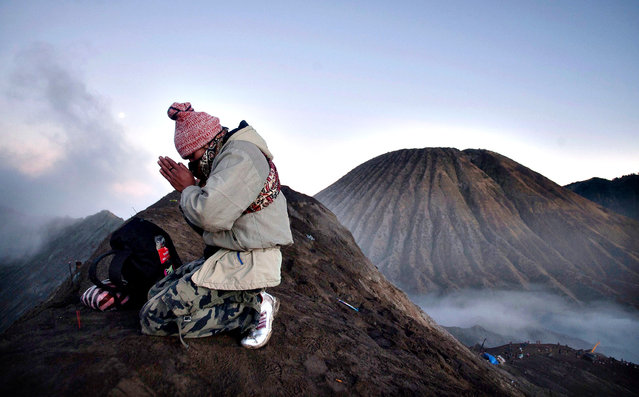
A Tengger tribesman prays at Mount Bromo during the annual Kasada ceremony in East Java on August 12, 2014. The Kasada ceremony is a festival held every 14th day of the Kasada month in the traditional Hindu lunar calender to honour Sang Hyang Widhi (God Almighty) and is based on the legend of Roro Anteng and Joko Seger from the Majapahit Kingdom, from which their Tengger tribe name originates. (Photo by Juni Kriswanto/AFP Photo)

A Tengger tribesman prays at Mount Bromo during the annual Kasada ceremony in East Java on August 12, 2014. The Kasada ceremony is a festival held every 14th day of the Kasada month in the traditional Hindu lunar calender to honour Sang Hyang Widhi (God Almighty) and is based on the legend of Roro Anteng and Joko Seger from the Majapahit Kingdom, from which their Tengger tribe name originates. Hundreds of worshippers from the Tengger tribe offer food and livestock as a symbolic sacrifice which they throw into the crater for the blessings of safety and prosperity to their familyies and community. (Photo by Juni Kriswanto/AFP Photo)
Details
16 Aug 2014 11:19:00