Loading...
Done
Afghanistan: Dogs of War Part 1

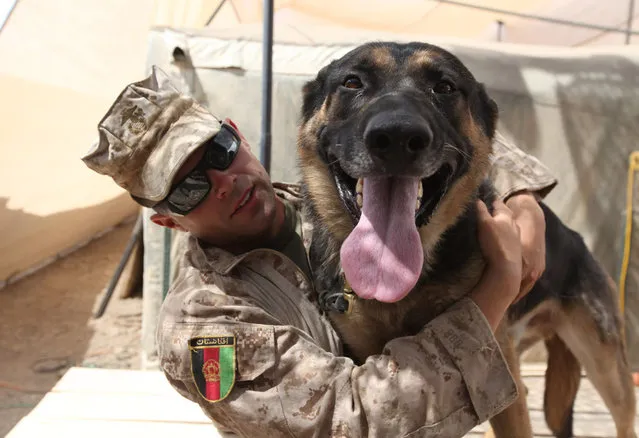
Throughout the course of the long war in Afghanistan, Coalition troops have relied on thousands of military working dogs to help keep them safe, and make their jobs easier. The dogs are trained to detect explosives, to find illegal drugs, to search for missing comrades, or target enemy combatants. Not only are they active on the front lines, but behind the lines they serve as therapy dogs, service dogs, and loyal companions. They also share the same risks as the ground troops, suffering injuries and sometimes death on the battlefields. Gathered here are images of these dogs and their handlers in Afghanistan and back home, from over the past several years, part of the ongoing series here on Afghanistan.
Details
03 Jun 2014 21:02:00
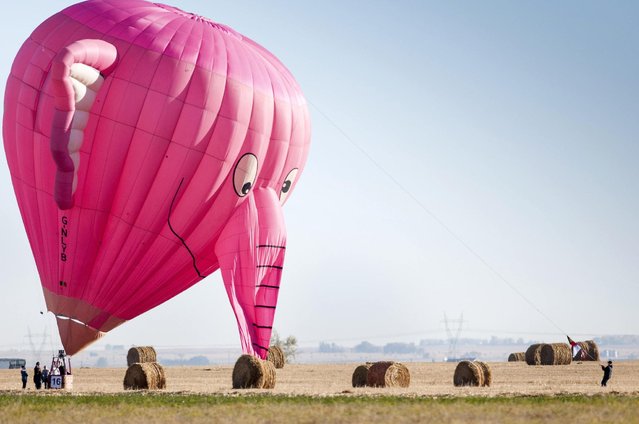
A pink elephant balloon, one of the entries in the Canadian Hot Air Balloon Championships, lands in a field in High River September 27, 2013. The event is a qualifier for the World Hot Air Balloon Championships in Sao Paulo in 2014. (Photo by Mike Sturk/Reuters)

A pink elephant balloon, one of the entries in the Canadian Hot Air Balloon Championships, lands in a field in High River September 27, 2013. The event is a qualifier for the World Hot Air Balloon Championships in Sao Paulo in 2014. (Photo by Mike Sturk/Reuters)
Details
29 Sep 2013 12:35:00
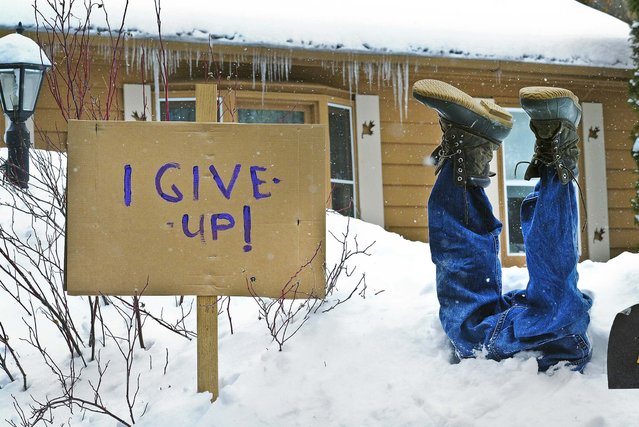
A mannequin with boots is stuffed upside down in the snow in front of a  home in Nisswa, Minnesota, on March 18, 2013. (Photo by Steve Kohls/The Brainerd Daily Dispatch)

A mannequin with boots is stuffed upside down in the snow in front of a home in Nisswa, Minnesota, on March 18, 2013. (Photo by Steve Kohls/The Brainerd Daily Dispatch)

P.S. All pictures are presented in high resolution. To see Hi-Res images – just TWICE click on any picture. In other words, click small picture – opens the BIG picture. Click BIG picture – opens VERY BIG picture (if available; this principle works anywhere on the site AvaxNews).
Details
23 Mar 2013 14:08:00
Winton Elementary fifth graders Juliana Ragan, from left, Chloe Windsor and Paisley Ganske wait backstage for their turn to perform as the Andrew Sisters during the Pearl Harbor/Veterans assembly at the school on Monday, December 7, 2015, in Coeur d'Alene, Idaho. Dec. 7 is the 74th anniversary of the Japanese bombing of Pearl Harbor. (Photo by Kathy Plonka/The Spokesman-Review via AP Photo)

Winton Elementary fifth graders Juliana Ragan, from left, Chloe Windsor and Paisley Ganske wait backstage for their turn to perform as the Andrew Sisters during the Pearl Harbor/Veterans assembly at the school on Monday, December 7, 2015, in Coeur d'Alene, Idaho. Dec. 7 is the 74th anniversary of the Japanese bombing of Pearl Harbor. (Photo by Kathy Plonka/The Spokesman-Review via AP Photo)
Details
08 Dec 2015 11:00:00
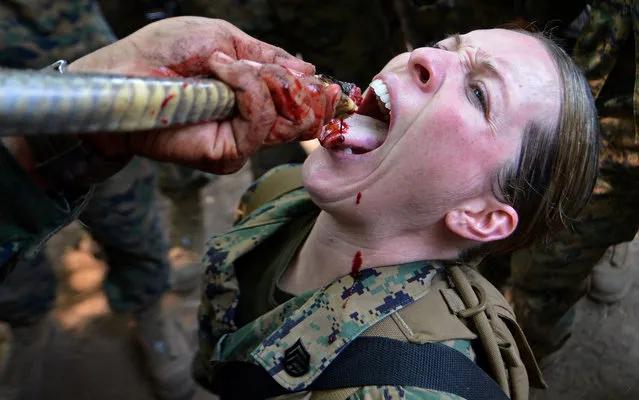
In a military base in the Thai province of Chon Buri February 20 U.S. Marines Navy with Thailand began their studies in jungle survival. The event is held in joint military exercises “Cobra Gold 2013”. During a jungle survival program February 20, 2013 taught by Royal Thai Special Forces in Sannapit, Thailand, U.S. Marines learned to catch cobras and drink their fresh blood, not to mention eat forest insects and pull the heads off of chicken. The training was part of Operation Cobra Gold 13, the 32nd edition of international military exercises hosted by the Thai. According to a U.S. Marines press release, Cobra Gold is the largest exercise of its kind in Asia and incorporates troops from five other nations in addition to the U.S. and Thailand. The Daily Mail reports that the Marines were invited to experience the local custom of drinking cobra blood after being taught to catch and kill cobras in the wild. As CNN notes, Cobra blood is believed to be a panacea and aphrodiasic in parts of Southeast Asia. In Jakarta, vendors can earn over $100 a night selling shots of cobra blood mixed with liquor. (Photo by Pornchai Kittiwongsakul/AFP Photo)

During a jungle survival program February 20, 2013 taught by Royal Thai Special Forces in Sannapit, Thailand, U.S. Marines learned to catch cobras and drink their fresh blood, not to mention eat forest insects and pull the heads off of chicken. The training was part of Operation Cobra Gold 13, the 32nd edition of international military exercises hosted by the Thai. According to a U.S. Marines press release, Cobra Gold is the largest exercise of its kind in Asia and incorporates troops from five other nations in addition to the U.S. and Thailand. The Daily Mail reports that the Marines were invited to experience the local custom of drinking cobra blood after being taught to catch and kill cobras in the wild. As CNN notes, Cobra blood is believed to be a panacea and aphrodiasic in parts of Southeast Asia. In Jakarta, vendors can earn over $100 a night selling shots of cobra blood mixed with liquor. (Photo by Pornchai Kittiwongsakul/AFP Photo)
Details
23 Feb 2013 11:52:00
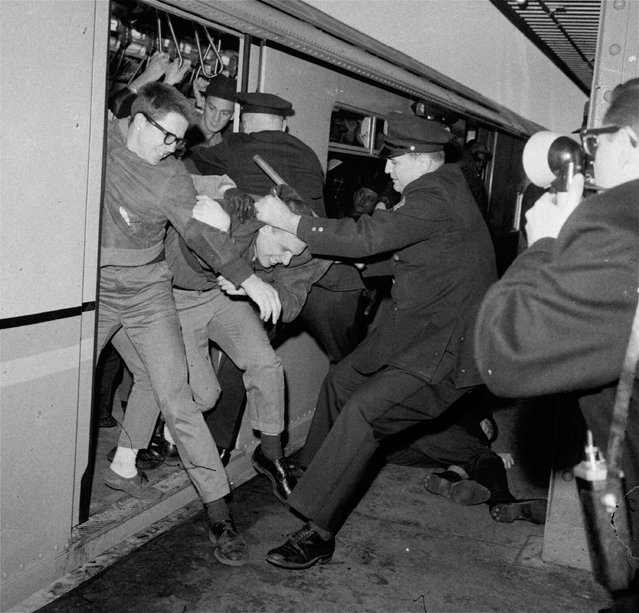
New York City policemen tangled with demonstrators at a subway station on the opening day of the New York World's Fair, April 22, 1964. Youths attempted to stall the train, which was headed from the city to the fairgrounds, as a form of protest on behalf of civil rights for blacks. (Photo by Charles Gorry/AP Photo)

New York City policemen tangled with demonstrators at a subway station on the opening day of the New York World's Fair, April 22, 1964. Youths attempted to stall the train, which was headed from the city to the fairgrounds, as a form of protest on behalf of civil rights for blacks. (Photo by Charles Gorry/AP Photo)
Details
26 Jan 2015 11:52:00
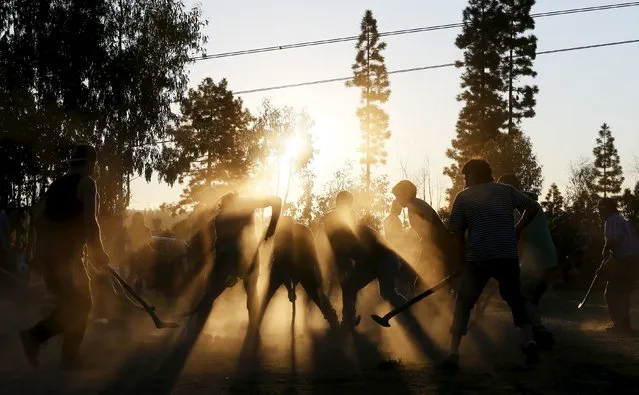
People play "Palin", a traditional ritual and ancestral Mapuche game played with curved sticks called "Chuecas" and a wooden ball, during a meet on Dia de la Raza (Day of the Races), also known as Columbus Day in Vina del Mar, Chile October 11, 2015. (Photo by Rodrigo Garrido/Reuters)

People play "Palin", a traditional ritual and ancestral Mapuche game played with curved sticks called "Chuecas" and a wooden ball, during a meet on Dia de la Raza (Day of the Races), also known as Columbus Day in Vina del Mar, Chile October 11, 2015. (Photo by Rodrigo Garrido/Reuters)
Details
15 Oct 2015 08:01:00
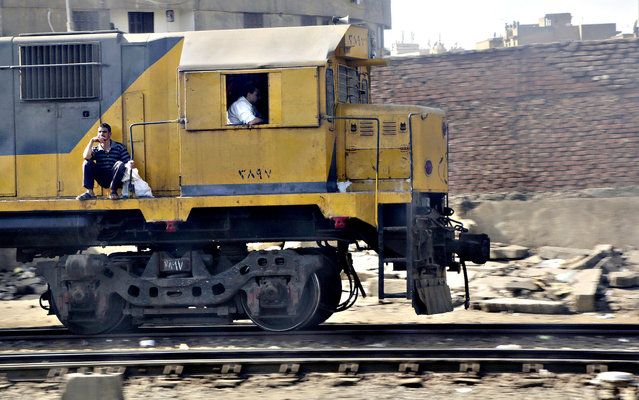
An Egyptian passenger sits on the locomotive of a train as it leaves Cairo train station in Egypt, Wednesday, October 14, 2015. (Photo by Amr Nabil/AP Photo)

An Egyptian passenger sits on the locomotive of a train as it leaves Cairo train station in Egypt, Wednesday, October 14, 2015. (Photo by Amr Nabil/AP Photo)
Details
12 Nov 2015 08:02:00