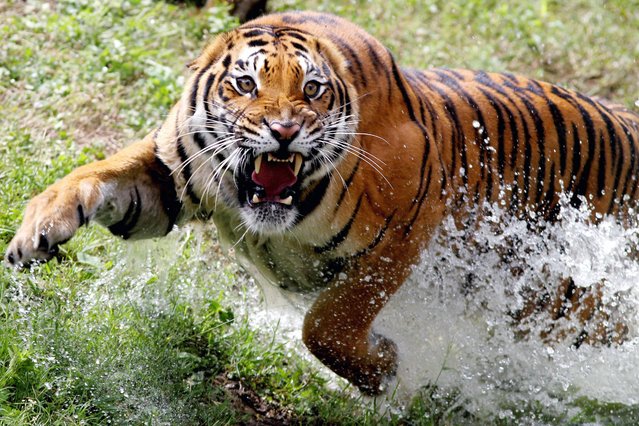
A Bengal tigress who gave birth to four cubs at the Guadalajara Zoo, Jalisco state, Mexico runs at the zoo on October 5, 2021. (Photo by Ulises Ruiz/AFP Photo)
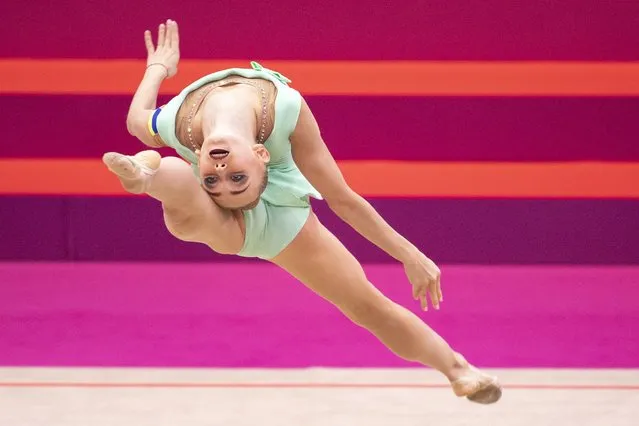
Ukraine's Viktoriia Onopriienko competes in the individual all-around qualification round during the Rhythmic Gymnastics World Championships at the West Japan General Exhibition Center in Kitakyushu, Fukuoka prefecture on October 27, 2021. (Photo by Charly Triballeau/AFP Photo)
A man walks past the body of a man after he was shot in the head by unknown assailants during a protest in Port-au-Prince, Haiti, Monday, August 22, 2022. (Photo by Odelyn Joseph/AP Photo)
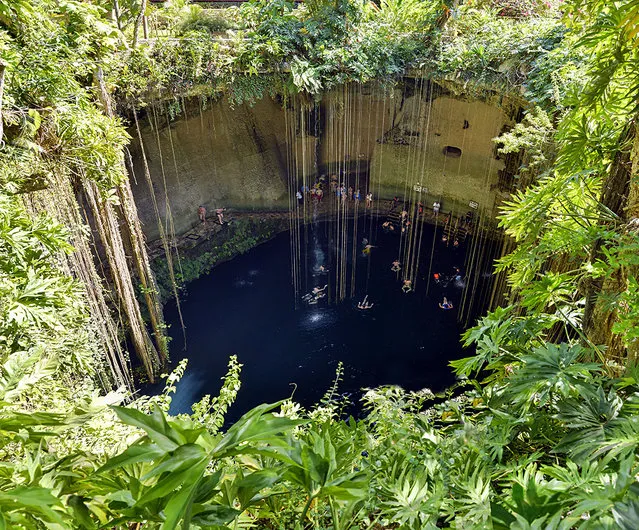
A cenote is a natural phenomenon, a sinkhole in the Earth’s surface. The Yucatan Peninsula in Mexico has an estimated 7,000 cenotes because it is primarily made up of porous limestone. For millions of years, rainfall slowly ate away at the limestone and a huge system of underground caves and caverns was formed. Many filled with water from rain or from the underground water table. When the roof of a water filled cave collapses, a cenote is born. The water found in a cenote may be fresh water, salt water, or both. Structurally it may be completely open, like a lake, almost completely closed with just a small opening at the top, or somewhere in between.
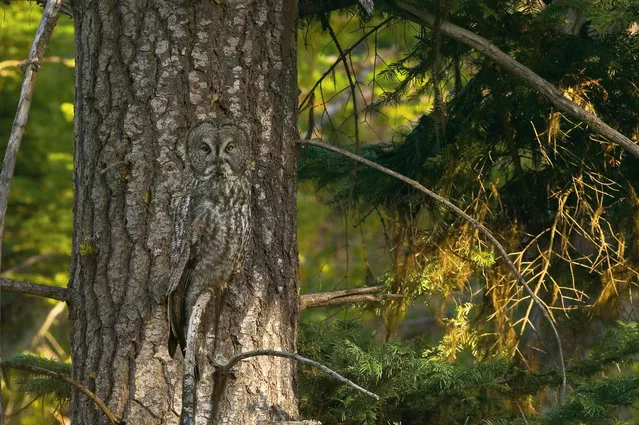
An amazing series by Art Wolfe that were taken as part of his “Vanishing Act” in which the Seattle-based photographer shows the talent of animals in disguising themselves from predators. “This collection has been a long time in the making. Finding and filming animals on location is an exhilarating and painstaking process. I’m still adding to the project even now”. Have fun spotting the hidden animals.
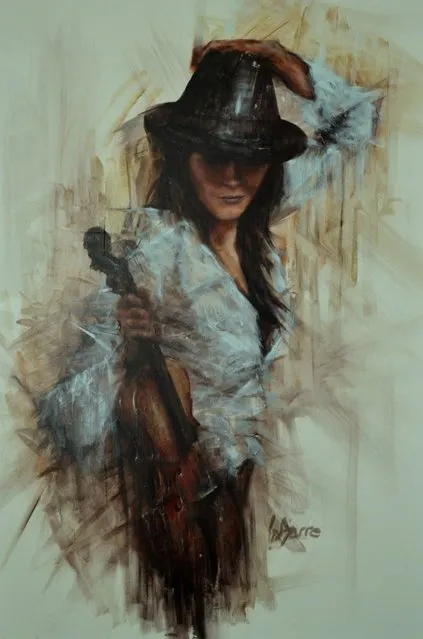
Leading contemporary artist Remi LaBarre describes his evocative oils as “painted songs”. Influenced by John Singer Sargent, his work reflects the lighting of hushed environments and presents poetic narratives of life after dark in bars and clubs. Remi's acclaimed artwork has won him a formidable reputation in Europe and North America. His premier UK collection features a breathtaking quartet of musical portraits which represent an atmospheric homage to his great love of jazz.
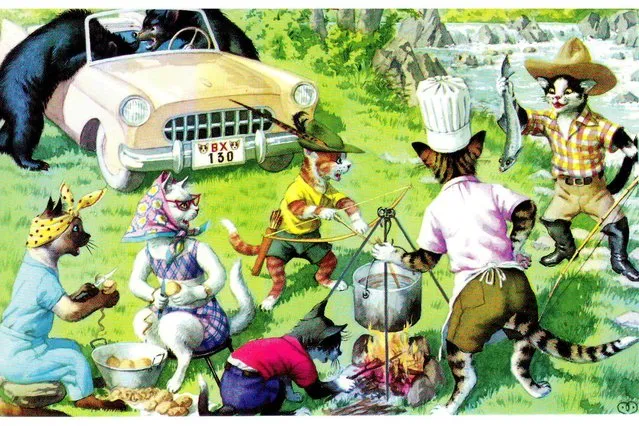
From the 1940s through the 1960s, the Alfred Mainzer Company of Long Island City, NY published a series of linen and photochrome humorous cat postcards illustrated by Eugen Hartung (or Hurtong) (1897–1973), sometimes referred to as “Mainzer Cats”. These postcards normally illustrate settings that are filled with action, often with a minor disaster just about to occur. While the dressed cats were by far the most popular and most plentiful cards, Hartung also painted other dressed animals – primarily mice, dogs, and hedgehogs.