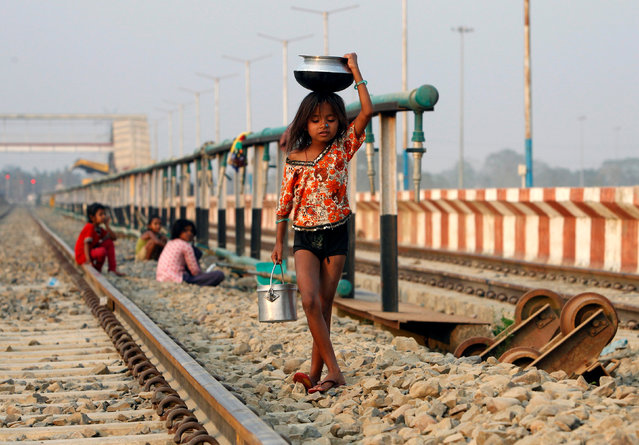
A girl carries utensils after filling them with water from a pipe that supplies water to trains at a railway station on the outskirts of Agartala, India, February 28, 2017. (Photo by Jayanta Dey/Reuters)
A shooting star (L, top) is seen on the night sky during the perseid meteor shower in Jankowo, near Poznan, 11 August 2016. The first half of August is traditionally the best time to look out for meteors called “shooting stars”, or perseids which are the leftover dust particles of a comet tail associated with comet Swift-Tuttle. (Photo by Lukasz Ogrodowczyk/EPA)
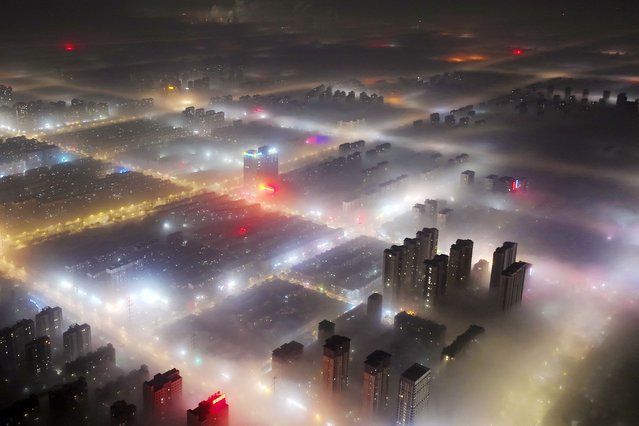
The aerial photo taken on November 20, 2024 shows a general view of buildings during a foggy day in Yinchuan, in northern China's Ningxia region. (Photo by AFP Photo/China Stringer Network)
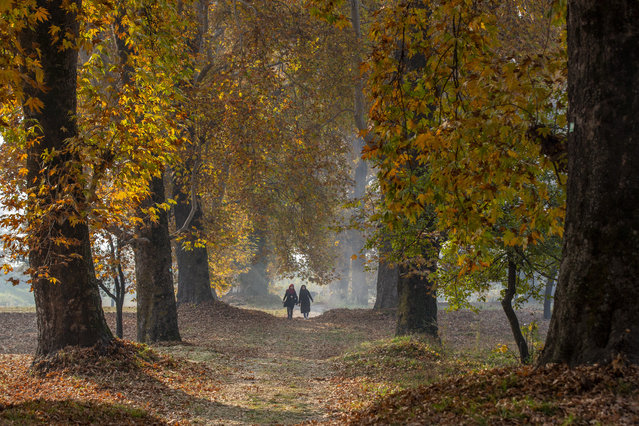
Kashmiri women walk in a garden covered with fallen Chinar leaves on the outskirts of Srinagar, Indian controlled Kashmir, Wednesday, November 4, 2020. Kashmiris collect fallen leaves in autumn to make charcoal for use during winters. (Photo by Dar Yasin/AP Photo)
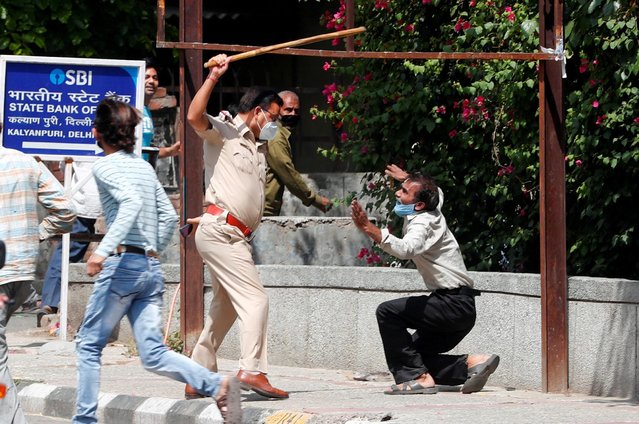
A police officer raises a baton at a man who, according to police, had broken the social distancing rule, outside a wine shop during an extended nationwide lockdown to slow the spread of the coronavirus disease (COVID-19), in New Delhi, India, May 4, 2020. (Photo by Adnan Abidi/Reuters)
Italy's Emma Severini tries to tackle Portugal's Tatiana Pinto during the Euro 2025, group B, soccer match between Portugal and Italy at Stade de Geneve in Geneva, Switzerland, Monday, July 7, 2025. (Photo by Alessandra Tarantino/AP Photo)
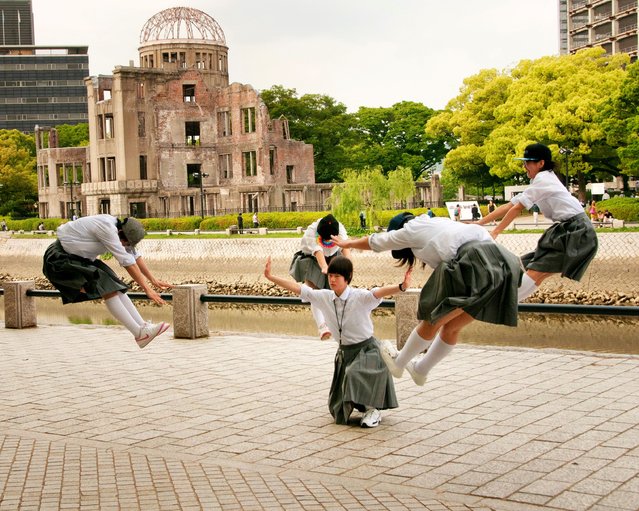
This image was taken purely by chance, when Fujioka happened to pass a group of schoolgirls striking a popular social media pose in Hiroshima in 2017. “I didn’t even notice the Atomic Bomb Dome (war memorial) behind them when I photographed this image – the girls probably didn’t either. The past and present of Hiroshima co-exists here, with a river running between”. (Photo by Aya Fujioka)
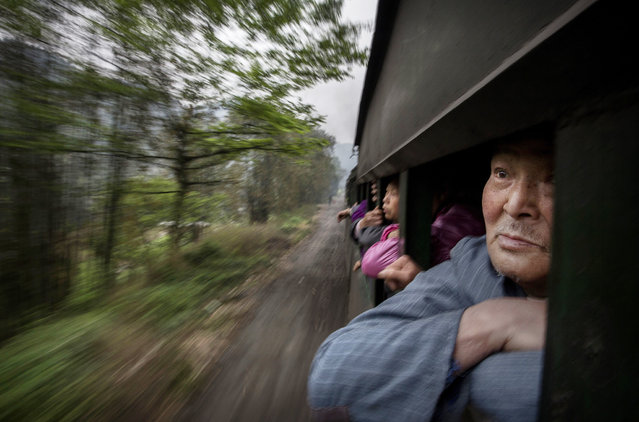
Local villagers ride a local coal powered steam train on March 27, 2015 at a station in the town of Shixi , Sichuan Province, in Southern China. While China boasts the world's most extensive high-speed rail infrastructure with over 16,000 kilometers of track, the Shixi-Bagou railway is still a primary connection for local villagers between towns and is kept alive by tourist cars carrying passengers for ten times the price. The rail line came into service in the late 1950s and the train was initially used to transport coal from a now-shuttered mine before passenger carriages were added. (Photo by Kevin Frayer/Getty Images)