A dejected German Grenadier carrying a machine gun on his shoulder in front of a building on fire during the German retreat in Russia. (Photo by Keystone/Getty Images). 1944
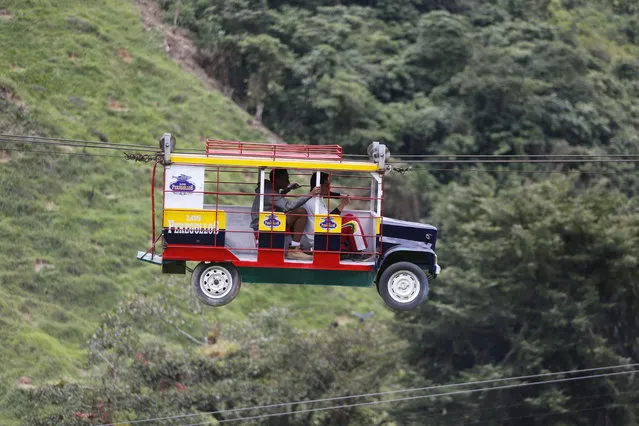
Tourists ride a cable car in the form a of a Chiva, a bus used to serve rural routes, in Pitalito, Colombia, Tuesday, April 5, 2017. The ride called “La Chiva Voladora” costs about $0.70 and you zip along about 800 meters from one side of a hill to another. (Photo by Fernando Vergara/AP Photo)
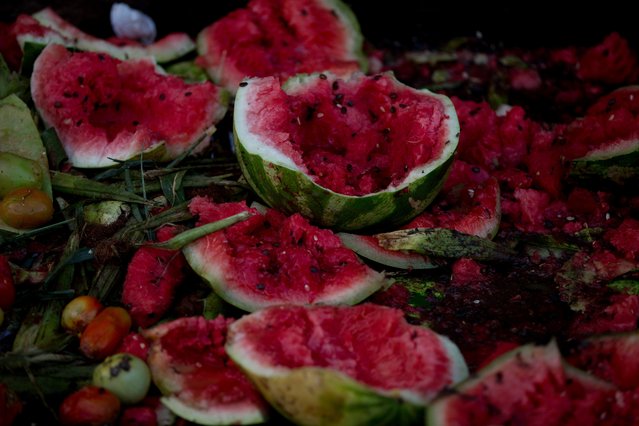
In this May 31, 2016 photo, pieces of watermelon litter the trash area of the Coche public market in Caracas, Venezuela. Staples such as corn flour and cooking oil are subsidized, costing pennies at the strongest of two official exchange rates. But fruit and vegetables have become an unaffordable luxury for many Venezuelan families. (Photo by Fernando Llano/AP Photo)
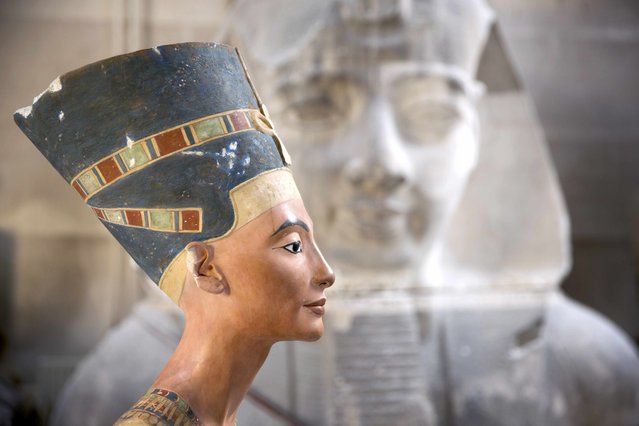
A replica of the bust of Nefertiti stands in the Replica Workshop of the National Museum of Berlin in Berlin, October 2, 2015. The workshop plans to produce 10 to 20 replicas a year, which like the original are made of a limestone core with gypsum finish. Each one will cost 8,900 euros (9,934 US Dollars). (Photo by Axel Schmidt/Reuters)
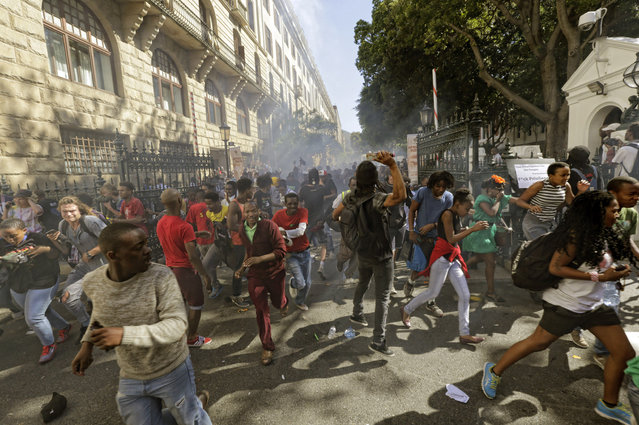
Protesting university students flee as police fire stun grenades outside Parliament in Cape Town, South Africa, Wednesday October 21, 2015. The protests are part of a wave of nationwide protests that have shut down many South Africa universities, which say they are struggling with higher operational costs as well as inadequate state subsidies. (Photo by AP Photo)
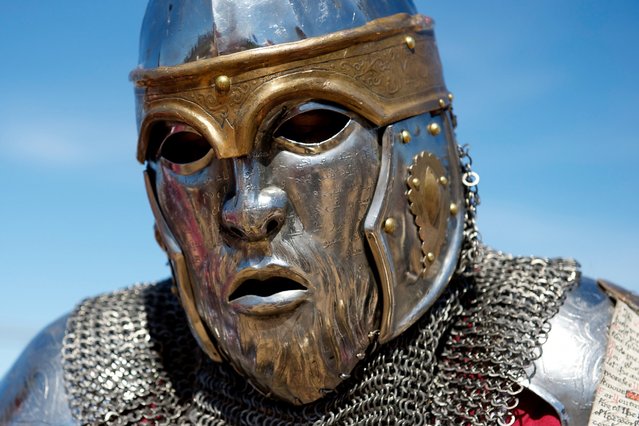
A member of the USA Knights team is seen wearing a face-like helmet shield during the International Medieval Combat championships at the castle of Belmonte, May 4, 2014, in Belmonte, Spain. The steel armor the knights wear can cost up to $10,000 and weigh 80 pounds. (Photo by Juan Naharro Gimenez/Getty Images)
In a picture taken with an underwater camera, a couple stands in front of a Polynesian priest during their underwater wedding ceremony on October 25, 2014 in Bora-Bora, in French Polynesia. The ceremony lasts twenty minutes and costs around 2700 euros. (Photo by Ben Thouard/AFP Photo)
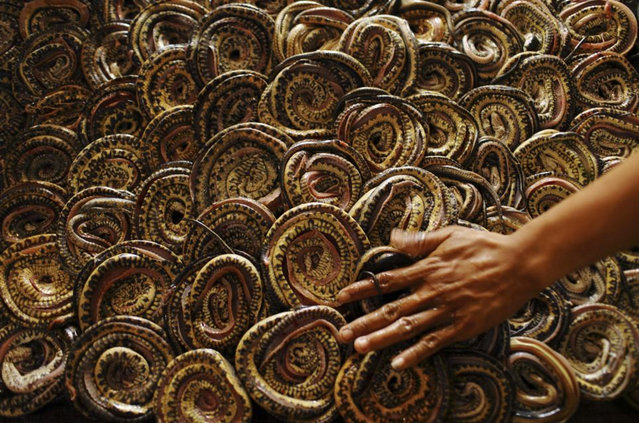
Images from a snake slaughterhouse at Kapetakan village in Indonesia’s West Java province. Wakira, who is known as “Boss Cobra”, owns the slaughterhouse that produces snake meat and skin. Snake meat is believed by some to be a remedy for skin diseases and asthma, as well as an aid to increase virility. The snake skins, measuring in the hundreds of metres, are sold to bag factories in the West and Central Java provinces on a monthly basis. The price of a bag made from snake skin costs between 150,000 rupiah ($ 15.60) and 300,000 rupiah ($31.20), depending on its size. That snakeskin handbag you’ll buy is costing a hell of a lot more.