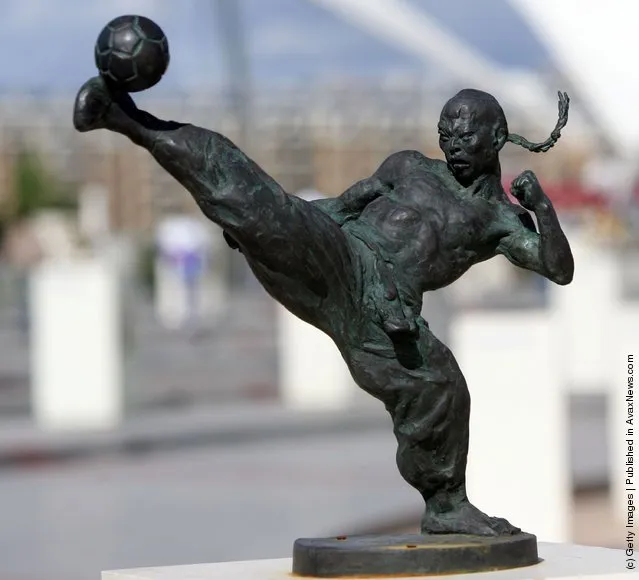
A sculpture is displayed at the Olympic Sculptures Exhibition at the Sculpture Park September 4, 2006 in Changchun of Jilin Province, China. (Photo by China Photos/Getty Images)
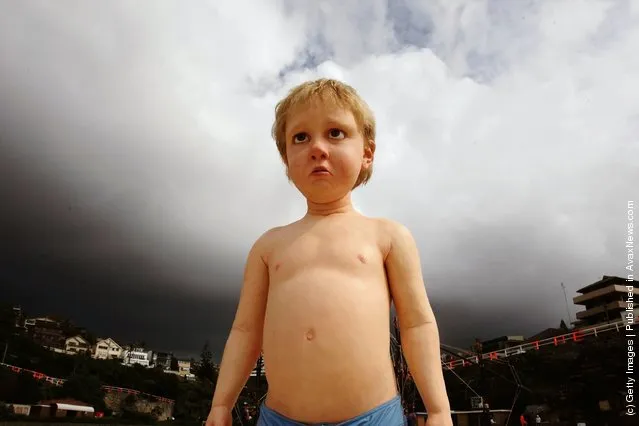
Children admire the work “Little Lost Boy” by Australian artist Paul Trefry is seen on Tamarama Beach as part of the Sculptures By The Sea outdoor art exhibition on November 10, 2009 in Sydney, Australia. (Photo by Ryan Pierse/Getty Images)
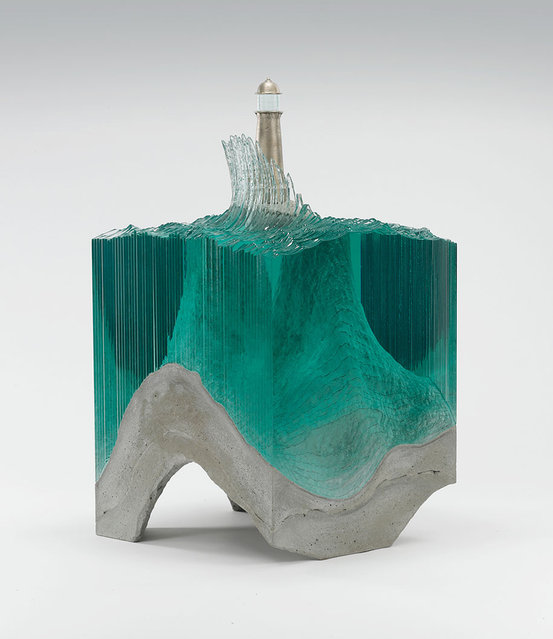
Sculptor Ben Young (previously) just unveiled a collection of new glass sculptures prior to the Sculpture Objects Functional Art + Design (SOFA) Fair in Chicago next month. Young works with laminated clear float glass atop cast concrete bases to create cross-section views of ocean waves that look somewhat like patterns in topographical charts. The self-taught artist is currently based in Sydney but was raised in Waihi Beach, New Zealand, where the local landscape and surroundings greatly inspired his art.
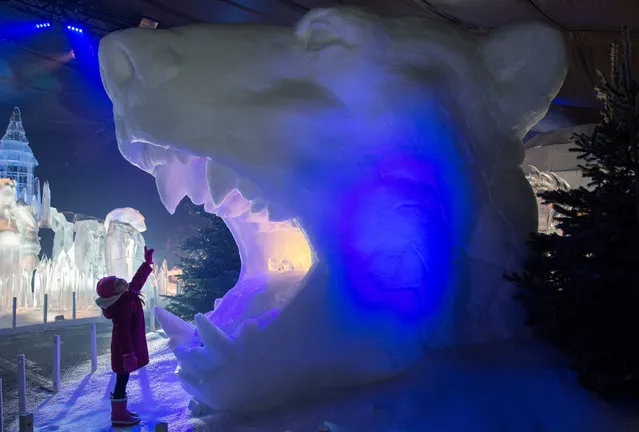
Scarlett points at the huge ice sculpture of a bear during a Photocall for Magical Ice Kingdom at Hyde Park Winter Wonderland at Hyde Park on November 17, 2016 in London, England. It is the event's 10th anniversary this year. (Photo by Ben Perry/Getty Images)
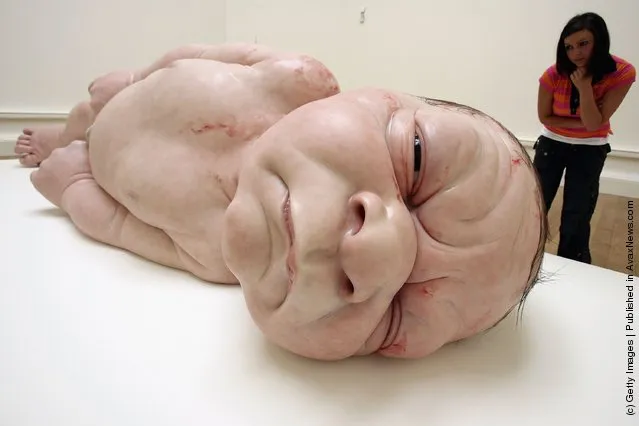
A visitors to the National Galleries of Scotland view the work “A girl” of sculptor Ron Mueck on August 4, 2006 Edinburgh in Scotland. (Photo by Jeff J Mitchell/Getty Images)
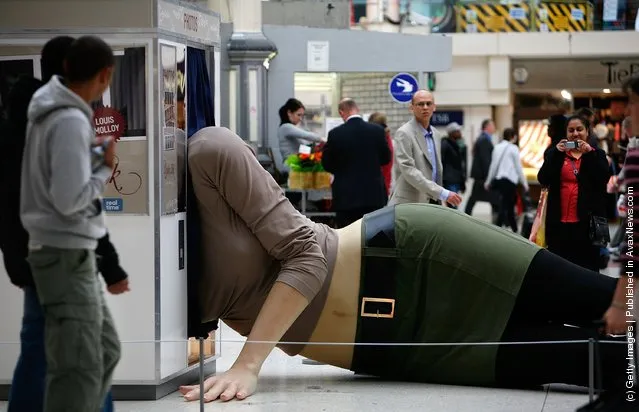
Travellers stop to take a second glance at a model of a giant lady with her head stuck in a photo booth being exhibited in Victoria train station on September 21, 2007 in London, England. (Photo by Cate Gillon/Getty Images)
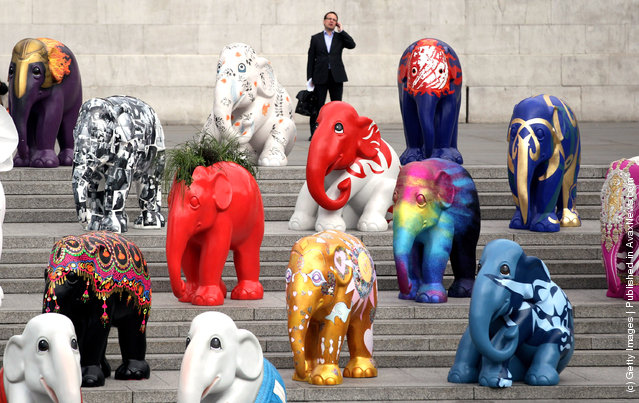
Decorative model Elephants stand in Trafalgar Square on May 4, 2010 in London, England. 260 of the decorative life size baby Elephants have been designed by established and emerging artists including Paul Smith, Marc Quinn and Julien Macdonald and have been placed across the capital in prominent places such as Buckingham Palace, Parliament Square and Trafalgar Square. (Photo by Dan Kitwood/Getty Images)
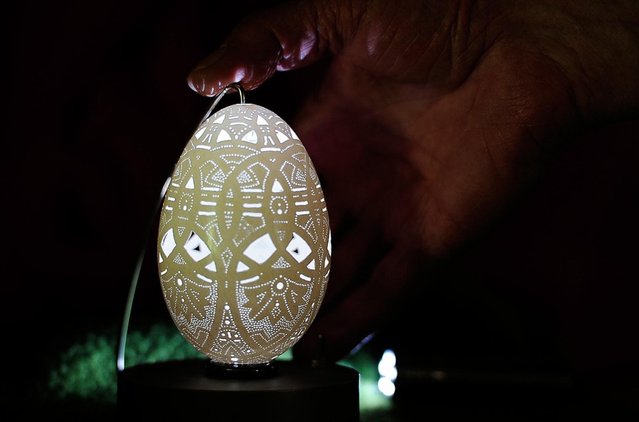
Slovenian artist Franc Grom, aged 72, makes unbelievably intricate egg sculptures using just a tiny electric drill and enormous patience. According to National Geographic, when finished, each egg contains approximately 2,500 to 3,500 holes. While Slovene artisans usually paint their eggs using a technique called drsanka by lightly scratching intricate patterns into the surfaces of colored eggs, carving them was solely Grom’s idea.