Performers of circus company Circa perform during a photocall for the Edinburgh Festival Fringe on Calton Hill on August 1, 2017 in Edinburgh, United Kingdom. (Photo by Murdo MacLeod/The Guardian)
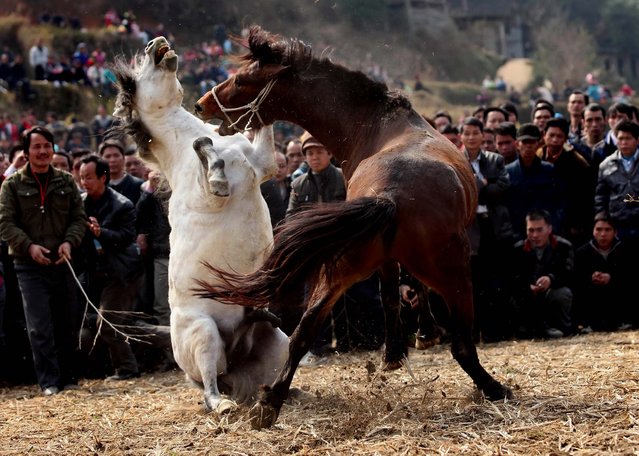
Two stallions confront each other at a horse fighting contest in Rongshui, China. More than 30 horses from surrounding regions took part in the traditional activity of the Lantern festival. (Photo by China Foto Press)
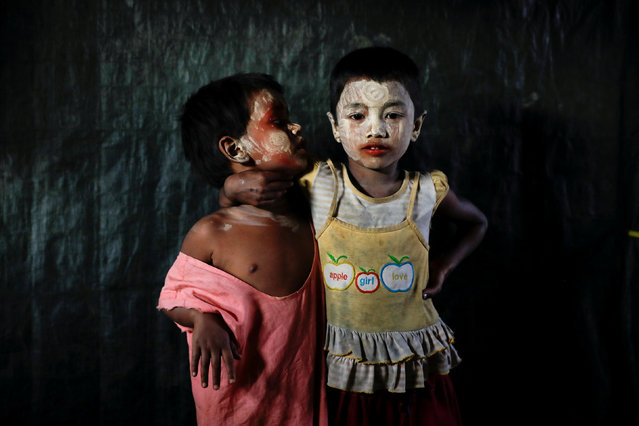
Rohingya refugee sisters Nur Kaida (R) and Ruhana hug each other at their shelter at the Palongkhali refugee camp near Cox's Bazar, Bangladesh December 21, 2017. (Photo by Marko Djurica/Reuters)
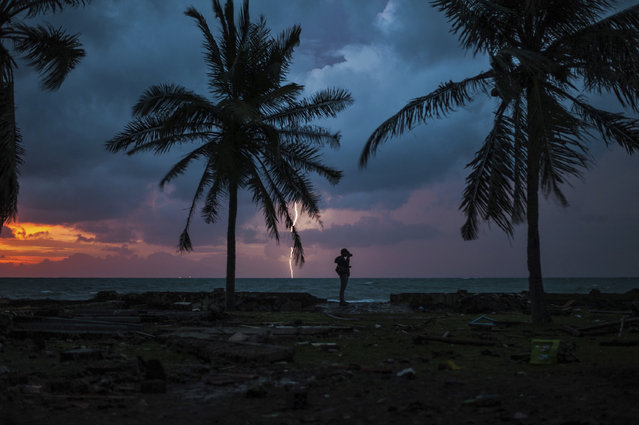
A photojournalist is silhouetted by the sunset as a lightning strike at a resort affected by Saturday's tsunami in Carita, Indonesia, Tuesday, December 25, 2018. Christmas celebrations traditionally filled with laughter and uplifting music were replaced by somber prayers for tsunami victims in an area hit without warning following a volcanic eruption, leaving hundreds of people dead and thousands homeless in disaster-prone Indonesia. (Photo by Fauzy Chaniago/AP Photo)
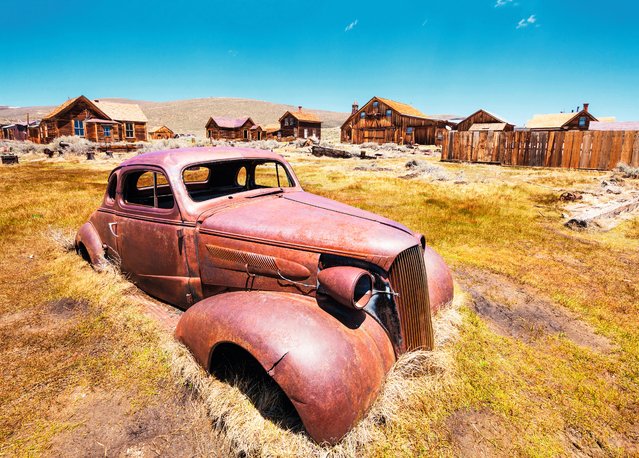
Kieron Connolly’s new book of photographs of more than 100 once-busy and often elegant buildings gives an idea of how the world might look if humankind disappeared. Here: Bodie, Mono County, California. Gold was discovered at Bodie in 1859 (just after the initial California gold rush) and it went from mining camp to boomtown. Its decline began in 1880, when word spread of new boomtowns elsewhere. The Standard Consolidated Mine closed in 1913, and four years later the Bodie Railway was abandoned. By 1940 the population was down to 40. Today, Bodie is maintained in a state of arrested decay as a visitor attraction. (Photo by Alamy Stock Photo)
Ice covered leafs are pictured on a tree near Amstall in northern Austria, December 2, 2014. Freezing fog and rain covered parts of the region with ice, causing blocked roads due to fallen trees and closed schools for security reasons, local media report. (Photo by Heinz-Peter Bader/Reuters)