A young Balinese man tries to kiss a woman during the Kissing Festival known as “Omed-Omedan” at Sesetan village on April 1, 2014 in Denpasar, Bali, Indonesia. (Photo by Agung Parameswara/Getty Images)
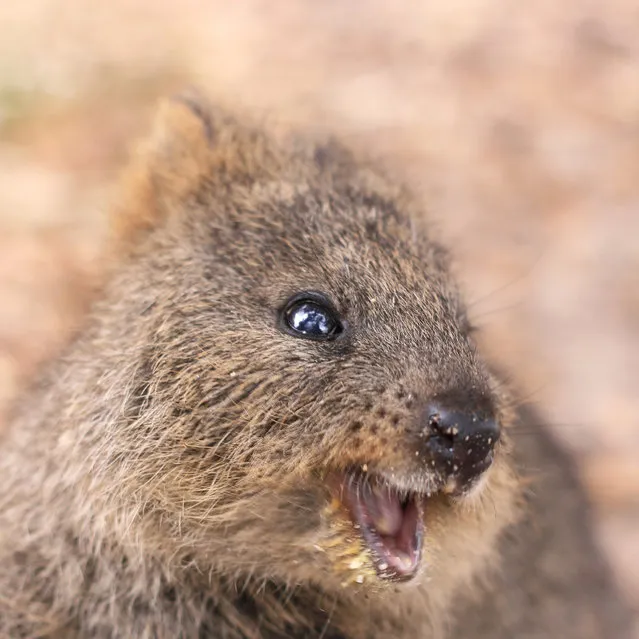
The quokka the only member of the genus Setonix, is a small macropod about the size of a domestic cat. Like other marsupials in the macropod family (such as the kangaroos and wallabies), the quokka is herbivorous and mainly nocturnal.
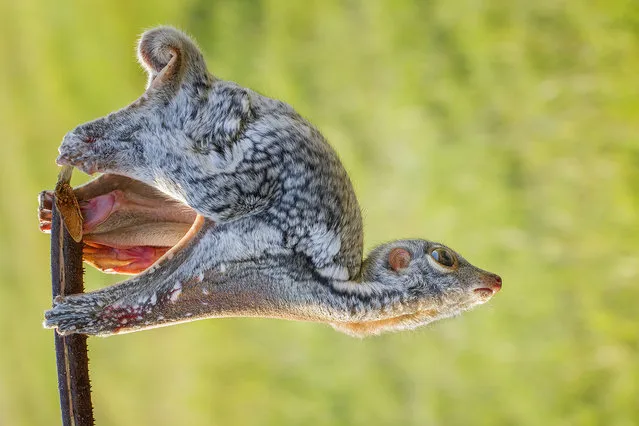
“Warming up”. This photo I capture in the early afternoon, the animal species of lemurs fly. Photo location: Sambas, West Kalimantan, Indonesia. (Photo and caption by Hendy Mp/National Geographic Photo Contest)
Yalena Leuliette, 7, of Greenbelt, Md., throws seeds from a cattail plant up in the air as she plays while visiting the Kenilworth Aquatic Gardens in northeast Washington, on Sunday, August 9, 2015. Leuliette visits the public garden with her parents a few times a year. (Photo by Jacquelyn Martin/AP Photo)
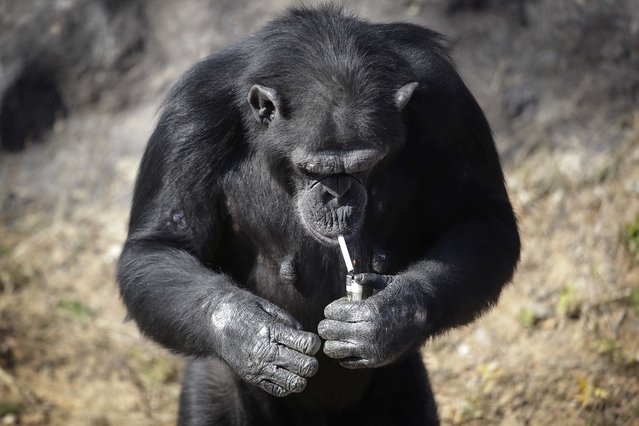
Azalea, whose Korean name is “Dalle”, a 19-year-old female chimpanzee, lights a cigarette at the Central Zoo in Pyongyang, North Korea on Wednesday, October 19, 2016. According to officials at the newly renovated zoo, which has become a favorite leisure spot in the North Korean capital since it was re-opened in July, the chimpanzee smokes about a pack a day. They insist, however, that she doesn’t inhale. (Photo by Wong Maye-E/AP Photo)
A loved-up couple have captured the moments they shared a dip-kiss in different locations around the world. Rob, 34, and Joli Switzer, 33, from Maryland, embark on a minimum of four international holidays per year to ensure that they get their unique dip-kiss photograph. Here: Rob Switzer 34 proposed to Joli 33 whilst they were on holiday in Moscow, Russia. (Photo by Dipkiss Travels/Caters News Agency)
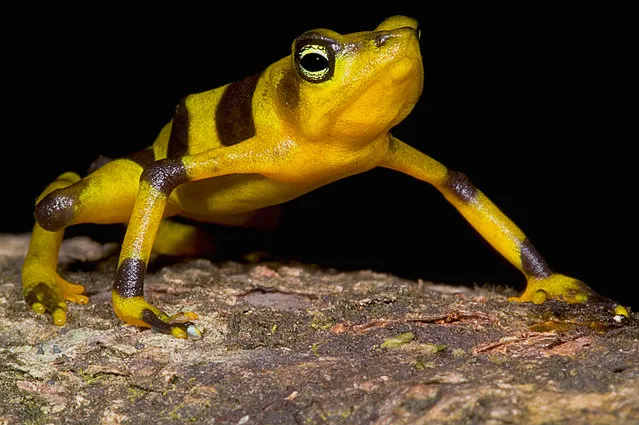
Wildlife photographer Danté Fenolio has headed into areas untouched by sunlight – deep seas, caves and underground – and found creatures that are exploding with colour. Here: The golden harlequin toad has vanished from the wild, and only a small number live on in captivity. A fungus caused them, and many other amphibians, to die out in their home in Central America. (Photo by Danté Fenolio/The Guardian/Johns Hopkins University Press)