Loading...
Done
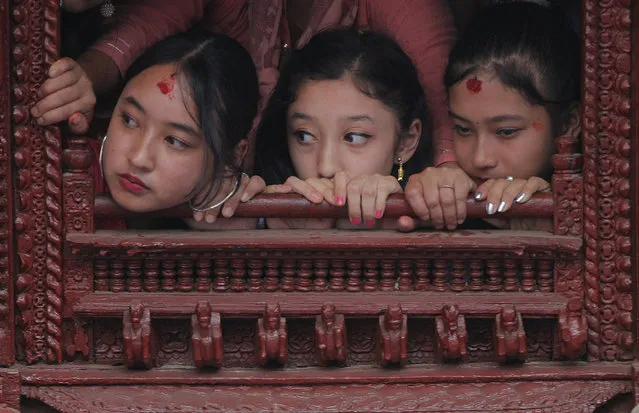
A former living goddess Kumari, middle, watches the Indra Jatra festival, an eight-day festival that honors Indra, the Hindu god of rain, in Kathmandu, Nepal, Friday, September 13, 2019. (Photo by Niranjan Shrestha/AP Photo)

A former living goddess Kumari, middle, watches the Indra Jatra festival, an eight-day festival that honors Indra, the Hindu god of rain, in Kathmandu, Nepal, Friday, September 13, 2019. (Photo by Niranjan Shrestha/AP Photo)
Details
18 Sep 2019 00:03:00
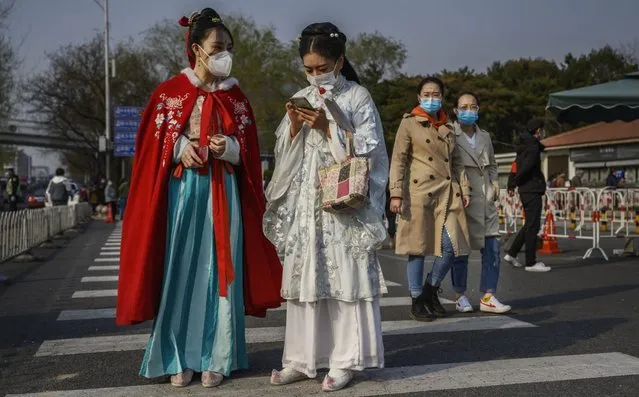
Chinese women wear protective masks as they are dressed in traditional clothing from the Qing Dynasty era outside a park on March 29, 2020 in Beijing, China. A limited section of the iconic tourist site was re-opened to the public this week allowing a smaller number of visitors to reserve tickets online in advance and to enter after passing health screening. With the pandemic hitting hard across the world, China recorded its first day with no new domestic cases of the coronavirus last week, since the government imposed sweeping measures to keep the disease from spreading. For two months, millions of people across China have been restricted in how they move from their homes, while other cities have been locked down in ways that appeared severe at the time but are now being replicated in other countries trying to contain the virus. Officials believe the worst appears to be over in China, though there are concerns of another wave of infections as the government attempts to reboot the worlds second largest economy. In Beijing, it is mandatory to wear masks outdoors, retail stores operate on reduced hours, restaurants employ social distancing among patrons, and tourist attractions at risk of drawing large crowds remain closed. Monitoring and enforcement of virus-related measures and the quarantine of anyone arriving to Beijing is carried out by neighborhood committees and a network of Communist Party volunteers who wear red arm bands. A primary concern for Chinese authorities remains the arrival of flights from Europe and elsewhere, given the exposure of passengers in regions now regarded as hotbeds for transmission. Since January, China has recorded more than 81,000 cases of COVID-19 and at least 3200 deaths, mostly in and around the city of Wuhan, in central Hubei province, where the outbreak first started. (Photo by Kevin Frayer/Getty Images)

Chinese women wear protective masks as they are dressed in traditional clothing from the Qing Dynasty era outside a park on March 29, 2020 in Beijing, China. A limited section of the iconic tourist site was re-opened to the public this week allowing a smaller number of visitors to reserve tickets online in advance and to enter after passing health screening. (Photo by Kevin Frayer/Getty Images)
Details
01 Apr 2020 00:05:00
Adrienne Sipe (L) and Brooke Gilliam of Washington D.C. leap off a snow podium they made near the U.S. Capitol in Washington February 13, 2014. A deadly and intensifying winter storm packing heavy snow, sleet and rain pelted a huge swath of the U.S. East Coast on Thursday, grounding flights and shuttering schools and government offices. (Photo by Kevin Lamarque/Reuters)

Adrienne Sipe (L) and Brooke Gilliam of Washington D.C. leap off a snow podium they made near the U.S. Capitol in Washington February 13, 2014. A deadly and intensifying winter storm packing heavy snow, sleet and rain pelted a huge swath of the U.S. East Coast on Thursday, grounding flights and shuttering schools and government offices. (Photo by Kevin Lamarque/Reuters)
Details
14 Feb 2014 09:20:00
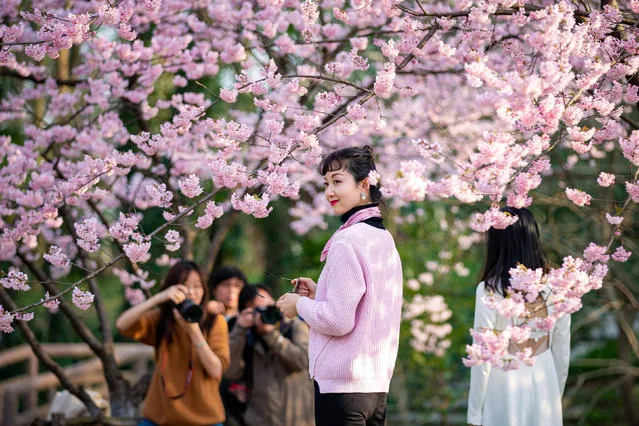
Visitors pose for pictures under blooming cherry blossoms at a botanical garden in Nanjing, China on March 15, 2019. (Photo by Reuters/China Stringer Network)

Visitors pose for pictures under blooming cherry blossoms at a botanical garden in Nanjing, capital of China’s eastern Jiangsu province on March 15, 2019. (Photo by Reuters/China Stringer Network)
Details
27 Mar 2019 00:03:00
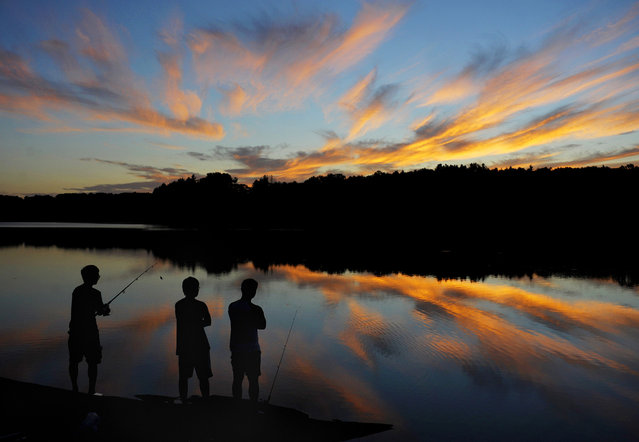
UConn students from Storrs, Conn., Gary Tu, Danny Wang and Victor Zheng, fish at Shenipsit Lake in Tolland, Conn. during sunset on Tuesday, August 19, 2014. (Photo by Jim Michaud/AP Photo/Journal Inquirer)

UConn students from Storrs, Conn., Gary Tu, Danny Wang and Victor Zheng, fish at Shenipsit Lake in Tolland, Conn. during sunset on Tuesday, August 19, 2014. (Photo by Jim Michaud/AP Photo/Journal Inquirer)
Details
21 Aug 2014 10:23:00
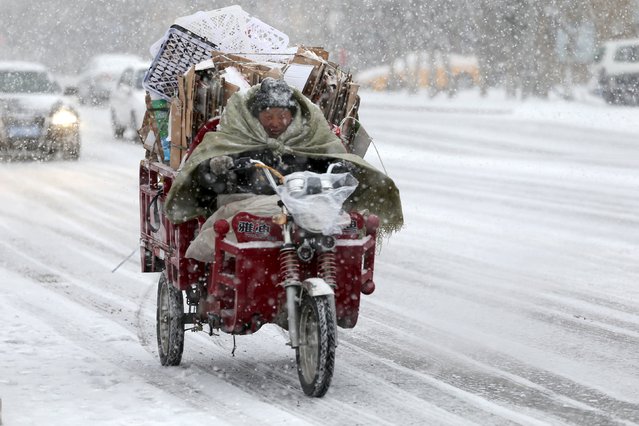
A man rides a motorcycle along a street in the snow in Altay, Xinjiang Uighur Autonomous region, February 9, 2016. (Photo by Reuters/Stringer)

A man rides a motorcycle along a street in the snow in Altay, Xinjiang Uighur Autonomous region, February 9, 2016. (Photo by Reuters/Stringer)
Details
15 Feb 2016 10:08:00
“Jumpology”. “Jump”. (Photo by Benoit Paillé)

“Jump”. (Photo by Benoit Paillé)

Details
06 Feb 2013 16:33:00
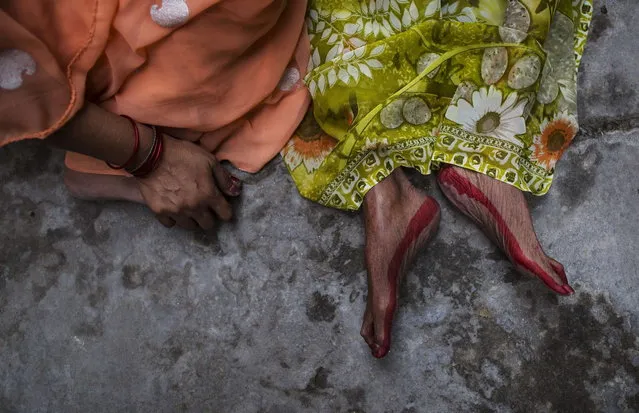
A relative (L) of Champa Devi, 88, sits next to her body, minutes after her death at Mukti Bhavan (Salvation House) at Varanasi, in the northern Indian state of Uttar Pradesh, June 21, 2014. (Photo by Danish Siddiqui/Reuters)

A relative (L) of Champa Devi, 88, sits next to her body, minutes after her death at Mukti Bhavan (Salvation House) at Varanasi, in the northern Indian state of Uttar Pradesh, June 21, 2014. The city of Varanasi, on the banks of the River Ganges, is widely considered Hinduism's holiest city and many Hindus believe that dying there and having their remains scattered in the Ganges allows their soul to escape a cycle of death and rebirth, attaining “moksha” or salvation. “Mukti Bhavan” or “Salvation House”, is a charity-run hostel that caters for people who wish to come to Varanasi to die. Guests can normally stay up to two weeks after which, if they haven't yet passed away, they are gently asked to leave. (Photo by Danish Siddiqui/Reuters)

Details
24 Jul 2014 12:32:00