Loading...
Done
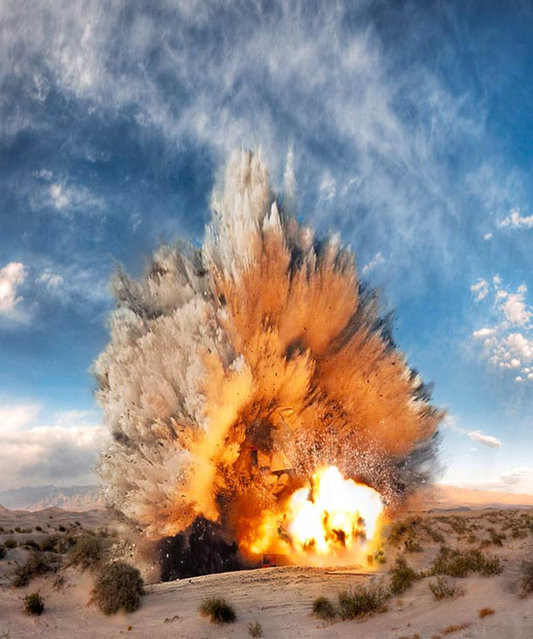
Detonations  by Ueli Alder

The explosive Ueli Alder Detonations series is deadly. Created by Swiss artist Ueli Alder, the series is luckily made up of images found on the Internet. However, the Photoshopped collages of explosions still manage to be incredibly badass and terrifying. Adler’s inspiration for the series were war-themed video games, as he attempts to romanticize the cataclysmic detonations that go off during game play.
Details
17 Sep 2012 12:48:00
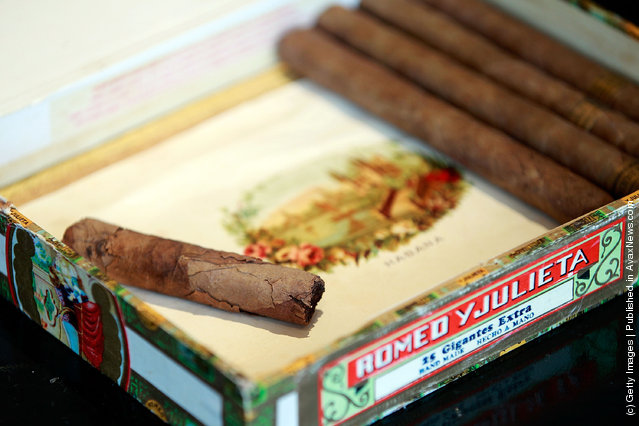
A collection of Sir Winston Churchill's wartime cigars, including four Romeo y Julieta Cuban Cigars

A collection of Sir Winston Churchill's wartime cigars, including four Romeo y Julieta Cuban Cigars given to Mr Percy Bower, Manager of the cigar department of his suppliers, the Army and Navy Stores to mark the end of the war, are displayed on January 13, 2012 in London, England. (Photo by Matthew Lloyd/Getty Images)
Details
21 Jan 2012 15:43:00
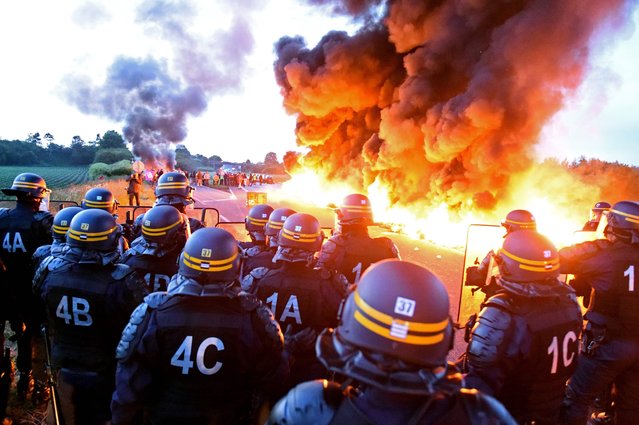
Riot police stand guard behind a fire as refinery workers hold a blockade of the oil depot of Douchy-Les-Mines to protest against the government's proposed labour reforms, on May 25, 2016. Refinery workers stepped up strikes that threaten to paralyse France weeks ahead of the Euro 2016 tournament as the government moved to break their blockades, escalating a three-month tug-of-war over labour reforms. (Photo by François L.O./AFP Photo)

Riot police stand guard behind a fire as refinery workers hold a blockade of the oil depot of Douchy-Les-Mines to protest against the government's proposed labour reforms, on May 25, 2016. Refinery workers stepped up strikes that threaten to paralyse France weeks ahead of the Euro 2016 tournament as the government moved to break their blockades, escalating a three-month tug-of-war over labour reforms. (Photo by François L.O./AFP Photo)
Details
26 May 2016 13:02:00
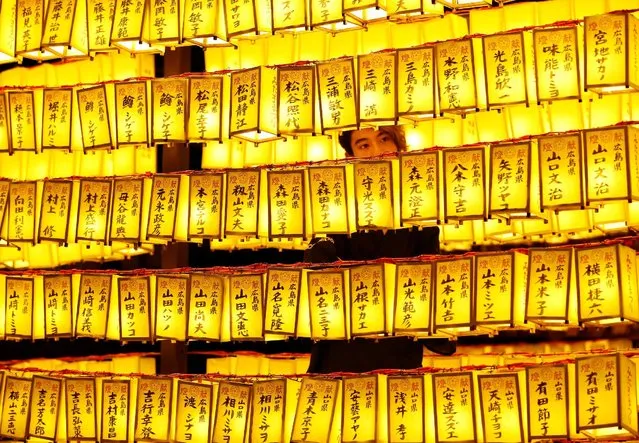
A man stands between thousands of paper lanterns, which were displayed and lit up the precincts of the shrine, where more than 2.4 million war-dead are enshrined, during the Mitama Festival at Yasukuni Shrine in Tokyo, Japan July 13, 2016. “Mitama” is a respectful word that means “the soul of a dead person” in Japanese, and this “Soul Festival” honors just that. The Yasukuni Shrine is dedicated to the honoring of the souls of those who gave their lives to defend Japan, and this festival is an early step towards the Japanese holiday season of Obon, during which Japanese people honor their deceased ancestors. (Photo by Issei Kato/Reuters)

A man stands between thousands of paper lanterns, which were displayed and lit up the precincts of the shrine, where more than 2.4 million war-dead are enshrined, during the Mitama Festival at Yasukuni Shrine in Tokyo, Japan July 13, 2016. “Mitama” is a respectful word that means “the soul of a dead person” in Japanese, and this “Soul Festival” honors just that. (Photo by Issei Kato/Reuters)
Details
14 Jul 2016 09:37:00
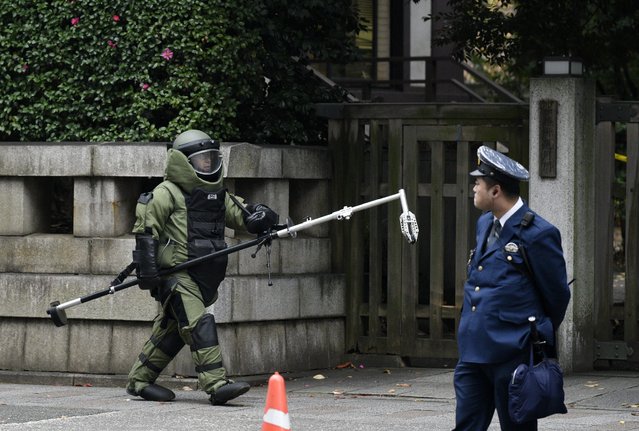
A bomb squad member wearing heavy equipment leaves the explosion site at the Yasukuni shrine precints in Tokyo, Japan, 23 November 2015. More than 100 police, firefighters and officials gathered at the site after an explosion was heard in the toilets of the Yasukuni Shrine, a controversial war shrine in the capital Tokyo. Local media reports said police found possible traces of an explosion, as well as batteries and wires at the shrine. There were no reports of injuries. (Photo by Franck Robichon/EPA)

A bomb squad member wearing heavy equipment leaves the explosion site at the Yasukuni shrine precints in Tokyo, Japan, 23 November 2015. More than 100 police, firefighters and officials gathered at the site after an explosion was heard in the toilets of the Yasukuni Shrine, a controversial war shrine in the capital Tokyo. Local media reports said police found possible traces of an explosion, as well as batteries and wires at the shrine. There were no reports of injuries. (Photo by Franck Robichon/EPA)
Details
25 Nov 2015 08:01:00
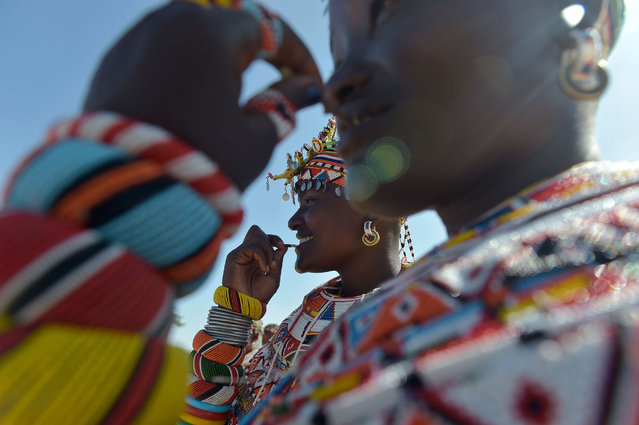
Samburu women of the Lorubai traditional dance group are seen wearing traditional beaded necklaces during a Peace Marathon for pastoralist communities at the Archers post in Isiolo, Kenya on April 26, 2018. The aim of the event is to bring the warring pastoralist communities of Samburu, Turkana, Borana and others together, and end the rivalry due to scarcity of pasture and water in the region. The peace marathon is organized by Kenya's Northern Rangeland Trust. (Photo by Simon Maina/AFP Photo)

Samburu women of the Lorubai traditional dance group are seen wearing traditional beaded necklaces during a Peace Marathon for pastoralist communities at the Archers post in Isiolo, Kenya on April 26, 2018. The aim of the event is to bring the warring pastoralist communities of Samburu, Turkana, Borana and others together, and end the rivalry due to scarcity of pasture and water in the region. The peace marathon is organized by Kenya's Northern Rangeland Trust. (Photo by Simon Maina/AFP Photo)
Details
21 Jun 2018 00:05:00
A boy listens to a prayer before he and other relatives visit the grave of their loved ones, all minors, who were killed a year ago during the government's war on drugs campaign, at the Tala Cemetery in Caloocan, east of Manila on December 28, 2017, as the world commemorates Holy Innocents' Day. Catholics celebrate the biblical passage when King Herodes the great ordered to kill all newborn babies to kill Jesus Christ. (Photo by Noel Celis/AFP Photo)

A boy listens to a prayer before he and other relatives visit the grave of their loved ones, all minors, who were killed a year ago during the government's war on drugs campaign, at the Tala Cemetery in Caloocan, east of Manila on December 28, 2017, as the world commemorates Holy Innocents' Day. Catholics celebrate the biblical passage when King Herodes the great ordered to kill all newborn babies to kill Jesus Christ. (Photo by Noel Celis/AFP Photo)
Details
03 Jul 2018 00:01:00
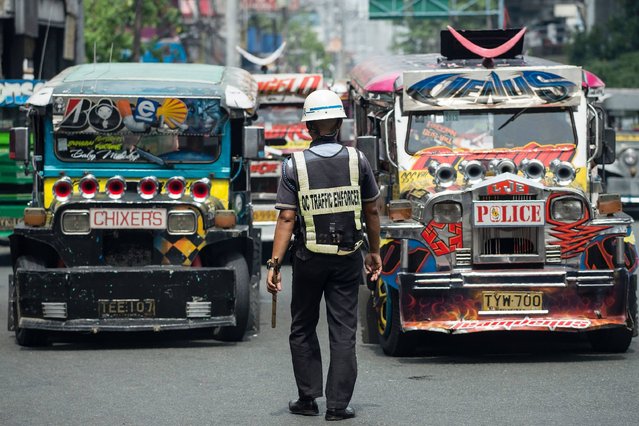
Jeepneys are seen as an enforcer manages traffic at a busy street in Manila on May 30, 2017. Jeepneys, once hailed as the “King of the Road” and a cultural symbol in the Phillipines to rival New York's yellow taxis, may soon disappear from Manila's gridlocked streets, as authorities move to phase out the Philippines' iconic World War II-era minibuses, citing pollution and safety concerns. (Photo by Noel Celis/AFP Photo)

Jeepneys are seen as an enforcer manages traffic at a busy street in Manila on May 30, 2017. Jeepneys, once hailed as the “King of the Road” and a cultural symbol in the Phillipines to rival New York's yellow taxis, may soon disappear from Manila's gridlocked streets, as authorities move to phase out the Philippines' iconic World War II-era minibuses, citing pollution and safety concerns. (Photo by Noel Celis/AFP Photo)
Details
31 May 2017 07:14:00