Loading...
Done
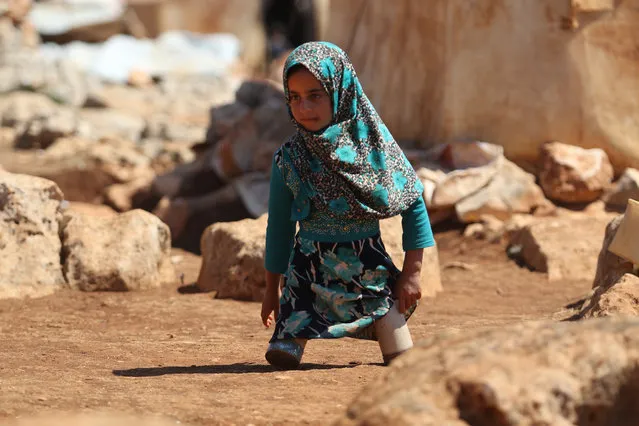
Eight year-old Maya Mohammad Ali Merhi walks using prosthetic legs made by her father from tin cans in a camp for displaced people, in the northern Syrian province of Idlib on June 20, 2018. Maya and her father were both born without lower limbs. Unable to afford real prosthetic limbs, her father made her a pair out of tin cans filled with cotton and scrap pieces of cloth. Maya's family had to leave their home in the Aleppo province to flee battles. (Photo by Aaref Watad/AFP Photo)

Eight year-old Maya Mohammad Ali Merhi walks using prosthetic legs made by her father from tin cans in a camp for displaced people, in the northern Syrian province of Idlib on June 20, 2018. Maya and her father were both born without lower limbs. Unable to afford real prosthetic limbs, her father made her a pair out of tin cans filled with cotton and scrap pieces of cloth. Maya's family had to leave their home in the Aleppo province to flee battles. (Photo by Aaref Watad/AFP Photo)
Details
09 Aug 2018 00:01:00
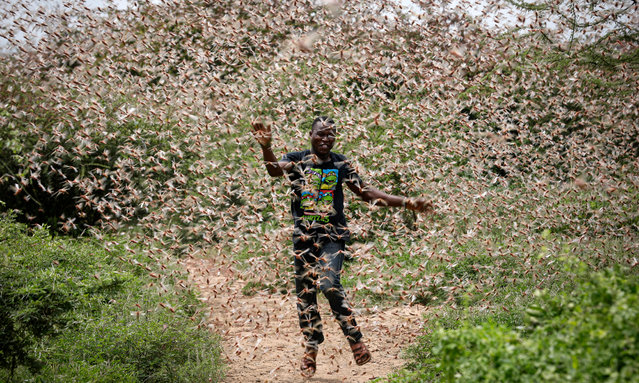
A local farmer Theophilus Mwendwa runs through a swarm of desert locusts to chase them away in the bush near Enziu, Kitui County, some 200km east of the capital Nairobi, Kenya, 24 January 2020. Large swarms of desert locusts have been invading Kenya for weeks, after having infested some 70 thousand hectares of land in Somalia which the United Nations Food and Agriculture Organisation (FAO) has termed the “worst situation in 25 years” in the Horn of Africa. FAO cautioned that it poses an “unprecedented threat” to food security and livelihoods in the region. (Photo by Dai Kurokawa/EPA/EFE)

A local farmer Theophilus Mwendwa runs through a swarm of desert locusts to chase them away in the bush near Enziu, Kitui County, some 200km east of the capital Nairobi, Kenya, 24 January 2020. Large swarms of desert locusts have been invading Kenya for weeks, after having infested some 70 thousand hectares of land in Somalia which the United Nations Food and Agriculture Organisation (FAO) has termed the “worst situation in 25 years” in the Horn of Africa. FAO cautioned that it poses an “unprecedented threat” to food security and livelihoods in the region. (Photo by Dai Kurokawa/EPA/EFE)
Details
22 Feb 2020 00:01:00
Camila Hormazabal, a 24-year-old sеx worker, meets with a virtual customer in Concepcion, Chile on April 7, 2020. Hormazabal now offers sеxual services online after the nightclub where she had worked was closed due to the outbreak. With no way to pay her bills, Hormazabal switched to video calls conducted from her high-rise apartment bedroom, and asked her regulars to meet her online. She is one of the thousands of sеx workers worldwide left in a precarious position after the very intimacy that defines their work was thwarted by social distancing measures. (Photo by Juan Gonzalez/Reuters)

Camila Hormazabal, a 24-year-old sеx worker, meets with a virtual customer in Concepcion, Chile on April 7, 2020. Hormazabal now offers sеxual services online after the nightclub where she had worked was closed due to the outbreak. With no way to pay her bills, Hormazabal switched to video calls conducted from her high-rise apartment bedroom, and asked her regulars to meet her online. She is one of the thousands of sеx workers worldwide left in a precarious position after the very intimacy that defines their work was thwarted by social distancing measures. (Photo by Juan Gonzalez/Reuters)
Details
08 May 2020 00:07:00
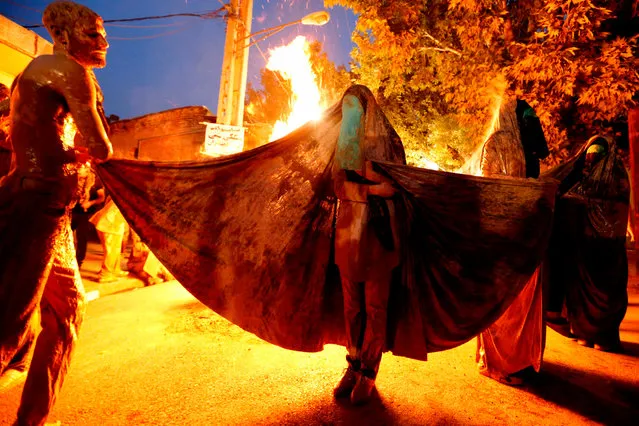
Iranian Shiite Muslim women gather around a bonfire after rubbing mud on their body during the “Kharrah Mali” (Mud Rubbing) ritual to mark the Ashura religious ceremony in the city of Khorramabad, some 470 kms southwest of Tehran, early in the morning on October 1, 2017. “Khrreh Mali” or “Mud Rubbing” is a ritual that is held in the city of Khorramabad every year to commemorate the seventh century slaying of Prophet Mohammed' s grandson Imam Hussein, in which Iranian men roll over in mud and dry themselves by gathering around the bonfires before flagellating themselves. (Photo by Atta Kenare/AFP Photo)

Iranian Shiite Muslim women gather around a bonfire after rubbing mud on their body during the “Kharrah Mali” (Mud Rubbing) ritual to mark the Ashura religious ceremony in the city of Khorramabad, some 470 kms southwest of Tehran, early in the morning on October 1, 2017. “Khrreh Mali” or “Mud Rubbing” is a ritual that is held in the city of Khorramabad every year to commemorate the seventh century slaying of Prophet Mohammed' s grandson Imam Hussein, in which Iranian men roll over in mud and dry themselves by gathering around the bonfires before flagellating themselves. (Photo by Atta Kenare/AFP Photo)
Details
02 Oct 2017 08:38:00
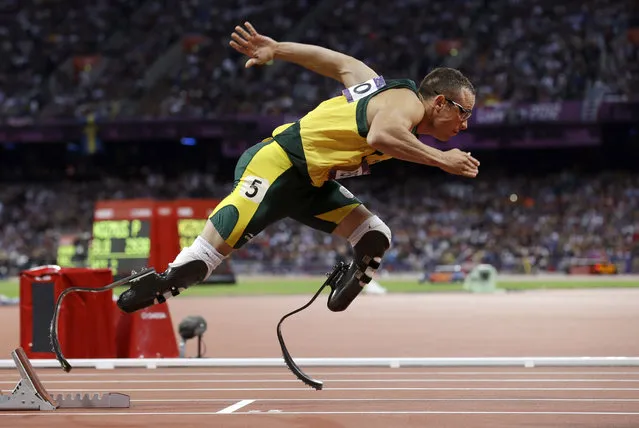
In this Sunday, August 5, 2012 file photo South Africa's Oscar Pistorius starts in the men's semi-finals of the 400-meter in the Olympic Stadium at the 2012 Summer Olympics, London.  Pistorius could be granted parole on Friday, Nov. 24, 2023 after nearly 10 years in prison for killing his girlfriend. The double-amputee Olympic runner was convicted of a charge comparable to third-degree murder for shooting Reeva Steenkamp in his home in 2013. He has been in prison since late 2014. (Photo by Anja Niedringhaus/AP Photo)

In this Sunday, August 5, 2012 file photo South Africa's Oscar Pistorius starts in the men's semi-finals of the 400-meter in the Olympic Stadium at the 2012 Summer Olympics, London. Pistorius could be granted parole on Friday, Nov. 24, 2023 after nearly 10 years in prison for killing his girlfriend. The double-amputee Olympic runner was convicted of a charge comparable to third-degree murder for shooting Reeva Steenkamp in his home in 2013. He has been in prison since late 2014. (Photo by Anja Niedringhaus/AP Photo)
Details
03 Dec 2023 03:10:00
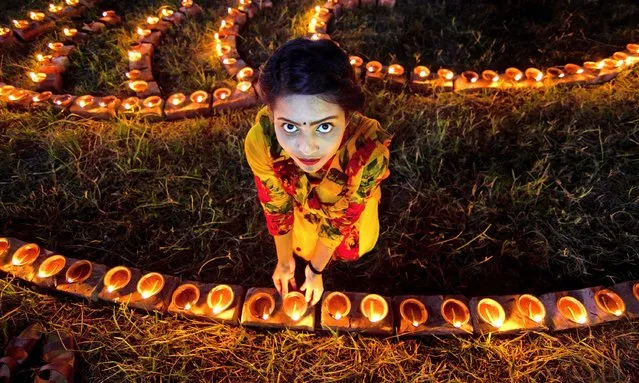
Hindu devotees light “Diyas” (earthen lamps) on a Rangoli, a framework of decorated pattern, as part of Diwali festivities in a temple premises in Dhaka, Bangladesh on November 12, 2023. The festival takes place every year in accordance with the Hindu lunar calendar. The word “Diwali” is derived from the Sanskrit word “Deepavali”, meaning series of lighted lamps; hence, it is also known as the festival of lights. Diwali is typically celebrated by socializing and exchanging gifts with family and friends. Many light oil lamps or candles to symbolize a victory of light over darkness, and fireworks are set off as part of the celebrations. (Photo by Joy Saha/Rex Features/Shutterstock)

Hindu devotees light “Diyas” (earthen lamps) on a Rangoli, a framework of decorated pattern, as part of Diwali festivities in a temple premises in Dhaka, Bangladesh on November 12, 2023. The festival takes place every year in accordance with the Hindu lunar calendar. The word “Diwali” is derived from the Sanskrit word “Deepavali”, meaning series of lighted lamps; hence, it is also known as the festival of lights. Diwali is typically celebrated by socializing and exchanging gifts with family and friends. Many light oil lamps or candles to symbolize a victory of light over darkness, and fireworks are set off as part of the celebrations. (Photo by Joy Saha/Rex Features/Shutterstock)
Details
18 Dec 2023 00:11:00
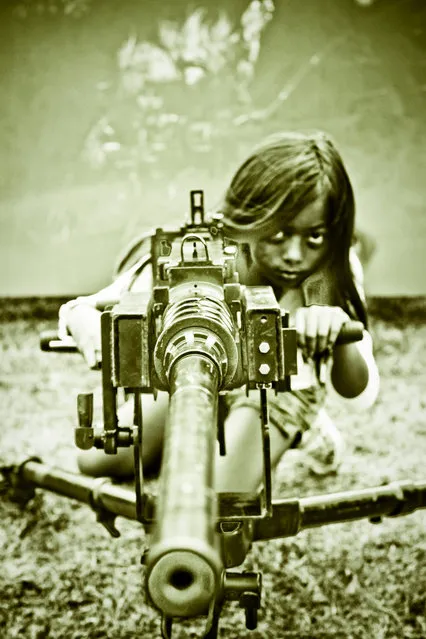
“You wont fool the children of the revolution”. (Photo by Andy Teo)

“You wont fool the children of the revolution”. (Photo by Andy Teo)
Details
13 Mar 2015 09:25:00
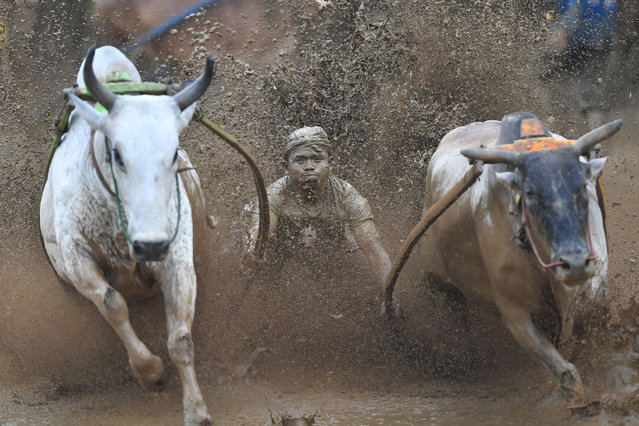
An Indonesian jockey rides two bulls with a cart during a traditional sport bull race locally called “pacu jawi” in Pariangan of Tanah Datar regency in West Sumatra on December 1, 2018. (Photo by Adek Berry/AFP Photo)

An Indonesian jockey rides two bulls with a cart during a traditional sport bull race locally called “pacu jawi” in Pariangan of Tanah Datar regency in West Sumatra on December 1, 2018. (Photo by Adek Berry/AFP Photo)
Details
08 Feb 2019 00:05:00