Loading...
Done
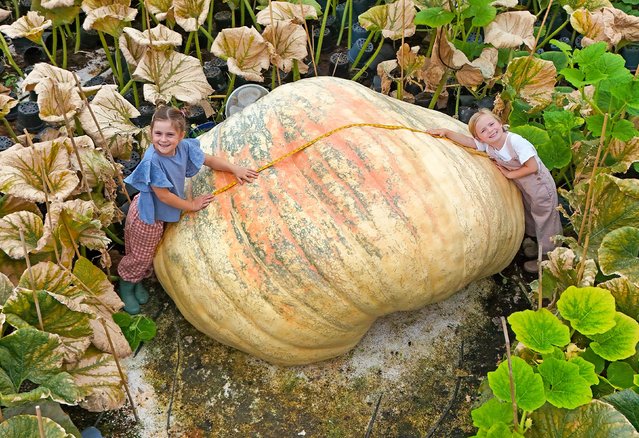
Sisters Martha Syrett, 6, left, and Etta Syrett, 4, right, measure one of Ian Paton's huge pumpkins at Pinetops Nurseries, Lymington, Hants, UK on October 5, 2025. An enormous pumpkin grown by a pair of green-fingered twins has smashed two world records – it is the heaviest and the longest pumpkin on the planet. Ian and Stuart Paton grew the pumpkin which weighed in at 2,819.8 pounds (1,278.8 kg) – the equivalent of about two bulls. (Photo by Ollie Thompson/Solent News & Photo Agency)

Sisters Martha Syrett, 6, left, and Etta Syrett, 4, right, measure one of Ian Paton's huge pumpkins at Pinetops Nurseries, Lymington, Hants, UK on October 5, 2025. An enormous pumpkin grown by a pair of green-fingered twins has smashed two world records – it is the heaviest and the longest pumpkin on the planet. Ian and Stuart Paton grew the pumpkin which weighed in at 2,819.8 pounds (1,278.8 kg) – the equivalent of about two bulls. (Photo by Ollie Thompson/Solent News & Photo Agency)
Details
04 Nov 2025 04:56:00
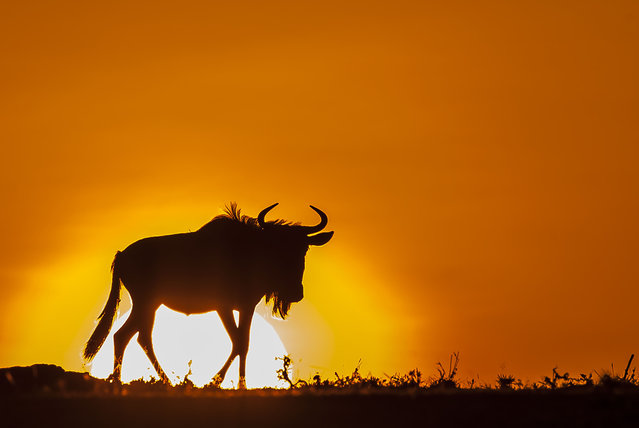
A blue wildebeest moves through grassland at dawn with the sun in the background in Mara Naboisho Conservancy, Kenya, Africa. (Photo by Renato Granieri/Caters News/Ardea)

These images show off some of the world's most majestic creatures silhouetted against the beautiful rising and setting sun. The vibrant pictures feature a variety of animals in the wild and were taken by a host of photographers at locations around the world. The striking images all have one thing in common: the photographers' awe-inspiring ability to perfectly capture the silhouettes of earth's beautiful creatures. Here: a blue wildebeest moves through grassland at dawn with the sun in the background in Mara Naboisho Conservancy, Kenya, Africa. (Photo by Renato Granieri/Caters News/Ardea)
Details
02 Sep 2015 11:12:00
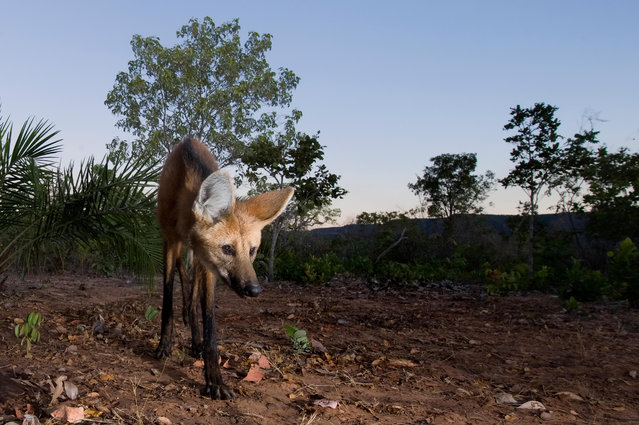
The maned wolf is among the large mammals in the Brazilian Cerrado that are threatened by the increasing conversion of grasslands into farmland for grazing and growing crops. (Photo by Ben Cranke/Nature Picture Library/Alamy Stock Photo)

Global wildlife populations will decline by 67% by 2020 unless urgent action is taken to reduce human impact on species and ecosystems, warns the biennial Living Planet Index report from WWF (World Wide Fund for Nature) and ZSL (Zoological Society of London). From elephants to eels, here are some of the wildlife populations most affected by human activity. Here: The maned wolf is among the large mammals in the Brazilian Cerrado that are threatened by the increasing conversion of grasslands into farmland for grazing and growing crops. (Photo by Ben Cranke/Nature Picture Library/Alamy Stock Photo)
Details
28 Oct 2016 10:47:00
The Bridge “Rakotzbrücke” is pictured against trees in autumn colours in the the eastern German town of Kromlau November 4, 2014. (Photo by Hannibal Hanschke/Reuters)

The Bridge “Rakotzbrücke” is pictured against trees in autumn colours in the the eastern German town of Kromlau November 4, 2014. (Photo by Hannibal Hanschke/Reuters)
Details
10 Nov 2016 12:25:00
Women take part in Glowork exhibition in Riyadh, September 28, 2017. (Photo by Faisal Al Nasser/Reuters)

Women take part in Glowork exhibition in Riyadh, Saudi Arabia on September 28, 2017. (Photo by Faisal Al Nasser/Reuters)
Details
04 Oct 2017 07:08:00
Manman Luk, a freelance model and make up artist, poses inside her 100-square-foot (9-square-metre) sub-divided unit, paying a monthly rent of HK4,700 ($606) in Hong Kong, China January 6, 2017. (Photo by Bobby Yip/Reuters)

Manman Luk, a freelance model and make up artist, poses inside her 100-square-foot (9-square-metre) sub-divided unit, paying a monthly rent of HK4,700 ($606) in Hong Kong, China January 6, 2017. (Photo by Bobby Yip/Reuters)
Details
21 Jan 2017 11:14:00
Betty Bachz is seen outside of the Furla store launch party on February 2, 2017 in London, England. (Photo by FameFlynet)

Betty Bachz is seen outside of the Furla store launch party on February 2, 2017 in London, England. (Photo by FameFlynet)
Details
05 Feb 2017 01:04:00
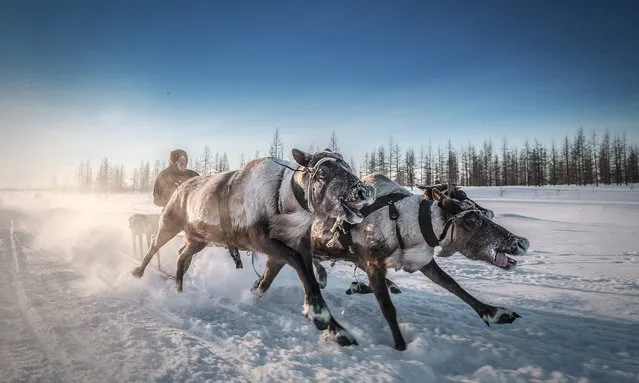
Take me away, deer, Russia. The Nenet people of Arctic Russia use reindeer and sledges as a prime mode of transport. The animals’ navigational ability means that in severe conditions they are sometimes the only hope of survival. (Photo by Kamil Nureev/Smithsonian Photo Contest)

Take me away, deer, Russia. The Nenet people of Arctic Russia use reindeer and sledges as a prime mode of transport. The animals’ navigational ability means that in severe conditions they are sometimes the only hope of survival. (Photo by Kamil Nureev/Smithsonian Photo Contest)
Details
06 Mar 2017 00:05:00