Loading...
Done
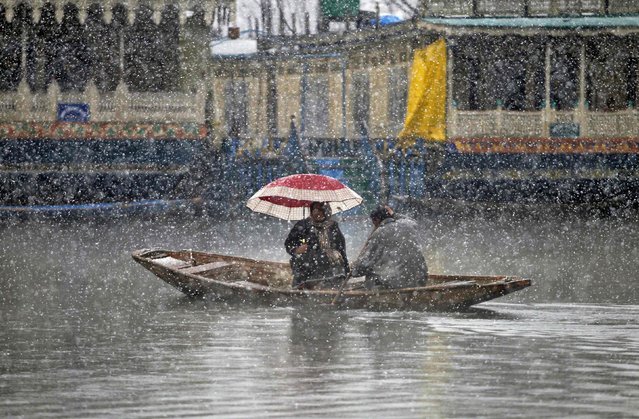
A man rows a boat on the Dal Lake as a woman holds an umbrella during snowfall in Srinagar February 19, 2015. (Photo by Danish Ismail/Reuters)

A man rows a boat on the Dal Lake as a woman holds an umbrella during snowfall in Srinagar February 19, 2015. (Photo by Danish Ismail/Reuters)
Details
12 Apr 2015 08:53:00
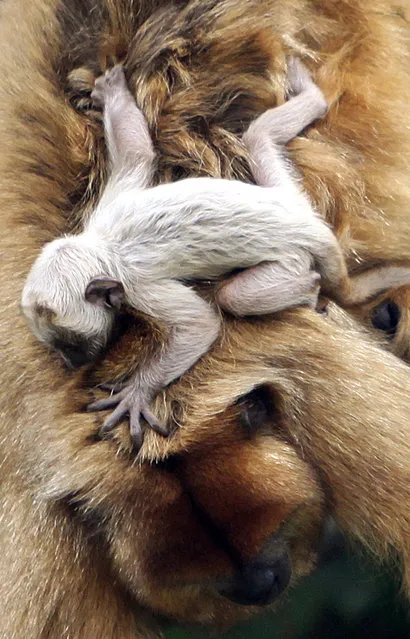
A baby black howler monkey (Alouatta caraya) clings onto its mother's back on Thursday January 29, 2009 in Singapore where it's national zoo is actively involved in the conservation and education of wildlife reserves. (Photo by Wong Maye-E/AP Photo)

“Wong Maye-E joined AP as a staff photographer in 2003. Based in Singapore, Maye-E's work is centered around Sports reportage, entertainment, politics, and regional news stories. Maye-E has covered headlining events such as the 2014 World Cup, Thailand political protests, and the devastation of the Philippines Typhoon”. – Associated Press. Photo: A baby black howler monkey (Alouatta caraya) clings onto its mother's back on Thursday January 29, 2009 in Singapore where it's national zoo is actively involved in the conservation and education of wildlife reserves. (Photo by Wong Maye-E/AP Photo)
Details
27 Aug 2014 09:14:00
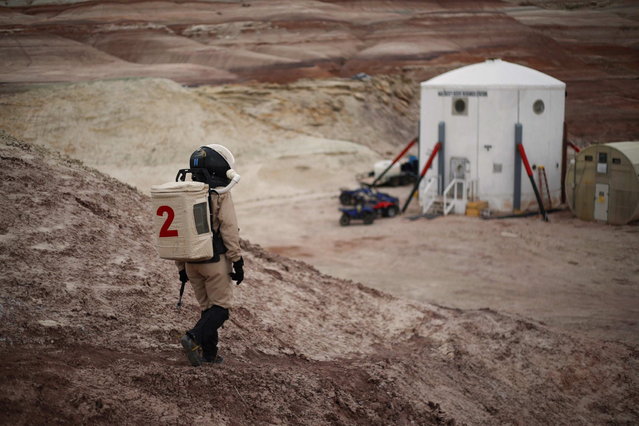
Csilla Orgel, a geologist of Crew 125 EuroMoonMars B mission, makes her way back to the Mars Desert Research Station (MDRS) in the Utah desert March 3, 2013. (Photo by Jim Urquhart/Reuters)

NASA says it could be another 20 years before humans touch down on Mars, but in a sense, the Mars Society has been exploring the red planet for more than a decade – in Utah. Photo: Csilla Orgel, a geologist of Crew 125 EuroMoonMars B mission, makes her way back to the Mars Desert Research Station (MDRS) in the Utah desert March 3, 2013. The MDRS aims to investigate the feasibility of a human exploration of Mars and uses the Utah desert's Mars-like terrain to simulate working conditions on the red planet. Scientists, students and enthusiasts work together developing field tactics and studying the terrain. All outdoor exploration is done wearing simulated spacesuits and carrying air supply packs and crews live together in a small communication base with limited amounts of electricity, food, oxygen and water. Everything needed to survive must be produced, fixed and replaced on site. (Photo by Jim Urquhart/Reuters)
Details
14 Mar 2013 12:11:00
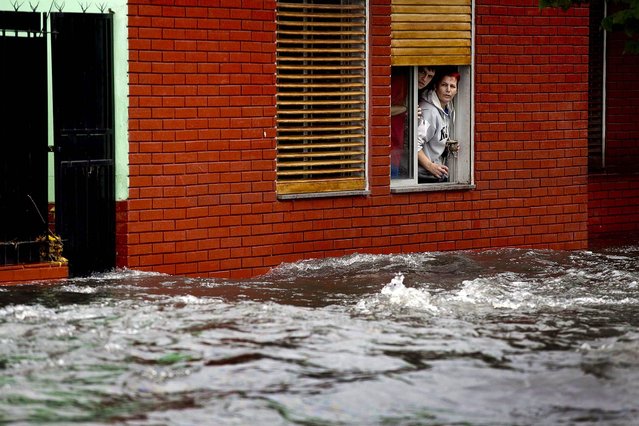
A couple looks at their flooded street from behind their home's window in La Plata, in Argentina's Buenos Aires province, where at least 35 people were killed by flooding overnight, on April 3, 2013. (Photo by Natacha Pisarenko/Associated Press)

A couple looks at their flooded street from behind their home's window in La Plata, in Argentina's Buenos Aires province, where at least 35 people were killed by flooding overnight, on April 3, 2013. (Photo by Natacha Pisarenko/Associated Press)
Details
04 Apr 2013 08:25:00
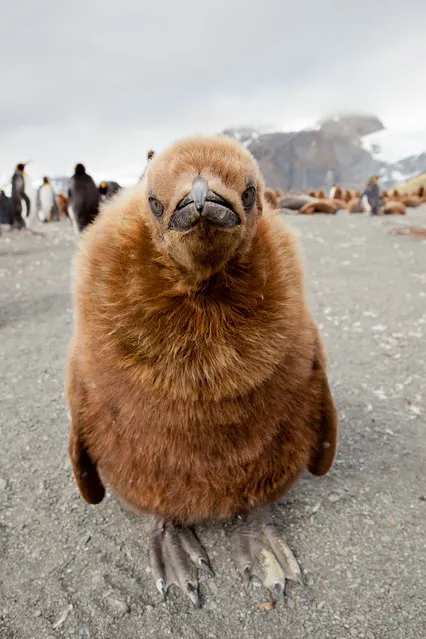
“Cub”. In the colony of penguins in South Georgia. (Photo and caption by Ondrej Zaruba/National Geographic Traveler Photo Contest)

“Cub”. In the colony of penguins in South Georgia. (Photo and caption by Ondrej Zaruba/National Geographic Traveler Photo Contest)

ATTENTION! All pictures are presented in high resolution. To see Hi-Res images – just TWICE click on any picture. In other words, click small picture – opens the BIG picture. Click BIG picture – opens VERY BIG picture.
Details
28 Jun 2013 12:32:00
Takeoka Chisaka, Hiroshima, Japan. “One morning in August 1945, I was walking home from the night shift at a factory in Hiroshima. As I reached my door, there was a huge explosion. When I came to, my head was bleeding and I had been blasted 30m away”. (Photo and caption by Sasha Maslov)

Takeoka Chisaka, Hiroshima, Japan. “One morning in August 1945, I was walking home from the night shift at a factory in Hiroshima. As I reached my door, there was a huge explosion. When I came to, my head was bleeding and I had been blasted 30m away. The atomic bomb had detonated. When I found my mother, her eyes were badly burned. A doctor said they had to come out, but he didn’t have the proper tools so used a knife instead. It was hellish. I became a peace-worker after the war. In the 1960s, at a meeting at the UN, I met one of the people who created the atomic bomb. He apologised”. (Photo and caption by Sasha Maslov)
Details
11 May 2015 11:56:00
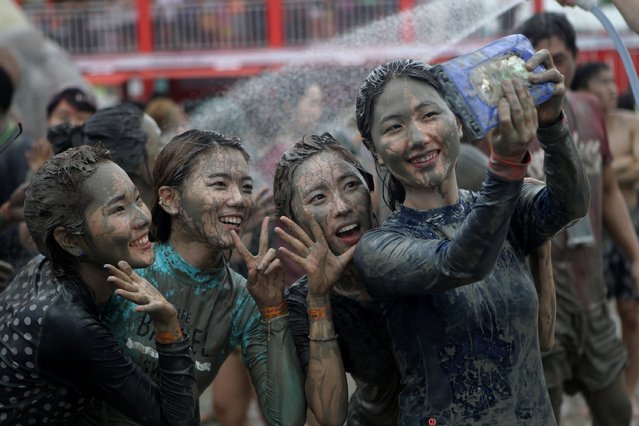
Festival-goers enjoy the mud during the annual Boryeong Mud Festival at Daecheon Beach on July 18, 2015 in Boryeong, South Korea. (Photo by Chung Sung-Jun/Getty Images)

Festival-goers enjoy the mud during the annual Boryeong Mud Festival at Daecheon Beach on July 18, 2015 in Boryeong, South Korea. The mud, which is believed to have benefical effects on the skin due to its mineral content, is sourced from mud flats near Boryeong and transported to the beach by truck. (Photo by Chung Sung-Jun/Getty Images)
Details
19 Jul 2015 10:05:00
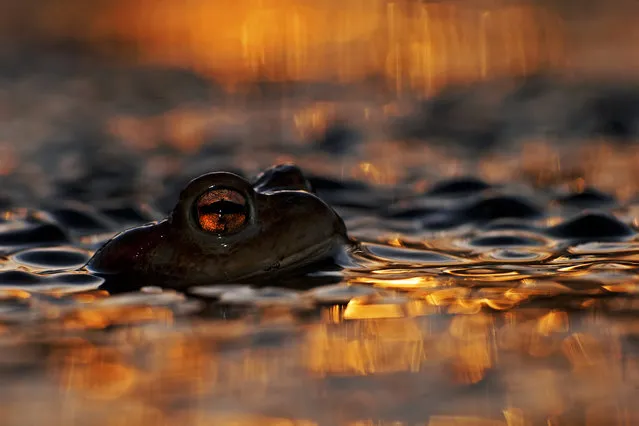
“Eye of a toad”. Animal Portraits, Łukasz Bożycki, Poland.  (Photo by Łukasz Bożycki)

“Eye of a toad”. Animal Portraits, Łukasz Bożycki, Poland. Early spring sees a pond near Łukasz’s home city of Warsaw, Poland, full of mating frogs and a few toads. On this March day, Łukasz shared the pond with them for an evening, sitting in the icy water in his chest-high waders, keeping as still as possible, despite the numbing cold, so that the amphibians could get used to him. “I wanted to find a fresh way of portraying the amphibians”, he says, “at water level”. Using a telephoto lens, he focused on one lone toad and waited for the sun to dip almost below the horizon before pressing the shutter, using flash to bring out the details in the shadow. His prize was “the glorious pool of sunset colour” and fiery glow of the toad’s eye. Nikon D80 + 70-300mm f4.5-5.6 lens + extension tube; 1/125 sec at f9 (-2.3 e/v); ISO 100; built-in flash. (Photo by Łukasz Bożycki)
Details
28 Aug 2013 11:45:00