Loading...
Done
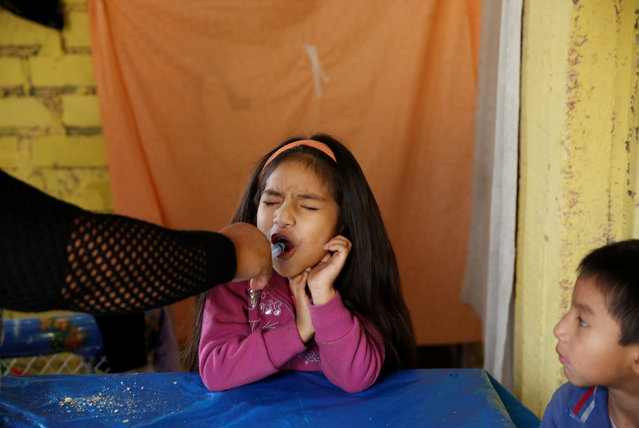
Jazmin, 6, sister of Jose Luis, receives Isoniazid Preventive Therapy in Carabayllo in Lima, Peru July 14, 2016. (Photo by Mariana Bazo/Reuters)

Jazmin, 6, sister of Jose Luis, receives Isoniazid Preventive Therapy in Carabayllo in Lima, Peru July 14, 2016. At least 30,000 Peruvians are infected with tuberculosis, an ancient disease that killed 1.8 million globally last year, more than AIDS-related and malaria deaths combined. Partners in Health, a Boston-based non-profit that works with Peru's health ministry, offers a simple solution. It trains community volunteers to tend to tuberculosis sufferers in their homes – ensuring patients take medicine daily and helping them navigate the public health bureaucracy. (Photo by Mariana Bazo/Reuters)
Details
23 Nov 2016 11:25:00
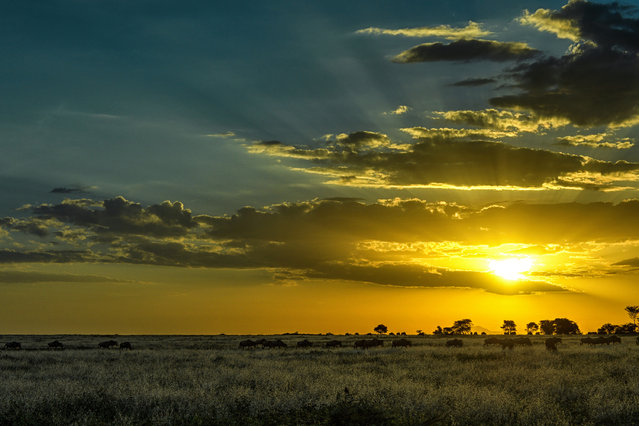
Using his camera skills, Marc meters the background sky in order to achieve the beautiful black silhouettes of the wildlife, Africa, 2010-2016. A photographer has travelled around Africa for six years to capture striking silhouettes of lions, giraffes and birds. Australian wildlife photographer, Marc Mol took the series of pictures in various areas of Africa; including Botswana and Kenya to Tanzania and Zambia. Whether grazing, hunting or resting, the animals' daily activities are transformed into something majestic when cast against golden evenings and pink dawns. (Photo by Marc Mol/Barcroft Images)

Using his camera skills, Marc meters the background sky in order to achieve the beautiful black silhouettes of the wildlife, Africa, 2010-2016. (Photo by Marc Mol/Barcroft Images)
Details
10 Jan 2017 13:36:00
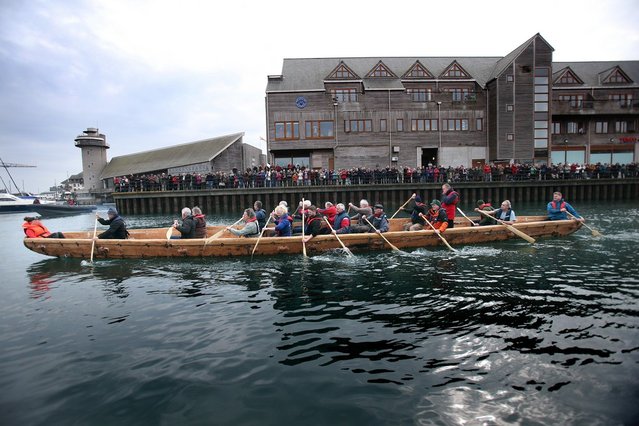
Crew in Britain's first ever full-size reconstructed sea-going Bronze Age boat, paddle out to sea near to the National Maritime Museum as it makes its maiden voyage on March 6, 2013 in Falmouth, England. With a crew of of 18, equipped with Bronze-Age-style wooden paddles, the 15 metre long experimental vessel – a replica of the sort of craft used for long-distance trade between Britain and the continent 4000 years ago – will be used to test prehistoric seafaring methods in a project in collaboration with the University of Exeter and the Falmouth-based National Maritime Museum Cornwall. (Photo by Matt Cardy)

Crew in Britain's first ever full-size reconstructed sea-going Bronze Age boat, paddle out to sea near to the National Maritime Museum as it makes its maiden voyage on March 6, 2013 in Falmouth, England. (Photo by Matt Cardy)
Details
07 Mar 2013 08:48:00
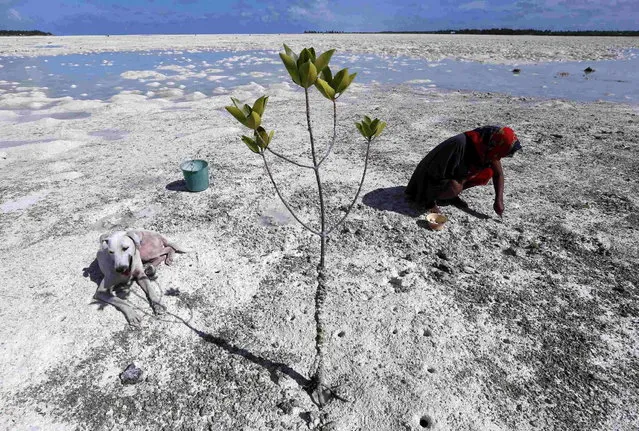
A dog sits in the shade of a mangrove tree as a woman uses a fork to dig for shellfish on the reef-mud flats of a lagoon located at South Tarawa in the central Pacific island nation of Kiribati May 23, 2013. (Photo by David Gray/Reuters)

A dog sits in the shade of a mangrove tree as a woman uses a fork to dig for shellfish on the reef-mud flats of a lagoon located at South Tarawa in the central Pacific island nation of Kiribati May 23, 2013. Kiribati consists of a chain of 33 atolls and islands that stand just metres above sea level, spread over a huge expanse of otherwise empty ocean. With surrounding sea levels rising, Kiribati President Anote Tong has predicted his country will likely become uninhabitable in 30-60 years because of inundation and contamination of its freshwater supplies. (Photo by David Gray/Reuters)
Details
13 Jun 2013 09:23:00
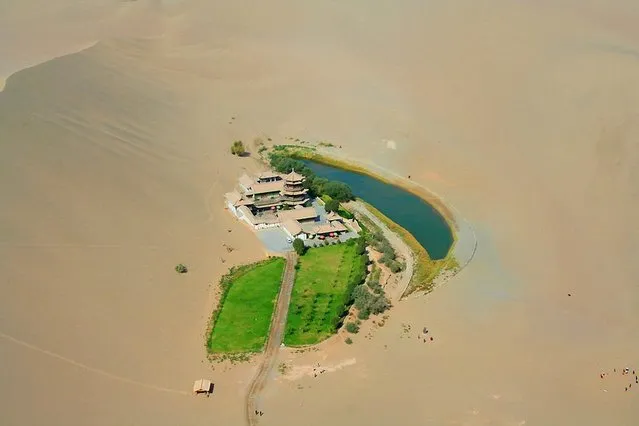
Crescent Lake In China

Yueyaquan is a crescent-shaped lake in an oasis, 6 km south of the city of Dunhuang in Gansu Province, China. It was named Yueyaquan in the Qing Dynasty. According to measurements made in 1960, the average depth of the lake was 4 to 5 meters, with a maximum depth of 7.5 metres In the following 40 years, the depth of the lake continually declined. In the early 1990s, its area had shrunk to only 5,500 m2 with an average depth of 0.9 meter (maximum 1.3 meter). In 2006, the local government with help of the central government started to fill the lake and restore its depth; its depth and size have been growing yearly since then. The lake and the surrounding deserts are very popular with tourists, who are offered camel and 4x4 rides.
Details
25 Jun 2013 10:29:00
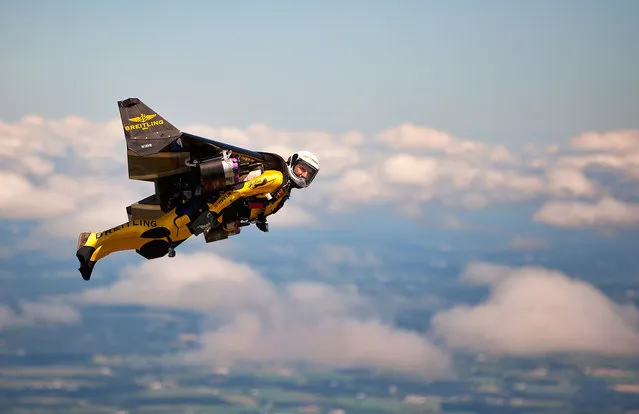
Jetman during a trial flight from Fond du Lac airport on Monday July 29, 2013. While skydiving several years ago Yves Rossy thought it would be cool to not just fall to earth but fly around with a jetpack on his back. So he invented one and will jump out of a helicopter over Oshkosh on Tuesday at AirVenture air and zoom around in his jetpack, his first public appearance in the U.S. (Photo by Mike Shore/Courtesy of Breitling)

Yves “Jetman”, Rossy made his first public performance in the United States on Tuesday during the afternoon air show at EAA AirVenture. As thousands of spectators leaned back and clicked cameras, Rossy jumped out of a helicopter with his 6-foot carbon fiber wing armed with four 45-pound-thrust JetCat engines strapped to his back. Photo: Jetman during a trial flight from Fond du Lac airport on Monday July 29, 2013. (Photo by Mike Shore/Courtesy of Breitling)
Details
31 Jul 2013 13:05:00
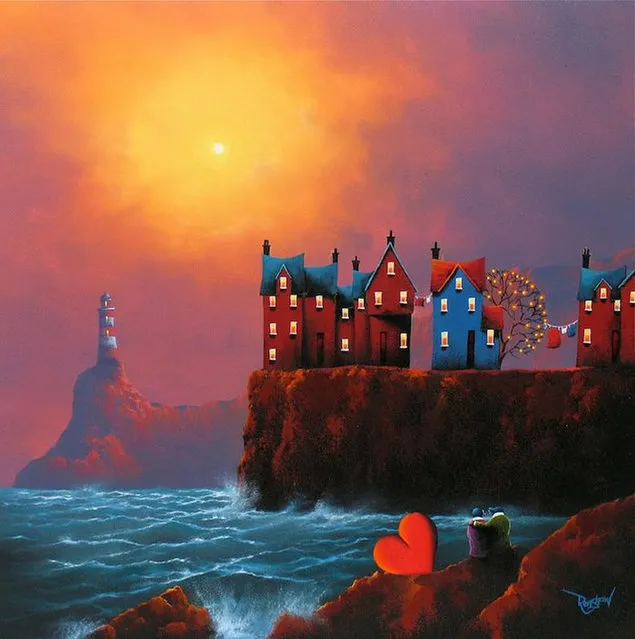
A Northern Romance Series By David Renshaw

Lovely is the correct work to describe this beautiful paintings series by David Renshaw from “Ted n’ Doris – A Northern Romance”. “Deep down I always knew what I wanted to do for a living and in my school years I remember my father teaching me some basic elements of drawing and I dreamed of one day becoming an artist. Being only really interested in art I left school and studied Graphic Design, after which I started work at a local art gallery as a picture framer. I continued to paint alongside my job, mainly developing techniques and ideas and in 2005 decided it was time to follow my dreams and dedicate myself to painting full time. I always try to make my work feel atmospheric, and I like to pay particular attention to sky and cloud formations as I consider this element of my work to be extremely important to the mood of the finished painting, whether it be a dramatic sunset or a misty moonlit night.”
Details
19 Oct 2013 11:48:00
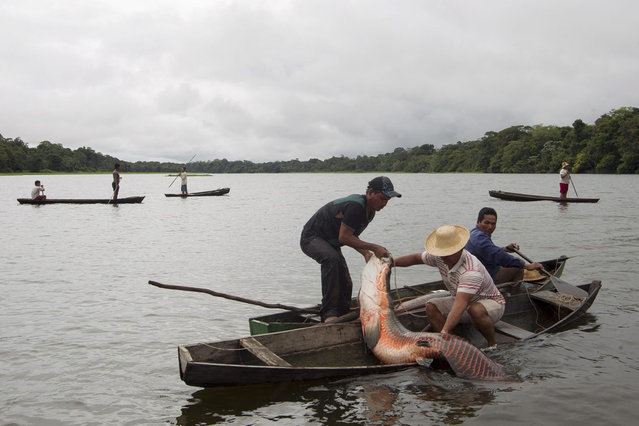
Villagers from the Porto Novo community load into their canoes arapaima or pirarucu, the largest freshwater fish species in South America and one of the largest in the world, while fishing in Poco Fundo lake along a branch of the Solimoes river, one of the main tributaries of the Amazon, in the Mamiraua nature reserve near Fonte Boa about 600 km (373 miles) west of Manaus, November 26, 2013. (Photo by Bruno Kelly/Reuters)

Villagers from the Porto Novo community load into their canoes arapaima or pirarucu, the largest freshwater fish species in South America and one of the largest in the world, while fishing in Poco Fundo lake along a branch of the Solimoes river, one of the main tributaries of the Amazon, in the Mamiraua nature reserve near Fonte Boa about 600 km (373 miles) west of Manaus, November 26, 2013. Catching the arapaima, a fish that is sought after for its meat and is considered by biologists to be a living fossil, is only allowed once a year by Brazil's environmental protection agency. The minimum size allowed for a fisherman to keep an arapaima is 1.5 meters (4.9 feet). (Photo by Bruno Kelly/Reuters)
Details
17 Dec 2013 08:03:00