Loading...
Done
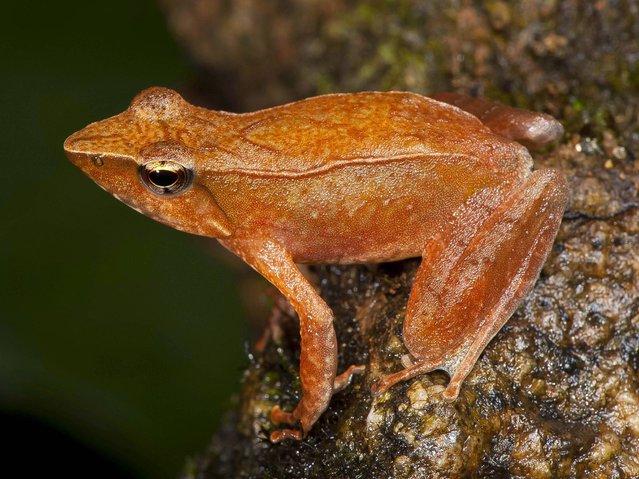
Orange dancing frog discovered by a team headed by University of Delhi professor Sathyabhama Das Biju in the jungle mountains of southern India. (Photo by Satyabhama Das Biju/AP Photo)

This undated photograph shows one of the 14 new species of so-called dancing frogs discovered by a team headed by University of Delhi professor Sathyabhama Das Biju in the jungle mountains of southern India. The study listing the new species brings the number of known Indian dancing frogs to 24 and attempts the first near-complete taxonomic sampling of the single-genus family found exclusively in southern India's lush mountain range called the Western Ghats, which stretches 1,600 kilometers (990 miles) from the west state of Maharashtra down to the country's southern tip. (Photo by Satyabhama Das Biju/AP Photo)
Details
09 May 2014 08:50:00
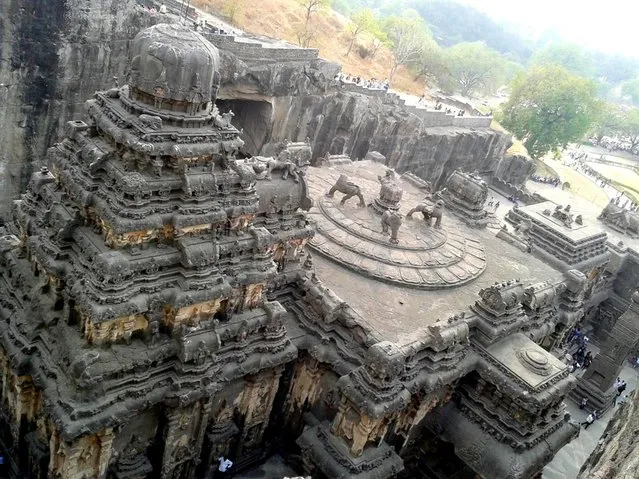
Ellora Cave Temples

Ellora is an archaeological site, 29 km (18 mi) North-West of the city of Aurangabad in the Indian state of Maharashtra built by the Rashtrakuta dynasty. It is also known as Elapura (in the Rashtrakuta literature-Kannada).
Details
06 May 2014 14:08:00
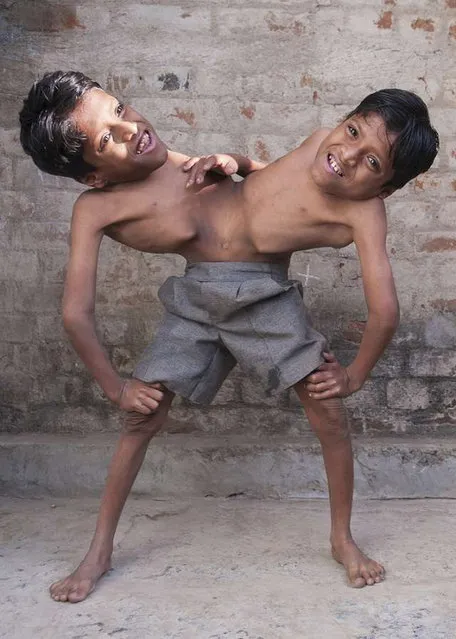
Conjoined Twins Who Are Worshipped In India

Conjoined twins Shivanath and Shivram Sahu have found a remarkable way to get to school – dropping to the floor and running like a spider.
Details
15 Apr 2014 14:06:00
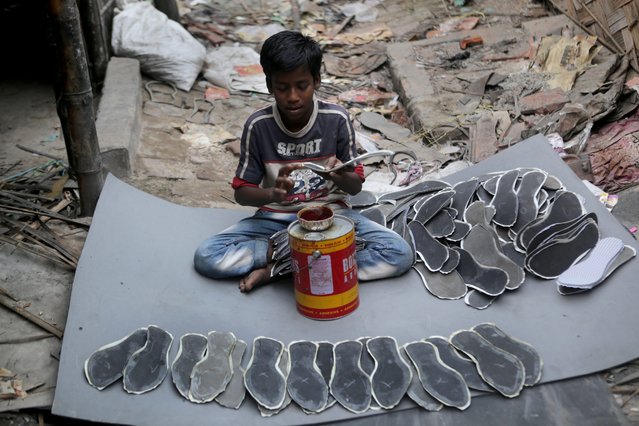
Indian boy Hassan Malik works in a leather shoe factory at Topsia in Calcutta, eastern India, 19 November 2013. (Photo by Piyal Adhikary/EPA)

Indian boy Hassan Malik works in a leather shoe factory at Topsia in Calcutta, eastern India, 19 November 2013. The leather industry occupies an important place in the Indian economy. It is an employment intensive sector with a vast potential for growth and exports but also a pollution intensive industry that relies on cheap labor. One of the major production centers for leather and leather products is located in Calcutta, West Bengal. Hundreds of tanneries are operated in the city’s Tiljala, Topsia and Tangra districts. They are mostly run by local families living and working under poor conditions. (Photo by Piyal Adhikary/EPA)
Details
20 Mar 2014 09:40:00
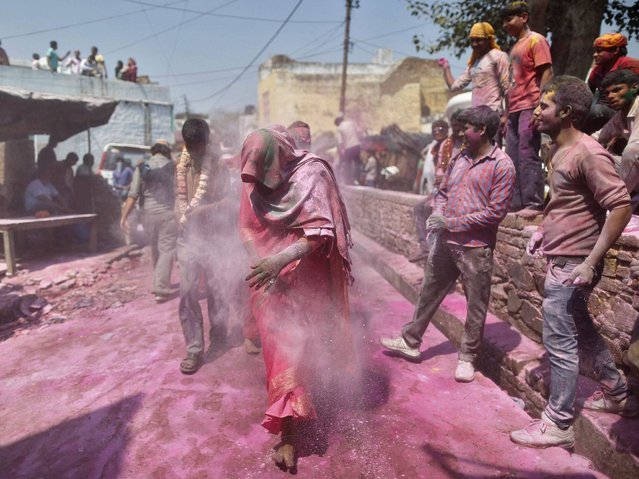
In a Holi tradition unique to Barsana and Nandgaon villages, men sing provocative songs to gain the attention of women, who then “beat” them with bamboo sticks called “lathis”. (Photo by Anindito Mukherjee/Reuters)

A woman covers her face as men throw colored powder at her during “Lathmar Holi” at the village of Barsana in the northern Indian state of Uttar Pradesh March 9, 2014. (Photo by Anindito Mukherjee/Reuters)
Details
13 Mar 2014 08:05:00
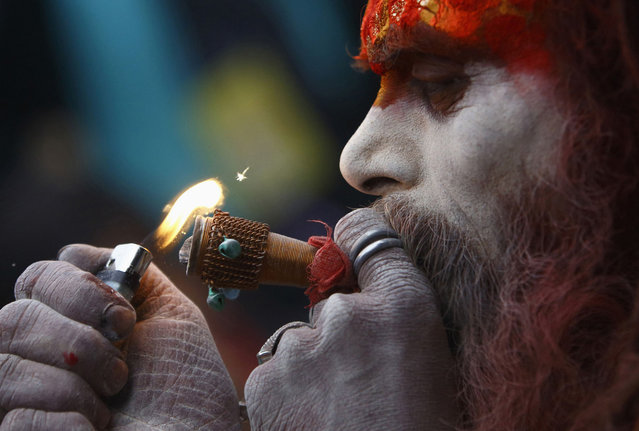
A Hindu holy man, or sadhu, smokes marijuana on a chillum (pipe) at the premises of Pashupatinath Temple during the Shivaratri festival in Kathmandu February 27, 2014. Hindu holy men from Nepal and India come to this temple to take part in the Shivaratri festival. Celebrated by Hindu devotees all over the world, Shivaratri is dedicated to Lord Shiva, and holy men mark the occasion by praying, smoking marijuana or smearing their bodies with ashes. (Photo by Navesh Chitrakar/Reuters)

A Hindu holy man, or sadhu, smokes marijuana on a chillum (pipe) at the premises of Pashupatinath Temple during the Shivaratri festival in Kathmandu February 27, 2014. Hindu holy men from Nepal and India come to this temple to take part in the Shivaratri festival. Celebrated by Hindu devotees all over the world, Shivaratri is dedicated to Lord Shiva, and holy men mark the occasion by praying, smoking marijuana or smearing their bodies with ashes. (Photo by Navesh Chitrakar/Reuters)
Details
27 Feb 2014 08:40:00
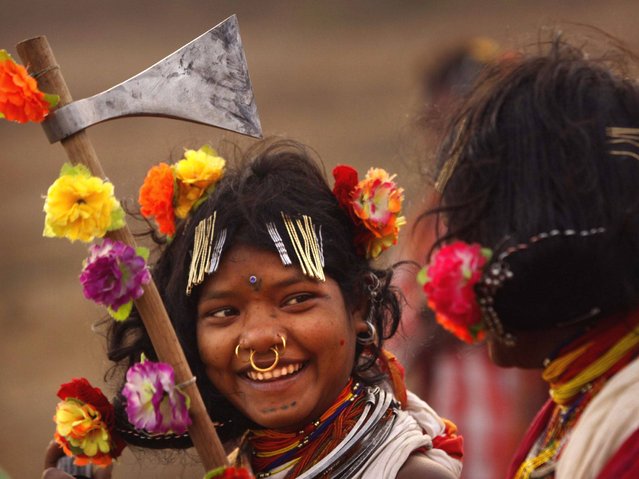
A Dongria tribe girl holds her traditional weapon and dance on the last day of their two days long Niyamraja Festival atop of the Niyamgiri hills near Lanjigarh in Kalahandi district, Orissa state. (Photo by Biswaranjan Rout/AP Photo)

A Dongria tribe girl holds her traditional weapon and dance on the last day of their two days long Niyamraja Festival atop of the Niyamgiri hills near Lanjigarh in Kalahandi district, Orissa state. (Photo by Biswaranjan Rout/AP Photo)
Details
25 Feb 2014 12:41:00
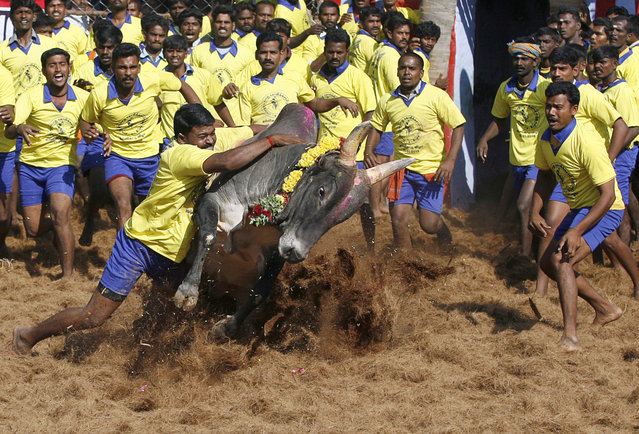
Bull tamers try to control a bull during the bull-taming sport called Jallikattu, in Palamedu, about 575 kilometers (359 miles) south of Chennai, India, Tuesday, Jan. 15, 2013. (Photo by Arun Sankar K./AP Photo)

“Jallikattu is a bull taming sport played in Tamil Nadu as a part of Pongal celebrations on Mattu Pongal day. Annually, jallikattu is held from January to July, played first in world-famous Palamedu, near Madurai on January 15 followed by “Alanganallur-jallikattu” in Alanganallur, near Madurai on 16 January. There is a specific breed of cattle bred for this purpose known as Jellicut and from the place of a big breeder Pulikulam”. – Wikipedia. Photo: Bull tamers try to control a bull during the bull-taming sport called Jallikattu, in Palamedu, about 575 kilometers (359 miles) south of Chennai, India, Tuesday, January 15, 2013. (Photo by Arun Sankar K./AP Photo)
Details
17 Jan 2014 10:06:00