Loading...
Done
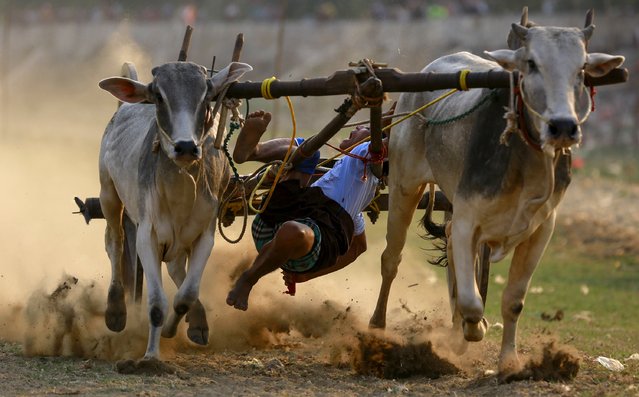
A man falls from an ox cart as he competes during an ox cart competition near U Bein bridge, in Mandalay March 22, 2015. (Photo by Soe Zeya Tun/Reuters)

A man falls from an ox cart as he competes during an ox cart competition near U Bein bridge, in Mandalay March 22, 2015. (Photo by Soe Zeya Tun/Reuters)
Details
25 Mar 2015 11:35:00
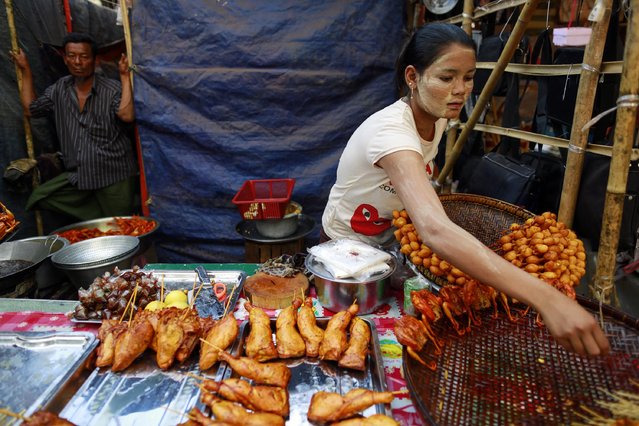
A woman sells fried chicken at the Kyaik-Khauk pagoda festival in the Tanlyin township outside Yangon February 4, 2015. (Photo by Soe Zeya Tun/Reuters)

A woman sells fried chicken at the Kyaik-Khauk pagoda festival in the Tanlyin township outside Yangon February 4, 2015. (Photo by Soe Zeya Tun/Reuters)
Details
17 Feb 2015 11:30:00
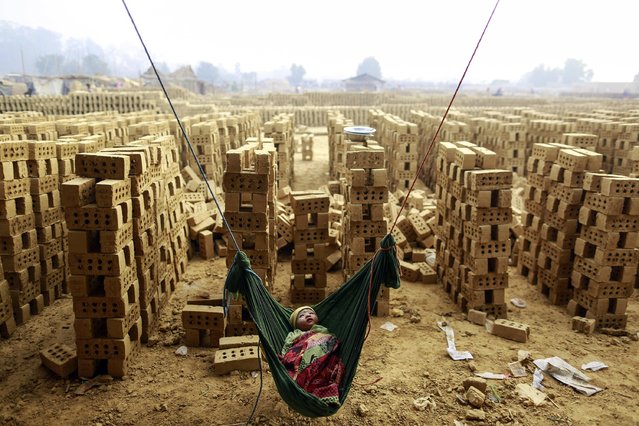
A boy sleeps in a hammock while his mother works at a brick kiln on the outskirts of Yangon February 1, 2015. (Photo by Soe Zeya Tun/Reuters)

A boy sleeps in a hammock while his mother works at a brick kiln on the outskirts of Yangon February 1, 2015. (Photo by Soe Zeya Tun/Reuters)
Details
02 Feb 2015 09:58:00
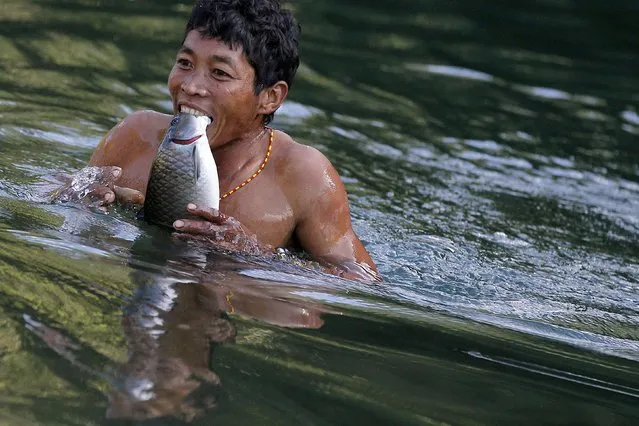
A Naga man carries fish in his teeth after it was stunned by dynamite, which fishermen threw in a creek between Donhe and Lahe township, in the Naga Self-Administered Zone in northwest Myanmar December 27, 2014. (Photo by Soe Zeya Tun/Reuters)

A Naga man carries fish in his teeth after it was stunned by dynamite, which fishermen threw in a creek between Donhe and Lahe township, in the Naga Self-Administered Zone in northwest Myanmar December 27, 2014. (Photo by Soe Zeya Tun/Reuters)
Details
11 Jan 2015 13:18:00
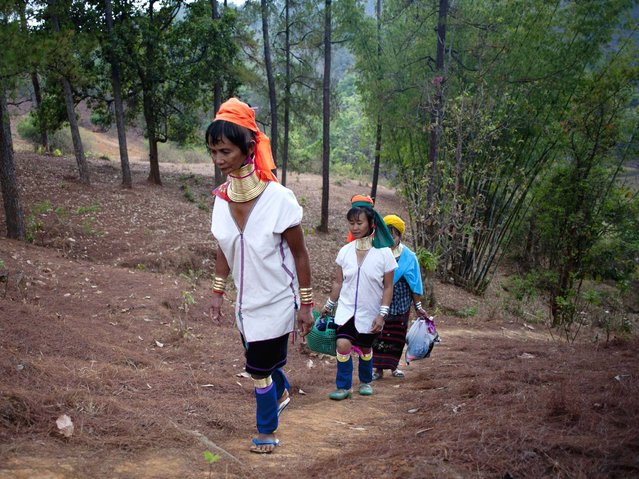
One of the theories says that the coils originate from the desire to look more attractive by exaggerating sexual dimorphism, as women have more slender necks than men. (Photo by Ye Aung Thu/AFP Photo)

This photo taken on April 16, 2014 shows ethnic Kayan women wearing traditional clothes and bronze rings around tbeir neck in Panpet village, Demoso township in Kayah state, eastern Myanmar. Some ethnic Kayan women, also known as Padaung, begin wearing the bronze rings on their neck and legs from a young age. Usually they start wearing six to ten rings when they are five to ten-years-old and then they put on one more ring a year for years after then. (Photo by Ye Aung Thu/AFP Photo)
Details
23 Apr 2014 08:56:00
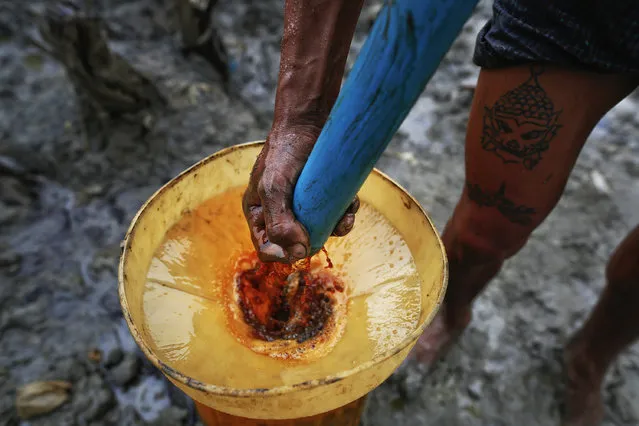
Ko Min, 26, manually extracts oil from one of three 300 feet deep wells he works on in the Minhla township of the Magwe district October 27, 2013. Everyday, Ko Min makes around $30 extracting crude oil from three small wells after he bought rights to use them for close to $1000 from a farmer who owns the land. (Photo by Damir Sagolj/Reuters)

Ko Min, 26, manually extracts oil from one of three 300 feet deep wells he works on in the Minhla township of the Magwe district October 27, 2013. Everyday, Ko Min makes around $30 extracting crude oil from three small wells after he bought rights to use them for close to $1000 from a farmer who owns the land. In Myanmar, an impoverished country rich with natural resources, people from poor communities find ways to supplement their income by exploiting such resources, such as the Minhla township, traditionally rich with oil, often using primitive and dangerous methods. (Photo by Damir Sagolj/Reuters)
Details
21 Apr 2014 10:06:00
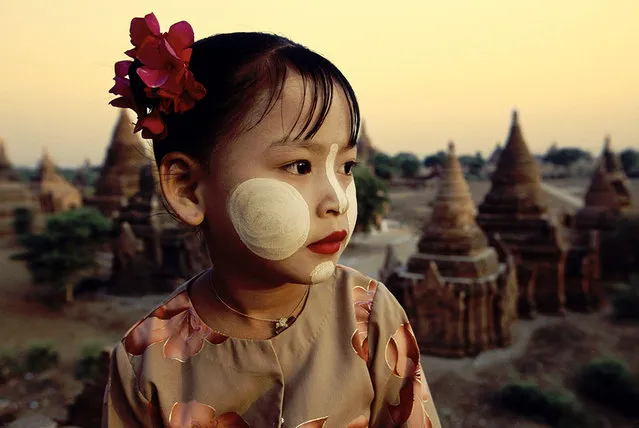
Pagan Kingdom, Myanmar

The Kingdom of Pagan (also commonly known as the Pagan Dynasty and the Pagan Empire) was the first kingdom to unify the regions that would later constitute modern-day Burma (Myanmar). Pagan's 250-year rule over the Irrawaddy valley and its periphery laid the foundation for the ascent of Burmese language and culture, the spread of Burman ethnicity in Upper Burma, and the growth of Theravada Buddhism in Burma and in mainland Southeast Asia.
Details
22 Feb 2014 15:14:00
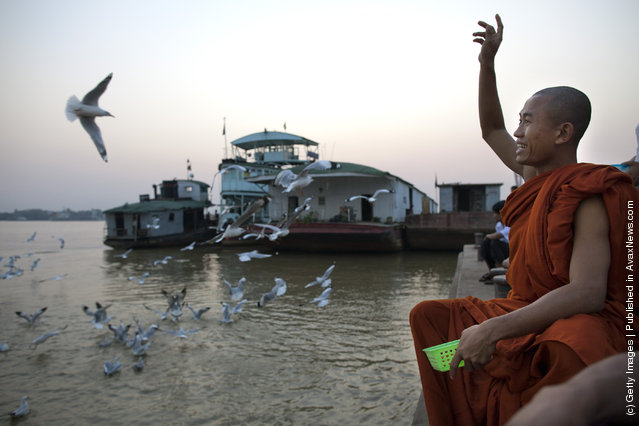
A Burmese monk feeds the seagulls at a Yangon river jetty

A Burmese monk feeds the seagulls at a Yangon river jetty February 8, 2012 in Yangon, Myanmar. (Photo by Paula Bronstein/Getty Images)
Details
09 Feb 2012 11:57:00