Loading...
Done
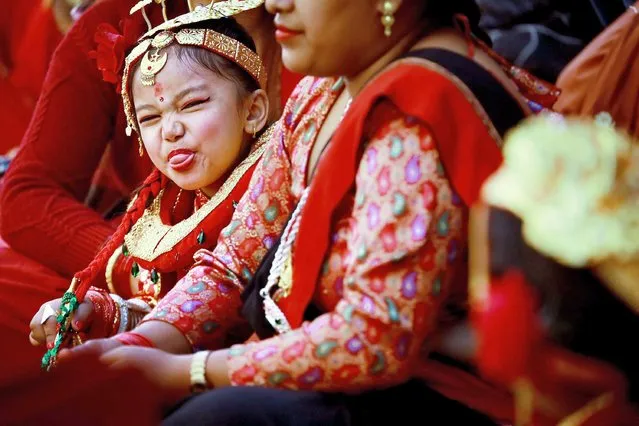
Girl in newari attire makes a funny face to her friend as she performs a Mass Bel Bibaha (marriage) ceremony in Bhaktapur, Bagmati, Nepal on December 7, 2021. The two-day ceremony, usually held several times a year, sees pre-adolescent “marry” the Hindu deity, Vishnu, symbolised by the local “bael” (wood apple) fruit. Normally Newar girls marry thrice time in there life as first marriage with Bael fruit, second with sun and third with human. (Photo by Amit Machamasi/ZUMA Wire/Alamy Live News)

Girl in newari attire makes a funny face to her friend as she performs a Mass Bel Bibaha (marriage) ceremony in Bhaktapur, Bagmati, Nepal on December 7, 2021. The two-day ceremony, usually held several times a year, sees pre-adolescent “marry” the Hindu deity, Vishnu, symbolised by the local “bael” (wood apple) fruit. Normally Newar girls marry thrice time in there life as first marriage with Bael fruit, second with sun and third with human. (Photo by Amit Machamasi/ZUMA Wire/Alamy Live News)
Details
05 Jan 2022 07:49:00
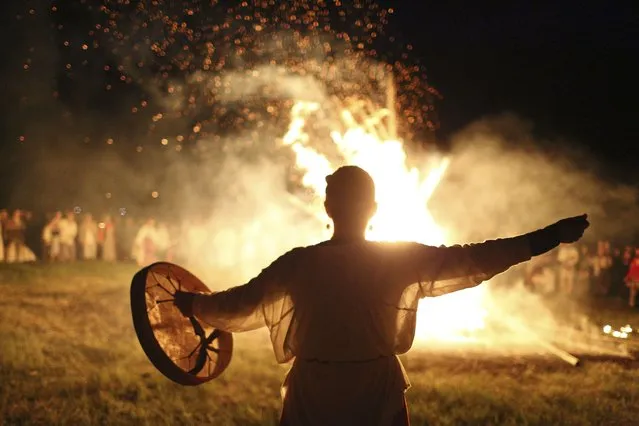
A person waves a drum while other people wearing traditional Russian village-style clothes celebrate the summer solstice near a bonfire in the village of Okunevo, about 200 kilometers (about 125 miles) northeast of the Siberian city of Omsk, Russia, on Wednesday, June 21, 2023. The festivities of Ivan Kupala, or John the Baptist, are similar to Mardi Gras and reflect pre-Christian Slavic traditions and practices. (Photo by Evgeniy Sofiychuk/AP Photo)

A person waves a drum while other people wearing traditional Russian village-style clothes celebrate the summer solstice near a bonfire in the village of Okunevo, about 200 kilometers (about 125 miles) northeast of the Siberian city of Omsk, Russia, on Wednesday, June 21, 2023. The festivities of Ivan Kupala, or John the Baptist, are similar to Mardi Gras and reflect pre-Christian Slavic traditions and practices. (Photo by Evgeniy Sofiychuk/AP Photo)
Details
26 Jun 2023 03:09:00
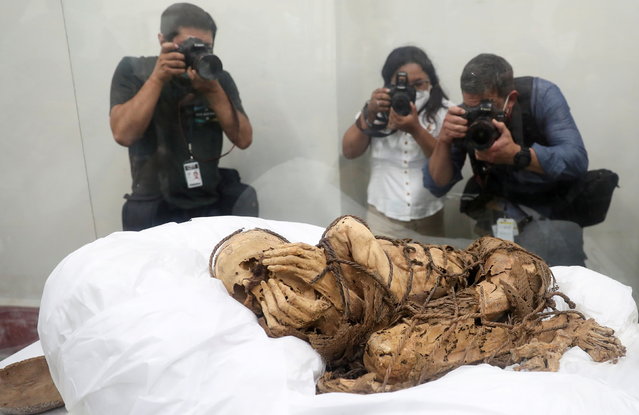
Members of the media take pictures of the pre-Inca “Mummy of Cajamarquilla”, which is presumed to be between 800 and 1200 years old, in Lima, Peru December 7, 2021. The “Mummy of Cajamarquilla” found by archaeologists from San Marcos inside a burial chamber of about three meters long and a depth of 1.40 meters in the Cajamarquilla archaeological site, east of Lima. (Photo by Sebastian Castaneda/Reuters)

Members of the media take pictures of the pre-Inca “Mummy of Cajamarquilla”, which is presumed to be between 800 and 1200 years old, in Lima, Peru December 7, 2021. The “Mummy of Cajamarquilla” found by archaeologists from San Marcos inside a burial chamber of about three meters long and a depth of 1.40 meters in the Cajamarquilla archaeological site, east of Lima. (Photo by Sebastian Castaneda/Reuters)
Details
09 Dec 2021 09:05:00
Dog Fashion Show Held Ahead Of Next Week's Westminster Kennel Club Dog Show

Miu Miu, a Chihuahua, poses at the pre-Westminster Fashion Show at Hotel Pennsylvania ahead of next week's Westminster Kennel Club Dog Show on February 10, 2012 in New York City. (Photo by Michael Nagle/Getty Images)
Details
11 Feb 2012 14:08:00
Buddha

The Leshan Giant Buddha was built during the Tang Dynasty (618–907AD). It is carved out of a cliff face that lies at the confluence of the Minjiang, Dadu and Qingyi rivers in the southern part of Sichuan province in China, near the city of Leshan. The stone sculpture faces Mount Emei, with the rivers flowing below his feet. It is the largest carved stone Buddha in the world[1] and it is by far the tallest pre-modern statue in the world.
Details
14 Jul 2012 04:50:00
Revelers dance at a Jacarezinho samba school practice session ahead of Carnival celebrations on February 16, 2014 in Rio de Janeiro, Brazil. The Jacarezinho “favela” was previously controlled by drug traffickers and is now occupied by the city's Police Pacification Unit (UPP). Carnival officially begins February 28, but pre-Carnival celebrations are already underway. (Photo by Mario Tama/Getty Images)

Revelers dance at a Jacarezinho samba school practice session ahead of Carnival celebrations on February 16, 2014 in Rio de Janeiro, Brazil. The Jacarezinho “favela” was previously controlled by drug traffickers and is now occupied by the city's Police Pacification Unit (UPP). Carnival officially begins February 28, but pre-Carnival celebrations are already underway. (Photo by Mario Tama/Getty Images)
Details
19 Feb 2014 11:01:00
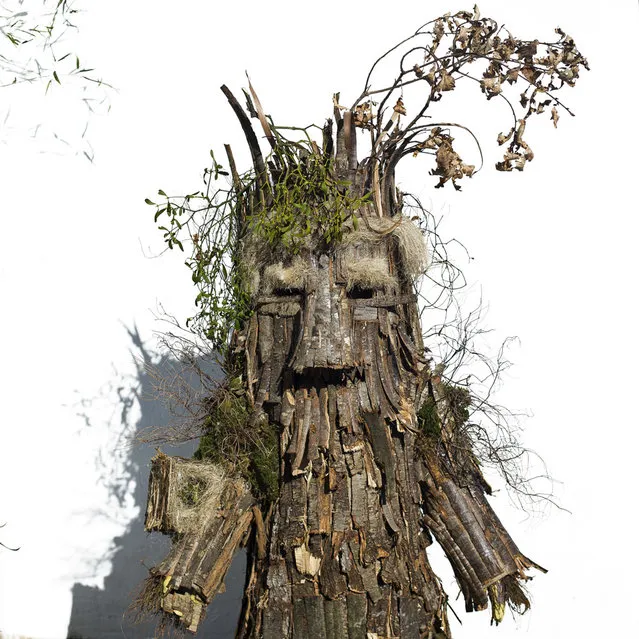
A man dressed as a  “Trapajon”, representing entities of nature, poses for a picture after taking part in the Vijanera Festival in Silio, northern Spain, Sunday, Jan. 6, 2013. The Vijanera masquerade, of pre-Roman origin, is the first carnival of the year in Europe symbolizing the triumph of good over evil and involving the participation of crowds of residents wearing different masks, animal skins and brightly colored clothing with its own complex function and symbolism and becoming the living example of the survival of archaic cults to nature. (Photo by Daniel Ochoa de Olza/AP Photo)

A man dressed as a “Trapajon”, representing entities of nature, poses for a picture after taking part in the Vijanera Festival in Silio, northern Spain, Sunday, Jan. 6, 2013. The Vijanera masquerade, of pre-Roman origin, is the first carnival of the year in Europe symbolizing the triumph of good over evil and involving the participation of crowds of residents wearing different masks, animal skins and brightly colored clothing with its own complex function and symbolism and becoming the living example of the survival of archaic cults to nature. (Photo by Daniel Ochoa de Olza/AP Photo)
Details
19 Jan 2013 13:01:00
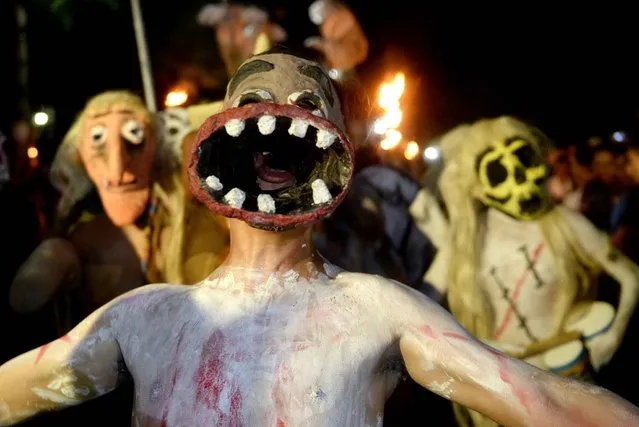
Young revelers take part in a parade called "La Calabiuza" on November 1, 2015, on the eve of the Day of the Dead in Tonacatepeque, 20 kms (13 miles) north of San Salvador. During the celebration, the residents of Tonacatepeque, originally an indigenous community, recall the characters from the mythology of Cuscatlan – pre-Columbian west and central regions of El Salvador – and their dead relatives. (Photo by Marvin Recinos/AFP Photo)

Young revelers take part in a parade called "La Calabiuza" on November 1, 2015, on the eve of the Day of the Dead in Tonacatepeque, 20 kms (13 miles) north of San Salvador. During the celebration, the residents of Tonacatepeque, originally an indigenous community, recall the characters from the mythology of Cuscatlan – pre-Columbian west and central regions of El Salvador – and their dead relatives. (Photo by Marvin Recinos/AFP Photo)
Details
04 Nov 2015 11:50:00