Loading...
Done
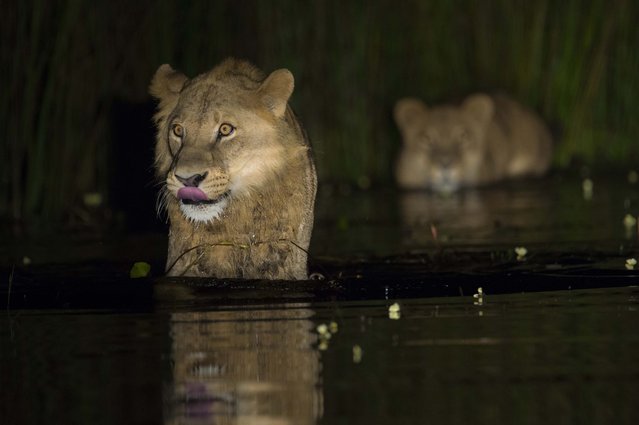
Lions submerged in water. (Photo by Wim van den Heever/Caters News)

These breath-taking photographs reveal the everyday lives of animals living in the wild. The incredible images were taken by wildlife photographer Wim van dan Heever, from Pretoria, South Africa, during trips to locations including Japan, Botswana and Svalbard. The 43-year-old has been photographing wildlife since he was a young boy and turned his passion for animals into a career and set up ODP Safaris. He has travelled across the globe to photograph wild animals – from lions and tigers, to elephants, dolphins and eagles – as they hunt, give birth and graze in their natural habitats. Here: Lions submerged in water. (Photo by Wim van den Heever/Caters News)
Details
07 Aug 2015 11:43:00
Viking Artifacts Found At A Boat Burial Site Are Unveiled In Edinburgh

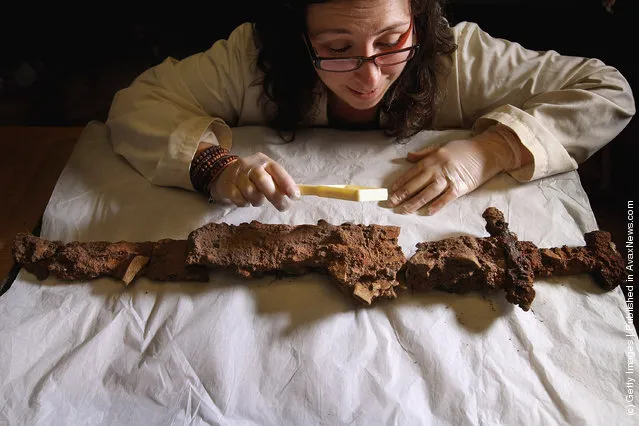
Dr. Hannah Cobb from The University of Manchester looks at a viking sword during a viewing at CFA Archaeology of artefacts discovered from the first fully intact Viking boat burial site on October 18, 2011 in Edinburgh, Scotland. (Photo by Jeff J Mitchell/Getty Images)
Details
19 Oct 2011 10:54:00
In this fur-ocious fight, two fox twins have been spotted locking paws as this sibling rivalry spirals into an epic brawl in London in the last decade of August 2023. (Photo by Anthony Cunningham/Caters News Agency)

In this fur-ocious fight, two fox twins have been spotted locking paws as this sibling rivalry spirals into an epic brawl in London in the last decade of August 2023. (Photo by Anthony Cunningham/Caters News Agency)
Details
17 Sep 2023 03:17:00
A devotee of the Chinese Samkong Shrine walks with flowers pierced through his cheeks during a procession celebrating the annual vegetarian festival in Phuket, Thailand, October 16, 2015. (Photo by Jorge Silva/Reuters)

A devotee of the Chinese Samkong Shrine walks with flowers pierced through his cheeks during a procession celebrating the annual vegetarian festival in Phuket, Thailand, October 16, 2015. The festival, featuring face-piercing, spirit mediums and strict vegetarianism celebrates the local Chinese community's belief that abstinence from meat and various stimulants during the ninth lunar month of the Chinese calendar will help them obtain good health and peace of mind. (Photo by Jorge Silva/Reuters)
Details
19 Oct 2015 08:06:00
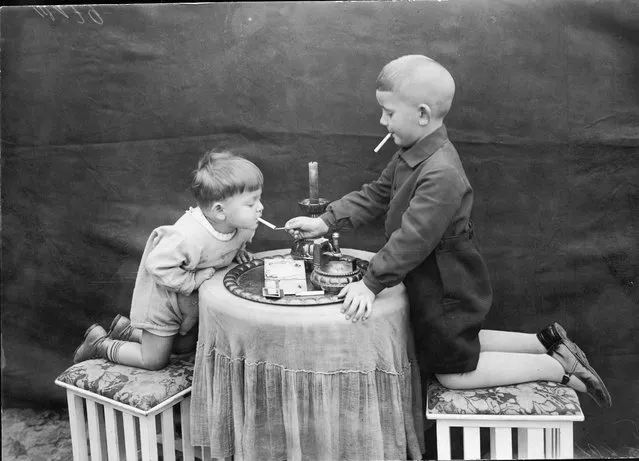
Two young boys kneel on stools on either side of a round table as one uses a match to this the other's cigarette, November 12, 1928. (Photo by FPG/Getty Images)

Two young boys kneel on stools on either side of a round table as one uses a match to this the other's cigarette, November 12, 1928. (Photo by FPG/Getty Images)
Details
17 Sep 2016 10:53:00
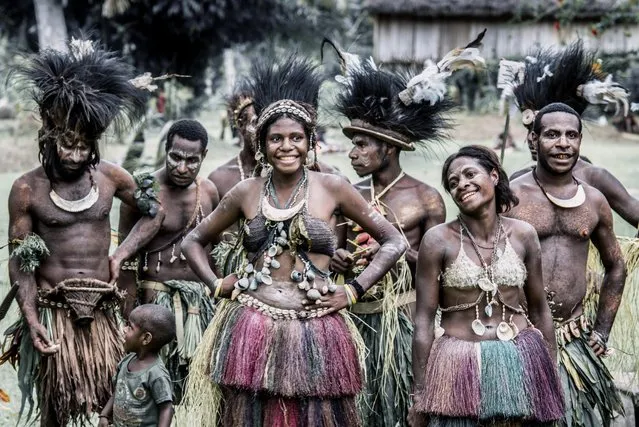
Stunning images capture the tribes of Papua New Guinea during a gathering of clans. (Photo by Trevor Cole/Media Drum World)

These powerful images capture the spear-wielding tribes of Papua new Guinea who believe they are possessed with the spirit of the crocodile. They show how the Kangunaman clansmen scar their backs to resemble reptile scales while the Huli Wigmen wear elaborate headdresses to signal they are ready for battle. (Photo by Trevor Cole/Media Drum World)
Details
05 May 2018 00:05:00
Bioluminescent sea fireflies glittering like diamonds on the rocks and sand. Okayama, Japan. July 2016. (Photo by Trevor Williams/Jonathan Galione/Getty Images)

Those lights are actually bioluminescent shrimp, better known as sea fireflies, or, in Japan, as “umibotaru”. Visible every year from May until the end of October, they live in the sand around very shallow sea water and are often seen floating between the extremes of high and low tides. Here: Bioluminescent sea fireflies glittering like diamonds on the rocks and sand. Okayama, Japan. July 2016. (Photo by Trevor Williams/Jonathan Galione/Getty Images)
Details
23 Aug 2016 10:13:00
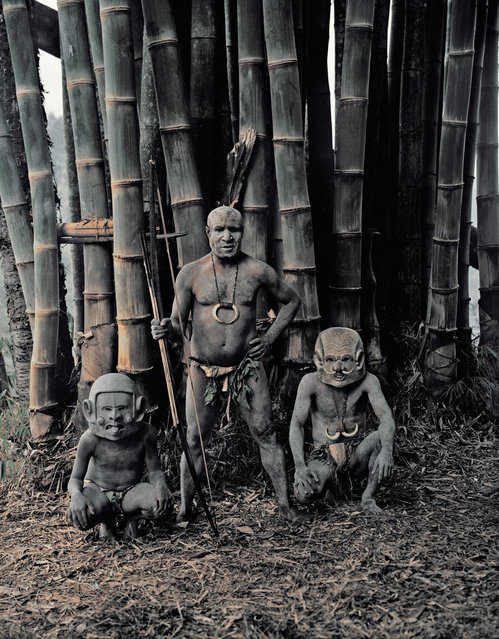
“Asaro from the Eastern Highlands”. The mudmen could not cover their faces with mud because the people of Papua New Guinea thought that the mud from the Asaro river was poisonous. So instead of covering their faces with this alleged poison, they made masks from pebbles that they heated and water from the waterfall, with unusual designs such as long or very short ears either going down to the chin or sticking up at the top, long joined eyebrows attached to the top of the ears, horns and sideways mouths. (Jimmy Nelson)

“Asaro from the Eastern Highlands”. The mudmen could not cover their faces with mud because the people of Papua New Guinea thought that the mud from the Asaro river was poisonous. So instead of covering their faces with this alleged poison, they made masks from pebbles that they heated and water from the waterfall, with unusual designs such as long or very short ears either going down to the chin or sticking up at the top, long joined eyebrows attached to the top of the ears, horns and sideways mouths. (Photo and caption by Jimmy Nelson)
Details
20 Oct 2013 08:54:00