Polar Bear club swimmers take their annual swim in the sea at Coney Island in New York City on January 1, 2014. (Photo by Curtis Means/ACE/INFphoto.com)
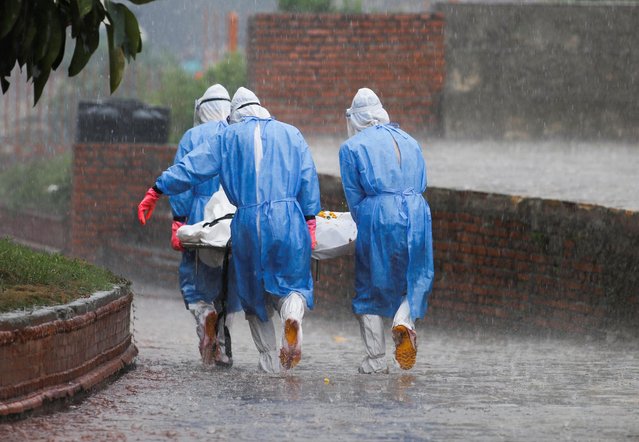
Members of Nepal Army wearing personal protective equipment (PPE) carry the body of a person, who died from the coronavirus disease (COVID-19), in the rain at the crematorium, in Kathmandu, Nepal on May 11, 2021. (Photo by Navesh Chitrakar/Reuters)
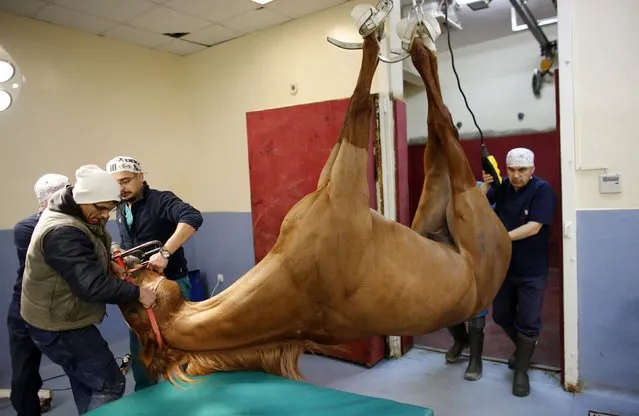
A racehorse is hoisted up before its operation at Veliefendi equine hospital in Istanbul March 3, 2015. A state-of-the-art hospital for hundreds of horses run by the Jockey Club of Turkey at Istanbul's Veliefendi racecourse is the country's oldest and biggest. Grooms and trainers at the equine clinic work with vets and nurses while owners hope their prize runners, often worth hundreds of thousands of dollars, will recover quickly and then run faster still. (Photo by Murad Sezer/Reuters)
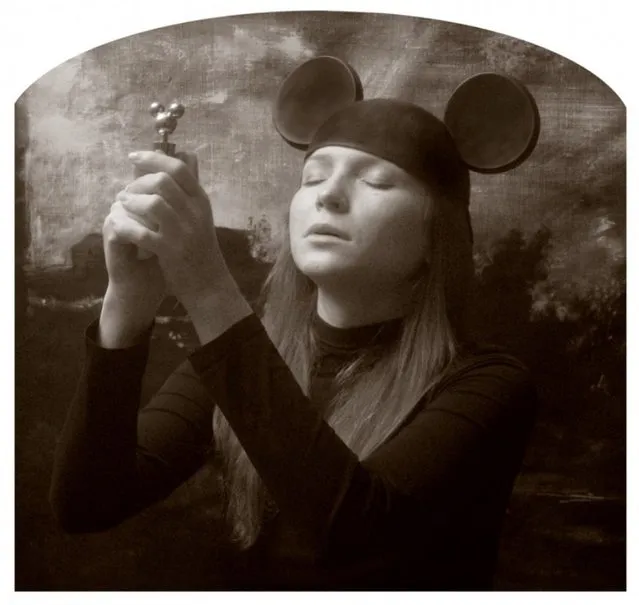
To produce the images that convey his fatalistic and ironic approach to life, tinged with hope, he needed the environment and knowledge of Mother Russia, oiled with a bit of bribery to certain circus trainers. Enter the Great Russian Bear, the personification of Russia for the last several centuries, onto center stage and into his studio. The bear is recognized as both brutish and cute – Misha was the mascot for the 1980 Olympic Games – and has remained a symbol of Russia since Tsarist times. In 2009 it is the symbol of the United Russia Party.
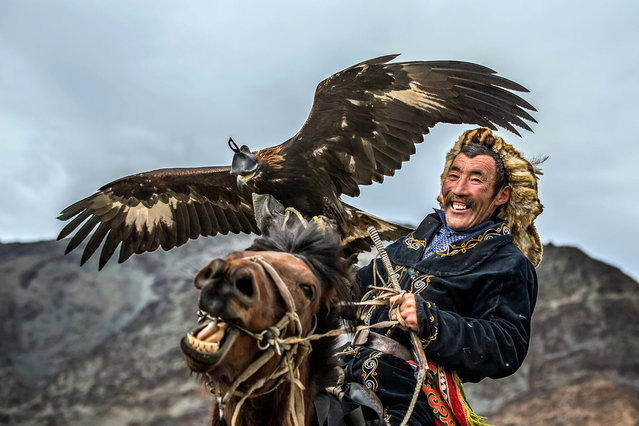
With their wings at full length, these beautiful golden eagles soar through the skies in a glorious training session to hunt their prey. Others sit on the arms of their owners and trainers. Batzaya Choijiljav, 41, from Mongolia has taken these magnificent pictures at the annual traditional Kazakhs festival, October 2015. (Photo by Batzaya Choijiljav/Caters News)
American television personality Dolores Catania in the first decade of February 2024 gets the “hot gossip” in a staged photo. (Photo by dolorescatania/Instagram)