Loading...
Done
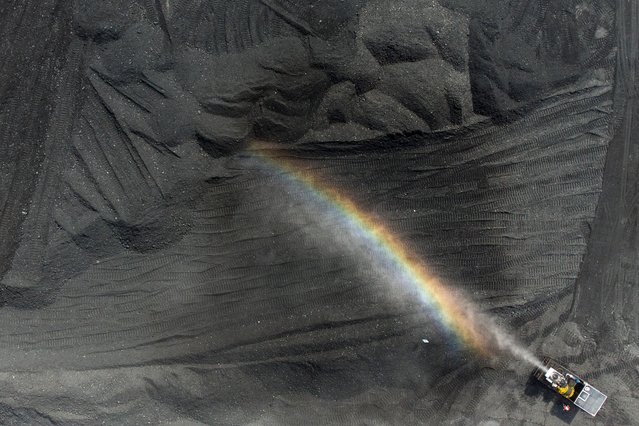
A rainbow forms on water from a spray machine used to suppress coal dust at the Krasnogorsky open pit coal mine, operated by Mechel PJSC, in Mezhdurechensk, Russia, on Monday, July 19, 2021. Russia’s government is betting that coal consumption will continue to rise in big Asian markets like China even as it dries up elsewhere. (Photo by Andrey Rudakov/Bloomberg)

A rainbow forms on water from a spray machine used to suppress coal dust at the Krasnogorsky open pit coal mine, operated by Mechel PJSC, in Mezhdurechensk, Russia, on Monday, July 19, 2021. Russia’s government is betting that coal consumption will continue to rise in big Asian markets like China even as it dries up elsewhere. (Photo by Andrey Rudakov/Bloomberg)
Details
06 Aug 2021 09:39:00
An exterior view of Rauceby, an abandoned mental asylum in Lincolnshire, UK. (Photo by Simon Robson/Caters News)

An exterior view of Rauceby, an abandoned mental asylum in Lincolnshire, UK. These haunting photos show the collapsing remains of a derelict mental asylum. The pictures show the ruined former hospital building and chapel, now covered in dust and graffiti. Few signs remain that reveal the site as a former home of mentally ill adults and children. (Photo by Simon Robson/Caters News)
Details
30 Sep 2016 09:10:00
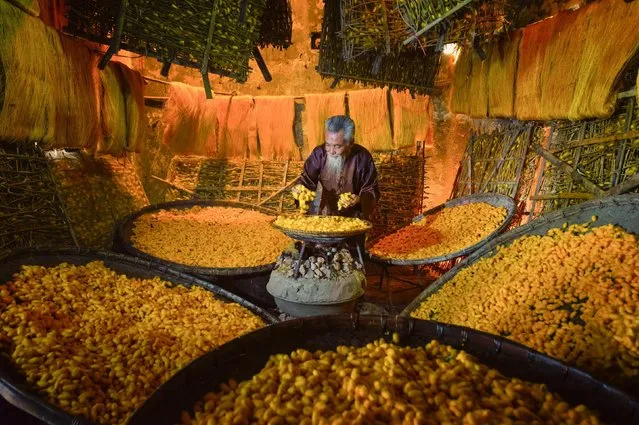
Thousands of bright yellow silkworm cocoons are dried in huge clay bowls in the village of Hong Ly, northern Vietnam in July 2022. Silk fibres are produced by silkworms when they spin themselves into a cocoon on their journey to becoming a silkmoth. The ultra-soft fibres are harvested from the cocoon in their raw state by being boiled in hot water. (Photo by Prabu Mohan/Solent News)

Thousands of bright yellow silkworm cocoons are dried in huge clay bowls in the village of Hong Ly, northern Vietnam in July 2022. Silk fibres are produced by silkworms when they spin themselves into a cocoon on their journey to becoming a silkmoth. The ultra-soft fibres are harvested from the cocoon in their raw state by being boiled in hot water. (Photo by Prabu Mohan/Solent News)
Details
31 Jul 2022 05:59:00
The World's Most Fashionable Grandpa By Gunther Krabbenhoft

Meet Günther Anton Krabbenhöft, a grandpa from Berlin, Germany who is making waves around the world because of his killer style. He was first noticed by Björn Akstinat of the German fashion blog Schickaa, who photographed Günther at the train station in a red bowling hat, yellow bow tie and burgundy leather driving gloves.
Details
02 Sep 2015 10:10:00
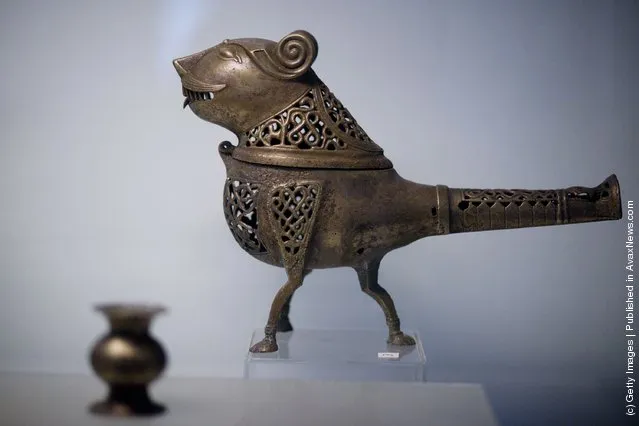
An ancient sculptures, pottery and bowls is displayed in the Kabul Museum August 4, 2011 in Kabul, Afghanistan

An ancient sculpture is displayed in the Kabul Museum August 4, 2011 in Kabul, Afghanistan. The sculptures, which had been destroyed by Islamists during the Taliban regime, were repaired after the collapse of the hardliners in 2001. Portions of the collection have been exhibited in seven countries. (Photo by Majid Saeedi/Getty Images)
Details
05 Aug 2011 09:27:00
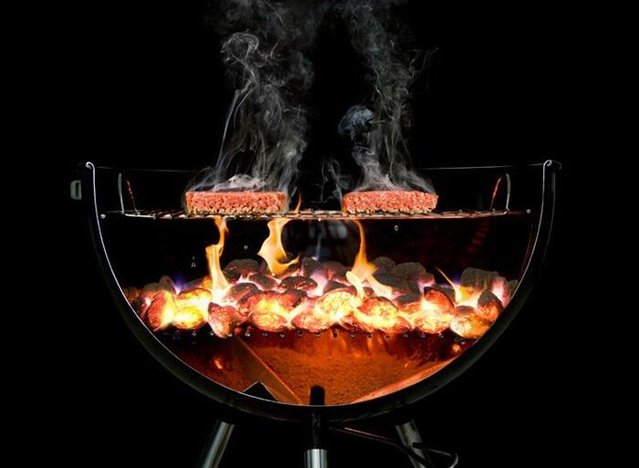
Things Cut in Half

HalfPics is a Twitter feed pointing to things cut in half like a bowl of ramen, a Mini Cooper, and toothpaste. Their tagline: “Ever wonder what stuff looks like when it’s cut in half?” Yes. We previously posted about “Cut Food,” a photo series of foods cut neatly in half by food photographer Beth Galton and food stylist Charlotte Omnès.

See also:Things Cut in Half Part1
Details
09 Sep 2013 10:05:00
The Songkran festival

“The Songkran festival is celebrated in Thailand as the traditional New Year's Day from 13 to 15 April. It coincides with the New Year of many calendars of South and Southeast Asia. The most obvious celebration of Songkran is the throwing of water upon others. Thais roam the streets with containers of water or water guns. In addition, many Thais will have small bowls of beige colored talc sold cheaply and mixed with water which is then smeared on the faces and bodies of random passerbys as a blessing for the new year” – Wikipedia. (Photo by Seua Yai)
Details
23 Oct 2013 12:00:00
A follower of the Afro-Brazilian religion Umbanda pays tribute for Iemanja, goddess of the sea, in Copacabana Beach in Rio de Janeiro, Brazil December 29, 2017. (Photo by Ricardo Moraes/Reuters)

A follower of the Afro-Brazilian religion Umbanda pays tribute for Iemanja, goddess of the sea, in Copacabana Beach in Rio de Janeiro, Brazil December 29, 2017. Hundreds of practitioners of Brazil's Afro-Brazilian Candomble and Umbanda faiths have gathered at Rio de Janeiro's Copacabana beach to honor Yemanja. Worshippers were mostly dressed in white as they launched their offerings to Iemanja: small boats with flowers and bowls with candles and fruits. (Photo by Ricardo Moraes/Reuters)
Details
30 Dec 2017 06:22:00