Loading...
Done
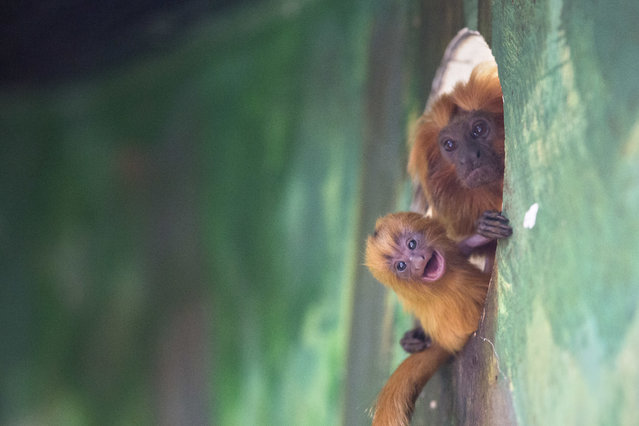
A golden lion tamarin monkey holds its newly born baby at a zoo in Jerusalem, Thursday, March 22, 2018. Golden lion tamarins are among the rarest animals in the world, according to the World Wildlife Fund. It is listed as endangered according to the International Union for Conservation of Nature. (Photo by Sebastian Scheiner/AP Photo)

A golden lion tamarin monkey holds its newly born baby at a zoo in Jerusalem, Thursday, March 22, 2018. Golden lion tamarins are among the rarest animals in the world, according to the World Wildlife Fund. It is listed as endangered according to the International Union for Conservation of Nature. (Photo by Sebastian Scheiner/AP Photo)
Details
23 Mar 2018 06:26:00
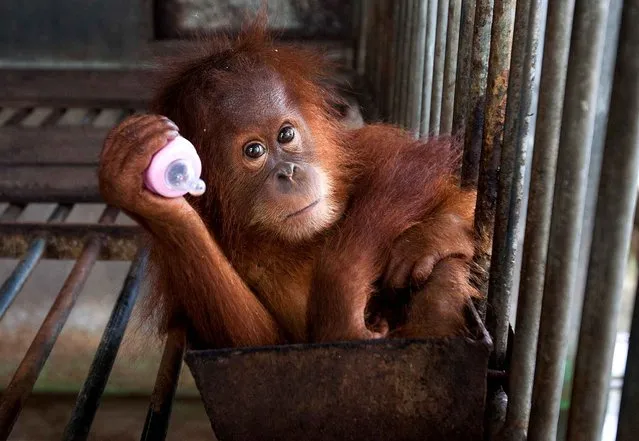
This picture shows a two-year old orangutan seized from a residents house at the provincial Nature Conservation and Agency (BKSDSA) office in Banda Aceh on September 16, 2014. The critically-endangered primates population are dwindling rapidly due to poaching and rapid destruction of their forest habitat that is being converted into palm oil plantations. (Photo by Chaideer Mahyuddin/AFP Photo)

This picture shows a two-year old orangutan seized from a residents house at the provincial Nature Conservation and Agency (BKSDSA) office in Banda Aceh on September 16, 2014. The critically-endangered primates population are dwindling rapidly due to poaching and rapid destruction of their forest habitat that is being converted into palm oil plantations. (Photo by Chaideer Mahyuddin/AFP Photo)
Details
20 Sep 2014 11:09:00
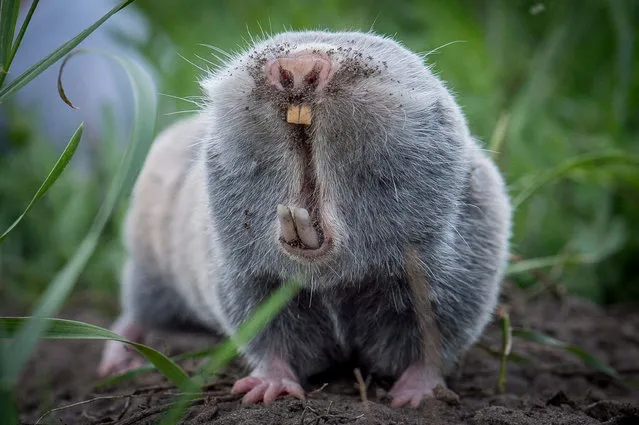
An adult specimen of Nannospalax (leucodon) montanosyrmiensis, a variant of the lesser mole-rat (Spalax leucodon) is pictured near Albertirsa, some 60 kilometers southeast of Budapest, Hungary, 12 May 2018. The critically endangered rodent lives in several isolated populations in the Carpathian Basin. (Photo by Sandor Ujvari/EPA/EFE)

An adult specimen of Nannospalax (leucodon) montanosyrmiensis, a variant of the lesser mole-rat (Spalax leucodon) is pictured near Albertirsa, some 60 kilometers southeast of Budapest, Hungary, 12 May 2018. The critically endangered rodent lives in several isolated populations in the Carpathian Basin. (Photo by Sandor Ujvari/EPA/EFE)
Details
20 May 2018 00:03:00
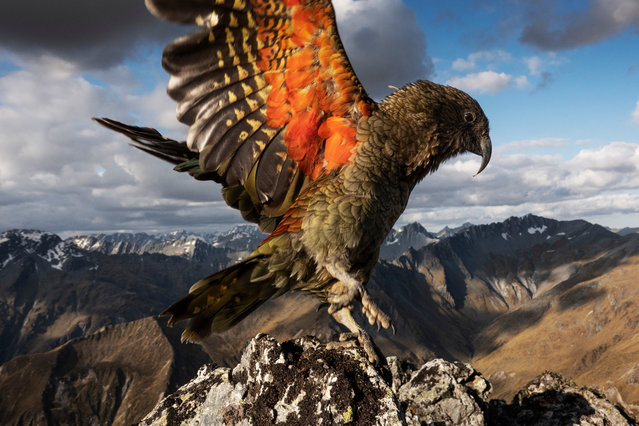
The endangered kea is the world’s only alpine parrot, and one of the most intelligent birds. They show no fear of humans and are thieves and pranksters. The parrot is seen in the Whakaari conservation area, near Glen Orchy in the Otago region of New Zealand, a place where historic huts and mining relics are surrounded by stunning mountains covered in tussock. (Photo by Murdo MacLeod/The Guardian)

The endangered kea is the world’s only alpine parrot, and one of the most intelligent birds. They show no fear of humans and are thieves and pranksters. The parrot is seen in the Whakaari conservation area, near Glen Orchy in the Otago region of New Zealand, a place where historic huts and mining relics are surrounded by stunning mountains covered in tussock. (Photo by Murdo MacLeod/The Guardian)
Details
15 Jun 2020 00:05:00
Giant Pandas In Beijing Zoo

A pair of giant pandas play in their enclosure at the Beijing Zoo on June 5, 2012 in Beijing, China. With an estimated 1,600 living in the wild, the endangered giant panda dwell in a few mountain ranges in central China, in Sichuan, Shaanxi, and Gansu provinces. (Photo by Lintao Zhang)
Details
06 Jun 2012 12:02:00
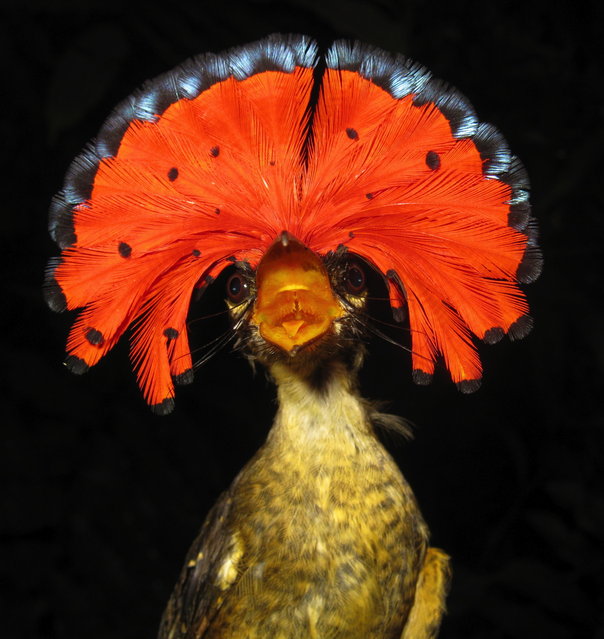
Royal Flycatcher

The Royal Flycatchers are birds in the genus Onychorhynchus in the Tityridae family. Depending on authority, it includes a single widespread, or four more localized species. The specific epithet of the type species, coronatus, and the common name of all the species in this genus, Royal Flycatcher, refer to the striking, colourful crest, which is seen displayed very rarely, except after mating, while preening, in courtship as well as being handled.
Details
02 Jun 2013 10:04:00
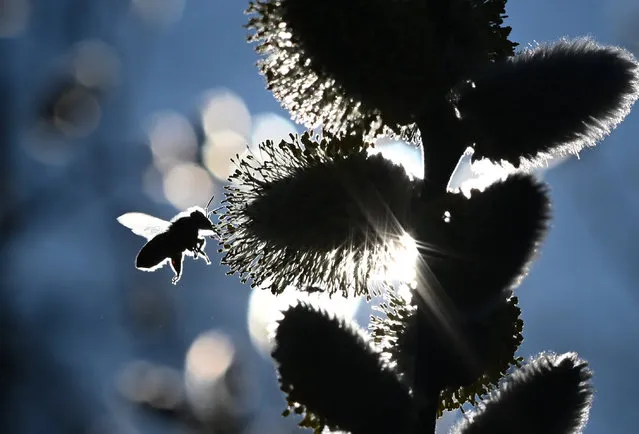
A bee approaching the flowers of a willow in Otzberg, Germany on February 28, 2021. Willow catkins are a protected species and one of the first sources of food for insects in early spring. (Photo by Arne Dedert/DPA)

A bee approaching the flowers of a willow in Otzberg, Germany on February 28, 2021. Willow catkins are a protected species and one of the first sources of food for insects in early spring. (Photo by Arne Dedert/DPA)
Details
10 Apr 2021 05:48:00
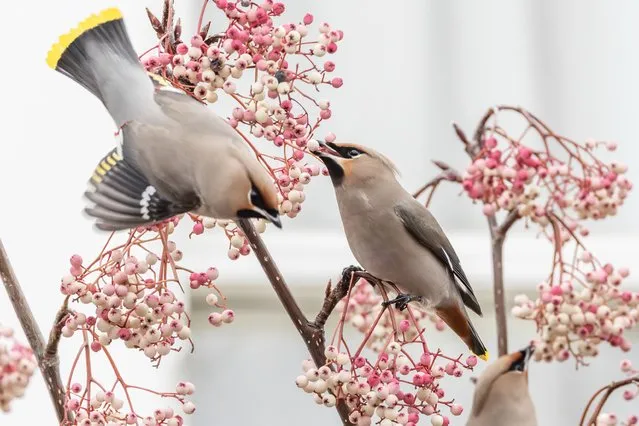
Waxwings in Balham south London on December 31, 2023. There has been a huge influx of this erruptive species this year. This probably due to severe storms and a shortage of food in their native Scandinavia in the Autumn. (Photo by Jack Hill/The Times)

Waxwings in Balham south London on December 31, 2023. There has been a huge influx of this erruptive species this year. This probably due to severe storms and a shortage of food in their native Scandinavia in the Autumn. (Photo by Jack Hill/The Times)
Details
25 Jan 2024 10:02:00