Loading...
Done
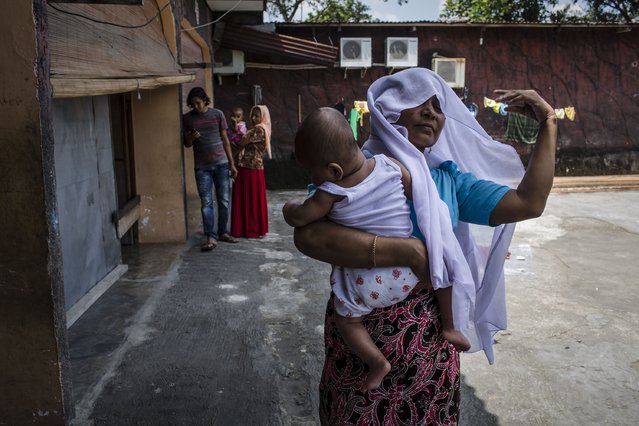
Rohingya refugees stand outside of their refugee camp on February 11, 2017 in Medan, North Sumatra, Indonesia. (Photo by Ulet Ifansasti/Getty Images)

Rohingya refugees stand outside of their refugee camp on February 11, 2017 in Medan, North Sumatra, Indonesia. Thousands of Rohingya Muslims have been stuck in limbo at Indonesia's refugee camps as the plight of Myanmar's ethnic minority continues. (Photo by Ulet Ifansasti/Getty Images)
Details
25 Feb 2017 00:02:00
Sushi Cats By Tange & Nakimushi Peanuts

Sushi Cats (originally branded as Neko-Sushi) is a series of photographs created by the Japan-based company Tange & Nakimushi Peanuts. In this series the creators have dressed up a number of cats and placed them on top of oversized balls of sushi rice. The kitties don’t look too happy with what is going on, though they do look adorable in their little outfits. Tange & Nakimushi Peanuts didn’t think that making a set of photos was enough, so they’ve also created an Android and iPhone apps featuring Sushi Cats. Moreover, people living in Japan can visit their website, if they wish to order photo prints, postcards, and other items. (Photo by Tange & Nakimushi Peanuts)
Details
08 Jan 2015 14:14:00
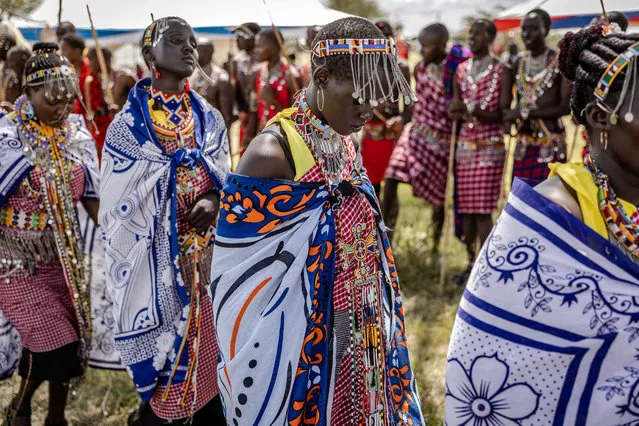
A group of Maasai women march while dancing traditional songs during a Maasai cultural festival in Sekenani, on June 10, 2023. The Maasai people are a Nilotic ethnic group inhabiting Kenya and northern Tanzania. The Maasai cultural festival is a popular gathering and celebration of the Maasai cultural heritage and aims to showcase the community's traditional activities and fashion. (Photo by Luis Tato/AFP Photo)

A group of Maasai women march while dancing traditional songs during a Maasai cultural festival in Sekenani, on June 10, 2023. The Maasai people are a Nilotic ethnic group inhabiting Kenya and northern Tanzania. The Maasai cultural festival is a popular gathering and celebration of the Maasai cultural heritage and aims to showcase the community's traditional activities and fashion. (Photo by Luis Tato/AFP Photo)
Details
20 Jun 2023 03:57:00
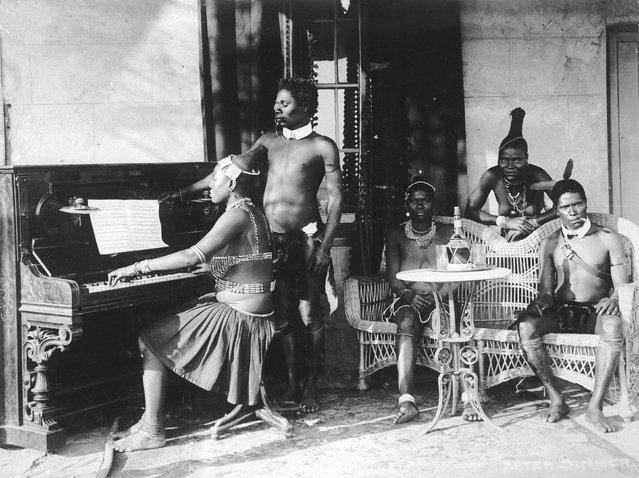
circa 1925:  A Zulu woman playing the piano while a group of others sit and listen.  (Photo by General Photographic Agency/Getty Images)

“The Zulu are the largest South African ethnic group, with an estimated 10–11 million people living mainly in the province of KwaZulu-Natal. Small numbers also live in Zimbabwe, Zambia, and Mozambique. Their language, Zulu, is a Bantu language; more specifically, part of the Nguni subgroup. The Zulu Kingdom played a major role in South African history during the 19th and 20th centuries. Under apartheid, Zulu people were classed as third-class citizens and suffered from state-sanctioned discrimination. They remain today the most numerous ethnic group in South Africa, and now have equal rights along with all other citizens”. – Wikipedia.

Photo: A Zulu woman playing the piano while a group of others sit and listen (to put it briefly, Englishmen scoff over Zulu). South Africa, circa 1925. (Photo by General Photographic Agency)

Details
03 Feb 2014 09:40:00
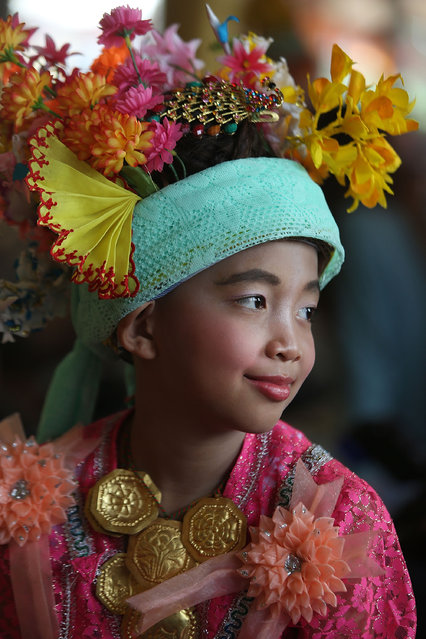
A Tai Yai boy waits for a ceremony to begin at Wat Don Chedi on April 7, 2014 in Mae Hong Son, Thailand. Poy Sang Long is a Buddhist novice ordination ceremony of the Shan people or Tai Yai, an ethnic group of Shan State in Myanmar and northern Thailand. Young boys aged between 7 and 14 are ordained as novices to learn the Buddhist doctrines. It's believed that they will gain merit for their parents by ordaining. (Photo by Taylor Weidman/Getty Images)

A Tai Yai boy waits for a ceremony to begin at Wat Don Chedi on April 7, 2014 in Mae Hong Son, Thailand. Poy Sang Long is a Buddhist novice ordination ceremony of the Shan people or Tai Yai, an ethnic group of Shan State in Myanmar and northern Thailand. Young boys aged between 7 and 14 are ordained as novices to learn the Buddhist doctrines. It's believed that they will gain merit for their parents by ordaining. (Photo by Taylor Weidman/Getty Images)
Details
09 Apr 2014 08:06:00
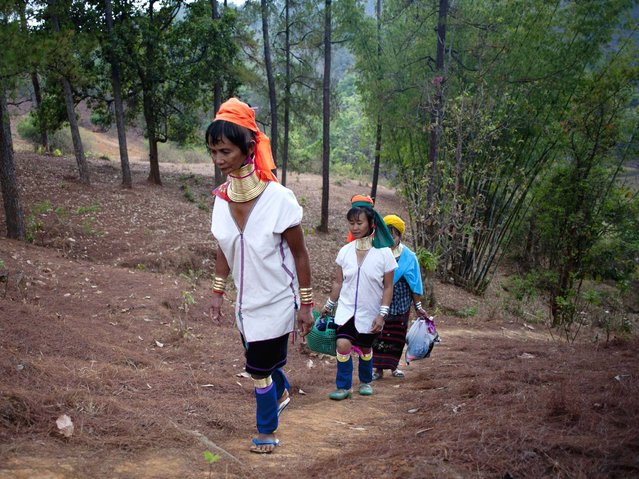
One of the theories says that the coils originate from the desire to look more attractive by exaggerating sexual dimorphism, as women have more slender necks than men. (Photo by Ye Aung Thu/AFP Photo)

This photo taken on April 16, 2014 shows ethnic Kayan women wearing traditional clothes and bronze rings around tbeir neck in Panpet village, Demoso township in Kayah state, eastern Myanmar. Some ethnic Kayan women, also known as Padaung, begin wearing the bronze rings on their neck and legs from a young age. Usually they start wearing six to ten rings when they are five to ten-years-old and then they put on one more ring a year for years after then. (Photo by Ye Aung Thu/AFP Photo)
Details
23 Apr 2014 08:56:00
Latefat Alao, 56, a ethnic Yoruba Muslim woman, waits for customers in front of her in Beere market in Ibadan, southwest Nigeria, January 29, 2015. Much of the grain and wheat traders like Alao sell comes from the north and Boko Haram's campaign has negatively affected farmers and food markets. (Photo by Akintunde Akinleye/Reuters)

Latefat Alao, 56, a ethnic Yoruba Muslim woman, waits for customers in front of her in Beere market in Ibadan, southwest Nigeria, January 29, 2015. Much of the grain and wheat traders like Alao sell comes from the north and Boko Haram's campaign has negatively affected farmers and food markets. Reuters photographer Akintunde Akinleye photographed Nigerians and asked them about their views on the elections as well as their hopes and concerns for the country. (Photo by Akintunde Akinleye/Reuters)
Details
12 Feb 2015 12:44:00
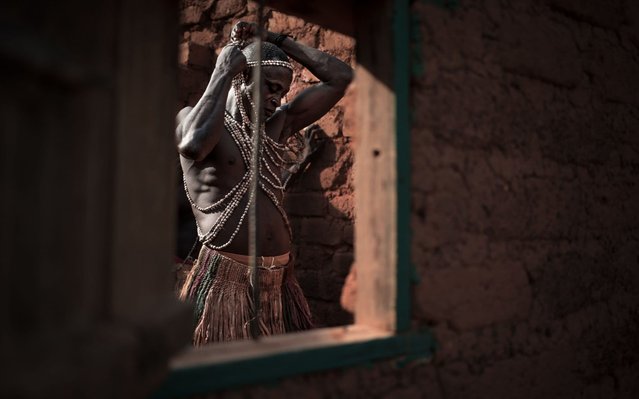
A Broto dancer prepares himself in a disused house of Bambari, in the centre of Central African Republic, before performing on March 14, 2019. The Broto, belonging to the Banda ethnic group, are known for their traditional dances accompanied by heavy horns made of tree roots. Today this tradition falls into disuse and its history is now forgotten by the new generations. (Photo by Florent Vergnes/AFP Photo)

A Broto dancer prepares himself in a disused house of Bambari, in the centre of Central African Republic, before performing on March 14, 2019. The Broto, belonging to the Banda ethnic group, are known for their traditional dances accompanied by heavy horns made of tree roots. Today this tradition falls into disuse and its history is now forgotten by the new generations. (Photo by Florent Vergnes/AFP Photo)
Details
05 Apr 2019 00:01:00