Loading...
Done
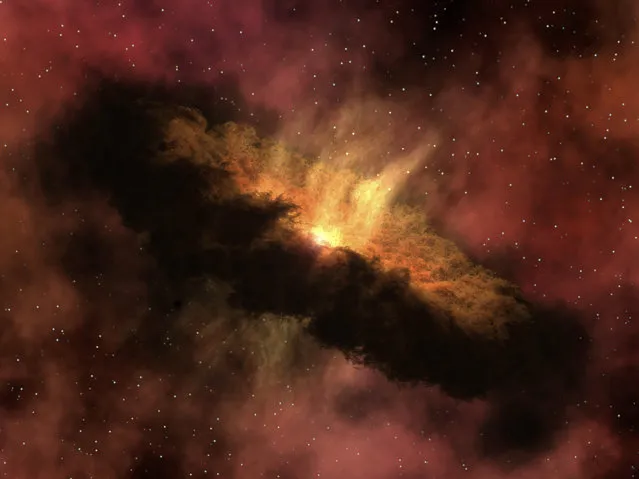
A fledgling solar system containing deep within it enough water vapor to fill all the oceans on Earth five times, located in our Milky Way galaxy about 1,000 light years from Earth in the constellation Perseus. (Photo by Reuters/NASA/JPL-Caltech)

A fledgling solar system containing deep within it enough water vapor to fill all the oceans on Earth five times, located in our Milky Way galaxy about 1,000 light years from Earth in the constellation Perseus. (Photo by Reuters/NASA/JPL-Caltech)
Details
28 Sep 2016 11:01:00
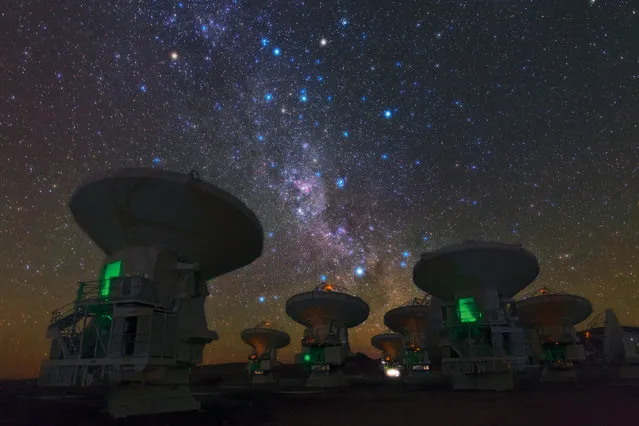
The antennas of the European Southern Observatory's Atacama Large Millimeter/Submillimeter Array, also known as ALMA, are set against the splendor of the Milky Way in this picture by Babak Tafreshi

The antennas of the European Southern Observatory's Atacama Large Millimeter/Submillimeter Array, also known as ALMA, are set against the splendor of the Milky Way in this picture by Babak Tafreshi. Construction of the full ALMA array is due to be completed in Chile's Atacama Desert in 2013, but the facility is already making scientific observations with a partial array of antennas. (Photo by ESO/B. Tafreshi/TWAN)
Details
03 Jun 2012 11:57:00
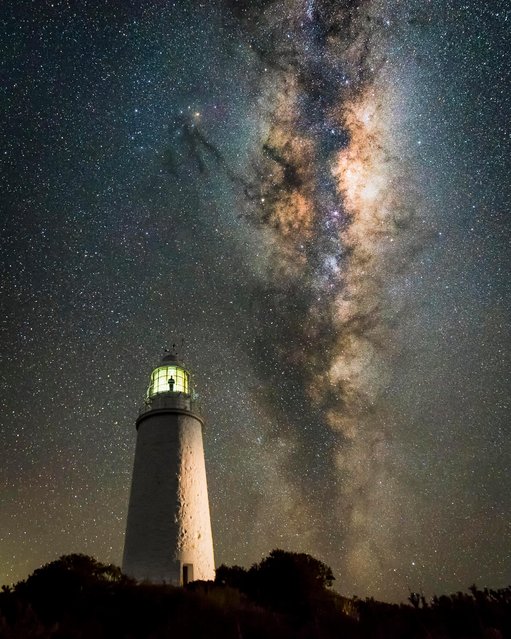
The Milky Way rises above an isolated lighthouse in Tasmania. Shot by James Stone of Australia. (Photo by James Stone/Astronomy Photographer of the Year 2018)

The competition is run by Royal Observatory Greenwich sponsored by Insight Investment and in association with BBC Sky at Night Magazine. This year astrophotographers from 91 countries sent in more than 4,200 spectacular entries. Here: The Milky Way rises above an isolated lighthouse in Tasmania. Shot by James Stone of Australia. (Photo by James Stone/Astronomy Photographer of the Year 2018)
Details
20 Jul 2018 00:05:00
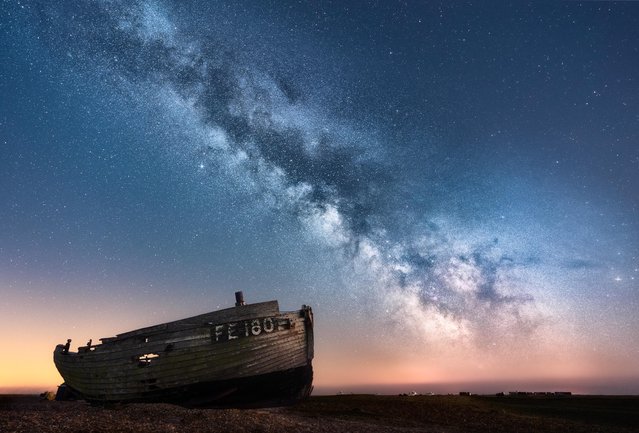
Paul Dixon is an engineer by day and an astrophotographer by night. He shot this broken boat on Dungeness beach, Kent in the last decade of August 2024, 17 times, stacking the images upon each other before combining them with a similar composite of the Milky Way. (Photo by Paul Dixon/Media Drum Images)

Paul Dixon is an engineer by day and an astrophotographer by night. He shot this broken boat on Dungeness beach, Kent in the last decade of August 2024, 17 times, stacking the images upon each other before combining them with a similar composite of the Milky Way. (Photo by Paul Dixon/Media Drum Images)
Details
10 Jul 2025 04:02:00
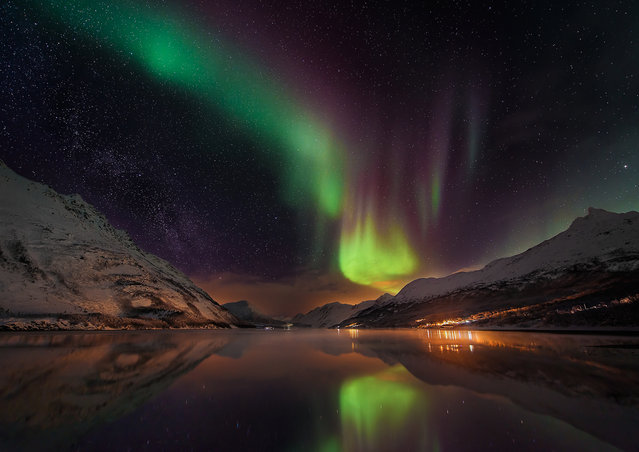
Some of the best entries so far in the 2016 Insight Astronomy Photographer of the Year competition. There are two weeks left to enter, and the winners will be announced in September. Here: Aurora over Laksvatn Fjord, Laksvatn, Norway. The aurora borealis dances in the skies over the town of Laksvatn, with the Milky Way to the left. The image is a single shot with no compositing, only post-processing to bring out the aurora, and some colour corrections. (Photo by Matt Walford/National Maritime Museum)

Some of the best entries so far in the 2016 Insight Astronomy Photographer of the Year competition. There are two weeks left to enter, and the winners will be announced in September. Here: Aurora over Laksvatn Fjord, Laksvatn, Norway. The aurora borealis dances in the skies over the town of Laksvatn, with the Milky Way to the left. The image is a single shot with no compositing, only post-processing to bring out the aurora, and some colour corrections. The photographer Matt Walford said: “I love the way the northern lights look like they are just wistfully dancing over the fjord, framed by the mountains on either side”. (Photo by Matt Walford/National Maritime Museum)

Details
01 Jul 2016 12:13:00
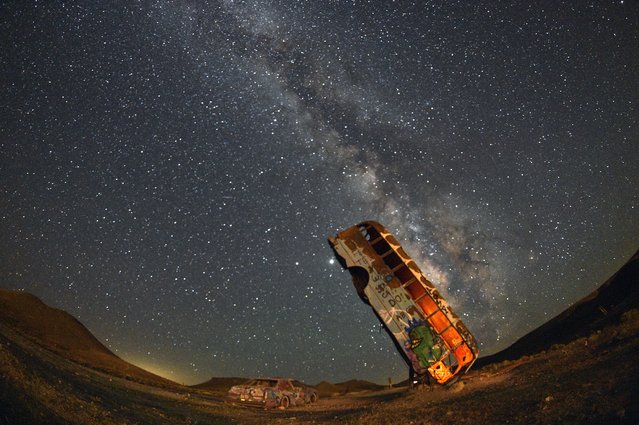
The Milky Way galaxy is seen in the sky above the International Car Forest of the Last Church in Goldfield, Nevada on July 18, 2020. The roadside attraction, created in 2002 by Mark Rippie, has over 36 automobiles including cars, trucks, vans and buses that have been balanced on their ends or stacked on top one of another. (Photo by David Becker/AFP Photo)

The Milky Way galaxy is seen in the sky above the International Car Forest of the Last Church in Goldfield, Nevada on July 18, 2020. The roadside attraction, created in 2002 by Mark Rippie, has over 36 automobiles including cars, trucks, vans and buses that have been balanced on their ends or stacked on top one of another. (Photo by David Becker/AFP Photo)
Details
20 Aug 2020 00:03:00
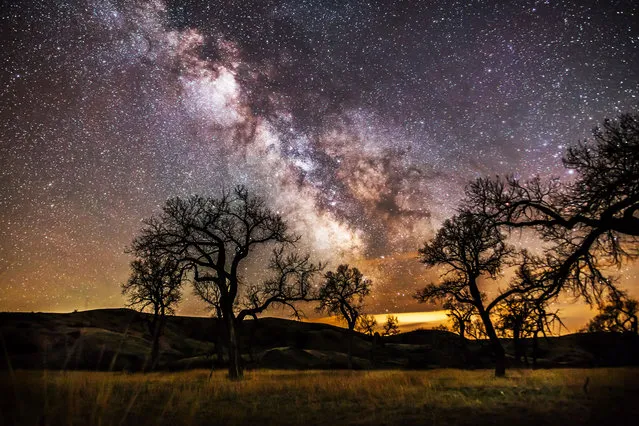
The stunning Milkyway in Midwestern U.S.A.  captured by photographer Randy Halverson in 2013. The stunning skies in Midwestern U.S.A. captured by photographer Randy Halverson. The videographer captured rare footage of the Milky Way, the elusive Northern Lights and raging night storms in some of the most isolated regions of the U.S.A. (Photo by Randy Halverson/Barcroft Media)

The stunning Milkyway in Midwestern U.S.A. captured by photographer Randy Halverson in 2013. The stunning skies in Midwestern U.S.A. captured by photographer Randy Halverson. The videographer captured rare footage of the Milky Way, the elusive Northern Lights and raging night storms in some of the most isolated regions of the U.S.A. The footage, which spans the skies of South Dakota, Wyoming and Utah, was taken between spring and autumn 2013. The 47-year-old spent 40 nights scattered across the eight-month period sat near his camera to capture the clear footage. Randy from Kennebec, South Dakota has been shooting timelapse for over 4 years. (Photo by Randy Halverson/Barcroft Media)
Details
20 Aug 2014 10:32:00
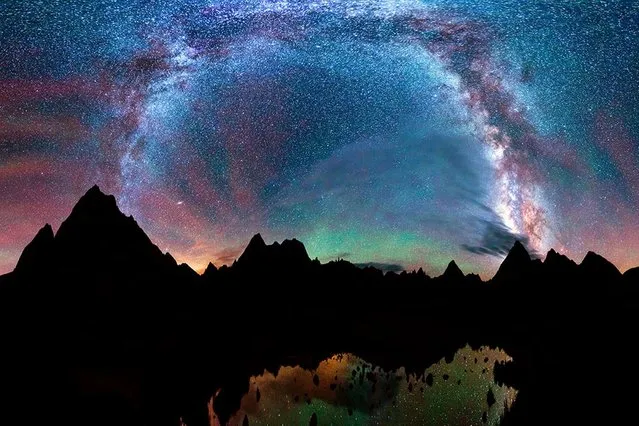
A photographer has captured these amazing rainbow-like images of stars high above the skies of Colorado. Stargazer Matt Payne, from Oregon, loves the evening skies so much, he has devoted hours to shooting the marvels of the Milky Way. The 35-year-old has to meticulously plan his work, taking into account weather, terrain, season and even the cycle of the moon to get the perfect snap. (Photo by Matt Payne/Caters News)

A photographer has captured these amazing rainbow-like images of stars high above the skies of Colorado. Stargazer Matt Payne, from Oregon, loves the evening skies so much, he has devoted hours to shooting the marvels of the Milky Way. The 35-year-old has to meticulously plan his work, taking into account weather, terrain, season and even the cycle of the moon to get the perfect snap. (Photo by Matt Payne/Caters News)
Details
02 Sep 2014 12:35:00