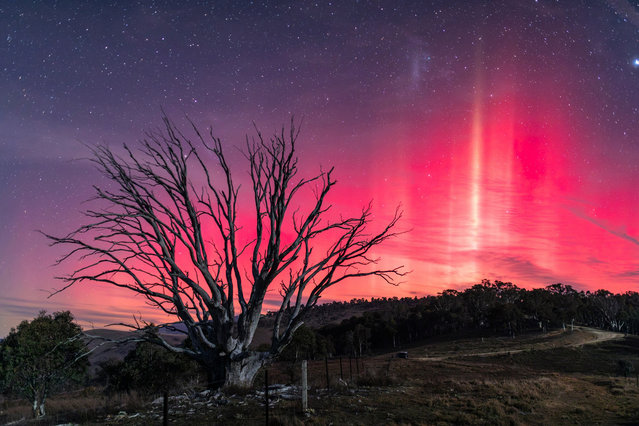
Paul Kerr was able to capture this stunning vista of the aurora australis from Canberra, New Zealand on June 1, 2025. (Photo by Paul Kerr/Hold Still Photography)
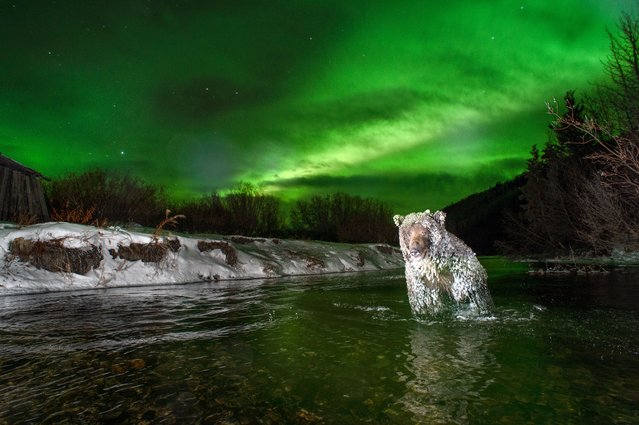
A grizzly bear fishes for salmon under the Northern Lights in Klukshu, Yukon, in the north of Canada on March 3, 2025. The bear makes use of the darkness because the salmon can't see well enough to swim away. (Photo by Peter Mather/Solent News & Photo Agency)
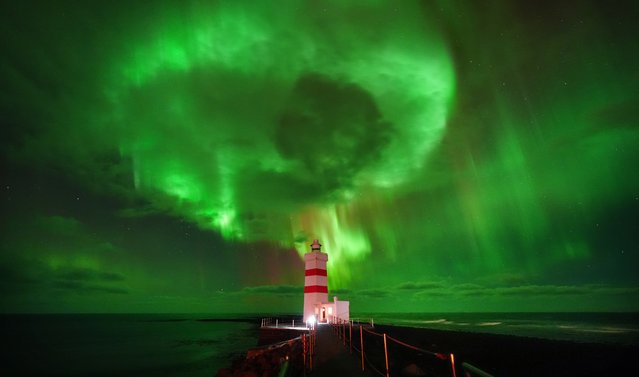
The aurora borealis, also known as the northern lights, visible above Old Gardur Lighthouse on the northern point of the Reykjanes peninsula in Iceland on Sunday, November 24, 2024. The lighthouse dates to 1897, and was one of the first built in Iceland. (Photo by Owen Humphreys/PA Images via Getty Images)
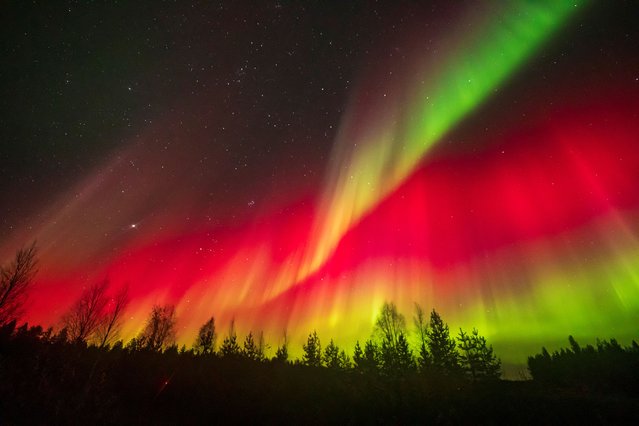
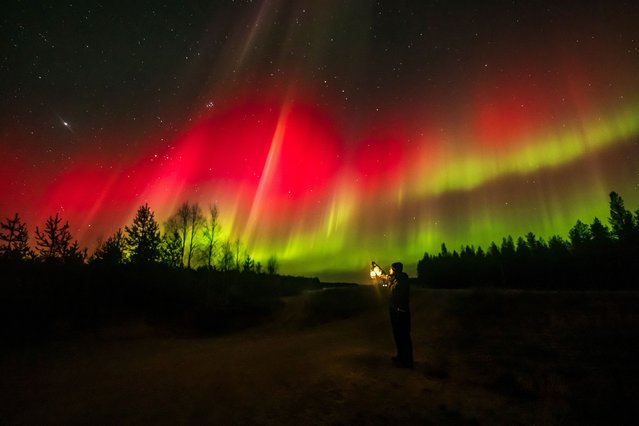
A view of northern lights over the skies of Sodankyla, Lapland, Finland, on October 7, 2024. (Photo by Alexander Kuznetsov/All About Lapland/Handout via Reuters)
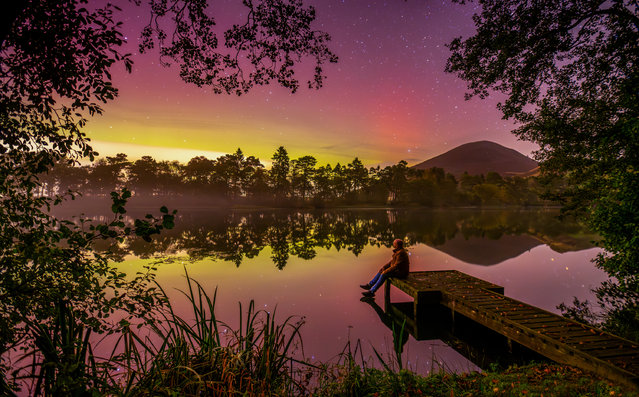
Bowden Loch, near Melrose, Scottish Borders, Scotland. The Northern Lights made an appearance over the Uk on the evening of the 7th October 2024. (Photo by Phil Wilkinson/The Times)
A view of northern lights over the skies of Sodankyla, Lapland, Finland, on October 7, 2024. (Photo by Alexander Kuznetsov/Courtesy of All About Lapland/Handout via Reuters)
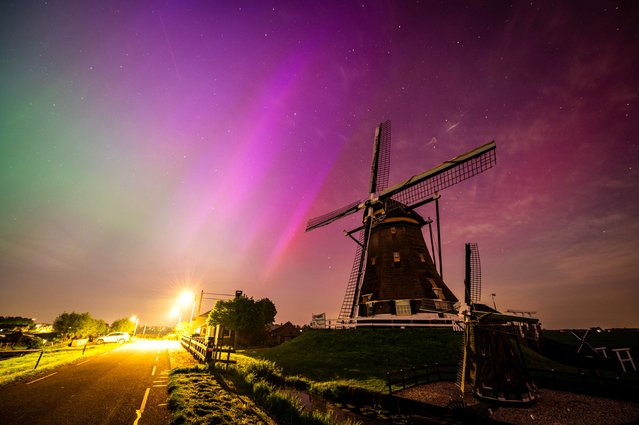
The Northern lights (aurora borealis) lights up the night sky above the Molenviergang in Aarlanderveen, the Netherlands, early on 11 May 2024. The National Oceanic and Atmospheric Administration (NOAA) of America has warned that the strongest geomagnetic storm for 20 years is set to hit Earth, making the Aurora Borealis, or Northern Lights, visible at much lower geomagnetic latitudes than usual. (Photo by Josh Walet/EPA/EFE/Rex Features/Shutterstock)